Tuesday, May 09, 2006

Fraudster Gangs Deal a Blow to Chip and PIN

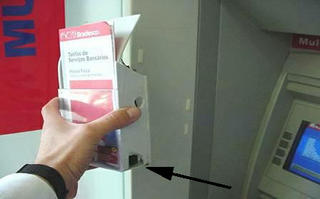
Picture of ATM skimming device using a hidden camera.

While North America was under attack in the Debit Card breach a few months ago, Britain rolled out Chip and PIN technology. At the time, the experts promised "Chip and PIN" cards would stop fraud dead in it's tracks.

Criminals are already beating this technology with skimming devices, which are mounted on ATM machines. AND it gets even scarier, the latest devices don't need cameras to record a PIN and can be built from parts ordered over the Internet.

Wikipedia already has an extensive section on Chip and PIN. I was amazed to discover that they were very up to date regarding potential security issues.

Chip and PIN is the name given to the initiative in the UK but countries worldwide are launching their own initiatives based on the EMV standard, which is a group effort between Europay, MasterCard and VISA. By the end of 2004, 100 countries will be using compatible systems based on this standard, and France aims to migrate its existing systems to be compatible with the new cards.

Sean Poulter of the Daily Mail reports on the recent Chip and PIN fraud:

Cloned cards belonging to Britons have been used to withdraw more than £1million in cash from machines in the UK, Paris, Sri Lanka, India and Hong Kong.

One card holder is believed to have lost as much as £25,000.

The police and banks have suggested that the problems at Shell petrol stations, which have centered on Surrey, emerged over the last eight weeks.

However, one Daily Mail reader from that area said his card details were cloned - he believes at a Shell outlet - in July last year.

Other readers believe their card details, including PINs, were stolen at garages operated by other companies, including BP and Esso. Cards have also been cloned at cash machines on at least one Total forecourt and at Tesco stores.

Full story, here.

Reading this, I had to reflect on the recent Debit Card breaches in North America. Early in the story, skimming devices were brought up a potential source. As the compromise spread across the continent, we heard rumors (still never confirmed) that retail systems were hacked. In the end, a few people were arrested and the story faded away.

Quite simply, it seems that the financial industry isn't commenting.

Whether the intention of not commenting is to protect the public, or the financial industry; it is clear that something needs to be done about this in the near term. Hopefully, the lack of information being released on these cases is because a strong investigative effort is underway.

It will be interesting to see what information is released on this latest case and how many more victims this latest caper will claim.

Here is a previous post, I did on the Debit Card breach:

Debit Card Breaches, A Growing Problem

Sunday, May 07, 2006

Internet Crimes are On the Rise and Deadlier than Ever

Panda Software recently issued it's quarterly report, which comes to the frightening conclusion that 70 percent of all malware they detected in the first quarter of 2006 is related to cyber crime. Activity also seems to have hit record numbers!

Here is their summary:

This report confirms the new malware dynamic based on generating financial returns. Spyware, Trojans, bots and dialers were the most frequently detected types of malware between January and March 2006. Trojans accounted for 47 percent of new malware examples during the first quarter of 2006.

Seventy percent of malware detected during the first quarter of 2006 was related to cyber crime and more specifically, to generating financial returns. This is one of the conclusions of the newly published PandaLabs report, which offers a global vision of malware activity over the first three months of the year. Similarly, the report offers a day by day analysis of the most important events in this area. This report can be downloaded, free of charge, here.

Since this statistic interested me, I jumped over to the Anti-Phishing Working Group's page to see what they had to say. Please note that Panda, along with Websense and MarkMonitor share information with the APWG. They confirmed Panda's report that crime on the Internet seems to be at an all time high.

Here is a tickler from their report:

The total number of unique phishing reports submitted to APWG in March 2006 was 18,480, the most reports ever recorded. This is a count of unique phishing email reports. March 2006 continues the trend of more phishing attacks and more phishing sites. The IRS phishing attack doubled in volume in March as compared to February (in the USA, the tax filing deadline was April 17 in 2006, as the usual April 15 deadline fell on a weekend this year.)

Link, here.

Two of the most concerning forms of malware being used are Keyloggers and Redirectors. Keyloggers are a form of spyware, which record all the strokes on a computer and transmits them to back to the person (criminal), who installed the malware. They are normally used to steal financial information, used in identity theft schemes.

Sadly enough, Keyloggers are legal and easily bought anywhere, including the Internet. They allegedly have legitimate uses like spying on other people?

Perhaps, the FTC should go after some of these vendors like they recently did with the Private Investigators selling telephone records?

Redirectors are a trojan, which once installed on a computer, redirect the user to malicious sites, where their financial information is stolen. The sites are also known to download more malware (crimeware) on systems. Redirectors are extremely dangerous because there is little indication you are being hijacked.

The Anti-Phishing Working Group has some excellent educational information on this subject, including what to do if you become a statistic:

How to Avoid Phishing Scams

What To Do If You've Given Out Your Personal Financial Information

Too many people (who know what to look for) ignore and delete phishing attempts. There are a lot of places you can report activity and make an impact. In most cases, it only takes a minute or two to do so.

You can report phishing activity to the APWG, here. Activity can also be reported to PIRT, which is a joint venture by Sunbelt Software and CastleCops.

Another resource to report activity is the Internet Crime Complaint Center, which is associated with the FBI. You can report it a lot of places, but it is important to report it. If everyone took the time to report one phishy email a day, it would probably have a significant impact.

By reporting the activity that we see and taking advantage of the mostly volunteer efforts to fight it, we might make the Internet a safe place for everyone again. As access becomes cheaper and more widespread, the number of potential victims is growing at a record rate.

Continuing to ignore all those "Phishy" e-mails will only encourage the Phishermen to move forward with greater frequency. Additionally, the attacks are becoming more sophisticated and "how to kits" are being sold on how to do these dirty deeds. This will undoubtedly bring more and more Phishermen to the (already) murky waters of the Internet.

Of course, we can also take the time to educate newer users, also. In fact, awareness protects people more effectively than anything I've seen, thus far.

Saturday, May 06, 2006

Retailers Find their Stolen Merchandise for Sale on eBay

Shoplifting costs retailers billions of dollars a year and we all pay for it in the form of higher prices. On the low end, you have teenagers and opportunists "boosting" merchandise. Moving up the retail theft food chain you have people supporting drug habits and even organized gangs, who steal from retailers on a larger scale.

A common misconception is that the majority of losses stem from individuals stealing items for their own use. In fact, the majority of stolen goods are converted into cash.

With the increased focus on the traditional means of converting stolen merchandise into cash, such as refunding, common and professional "boosters" are flocking to eBay to accomplish their primary goal.

This was a matter of concern raised at the Retail Fraud Conference held in London recently. Penelope Ody of the Retail Bulletin reports:

Retailers at this week's Retail Fraud conference in London (May 4) had a new preoccupation adding to the usual concerns over dishonest cashiers, sweethearting and back door delivery thefts-eBay. According to Boots head of loss prevention and security, Robert Jennings, this is now in the top five areas of concern as retailers increasingly see their merchandise offered in bulk on the web auction site.

Link, here.

Note that the Jennings is saying for "offered in bulk," which would lead one to speculate that this isn't being done by the "opportunists" and is more likely the work of organized gangs.

Interestingly enough, there has been a lot of buzz recently on organized gangs involved in shoplift activity. Margaret Pressler of the Washington Post recently wrote:

Retailers and theft experts say criminals have discovered that large profits can be made relatively easily, and without much risk, by stealing merchandise from crowded, understaffed stores. They say the most stolen items tend to be high-priced, widely used products that are routinely sold in chain stores: over-the-counter medicines, razors, film, CDs and DVDs, baby formula, diapers, batteries, hair-growth and smoking-cessation products, hardware, tools, designer clothes and electronics.

Link, here.

AND another recent viewpoint from SecurityInfoWatch.com might lead one to believe that organized retail crime has ties to illegal immigration and terrorisim.

Liz Mart'nez wrote:

According to CIS Robert W. Nolen, a lead trainer in a course developed with Bureau of Justice Assistance grant money called "Understanding, Combating, and Surviving Terrorism," many criminals from terrorist countries specialize in the re-sale of stolen consumer goods. The profits from these enterprises are used to fund terrorist activities.

In many cases, men and women from El Salvador, Honduras and Mexico travel together, doing the actual stealing. Each person in the crew has a particular area of expertise, whether it be distracting store employees, doing the actual boosting, or driving the get-away vehicle. These professional thieves often earn $3,000 a week.

Link, here.

Although not stated in the article, if illegal immigrants are doing the stealing and criminals from terrorist countries are selling the goods, it makes me wonder how close their relationships could be?

Another issue, retailers have had with eBay is the sale of gift cards on the site. Whether purchased with bogus financial instruments, or issued as refunds (which could be a direct result of shoplifting), gift cards are another means of converting stolen proceeds into cash.

In another interesting article, again from the Washington Post, Ariana Cha wrote:

The shoplifters discovered some stores would allow them to return the goods without receipts for store credit or gift cards. They then sold those vouchers on the giant online marketplace. It was easy, instant and anonymous. The money flowed in -- they got 76 cents per dollar of stolen merchandise, a huge takeaway considering that shoplifters traditionally net 10 percent or less of the retail value of the items. The group made more than $200,000 in 10 months.

This is yet another example of many, where crimes of all sorts are occurring in the Internet auction world (particularly eBay). We can't hold auction sites accountable for being in collusion with criminals, but we can hold them accountable for not providing a safe shopping environment.

After all, how long would one of these retailers survive if they allowed the amount of crime to occur within their four walls with people walking around? My guess is that they would be out of business pretty quickly.

The same standard needs to be applied to the Internet and if this "business model" is to survive, the auctioneers needs to wake up and smell the coffee. Thus far, eBay has been able to blame everyone, but themselves; however as corporations become victims, the stakes are likely to grow.

Corporations have money and can afford a lot of lawyers.

Tiffanys might have already started this trend with it's pending litigation regarding the sale of counterfeit merchandise on eBay.

Thursday, May 04, 2006

PI's Get a Black Eye from the FTC for Selling Phone Records

In the information age, our personal information has been gathered, sold and indexed for profit. Unfortunately, all too often, this information isn't protected properly and used by people, who have no right to it.

Criminals, Snoops and Stalkers delight in being able to get their hands on people's personal information AND this results in people becoming victims of a lot of different crimes.

Recently Private Investigators of the Internet sort have been offering personal telephone records for sale. Since the information is being sold over the Internet, we can assume, it is being sold to anybody and everybody. The FTC is sending a message that this is illegal and some of these Internet PI's are probably going to end up with a "black eye."

Here is a press release from the FTC:

FTC Seeks Halt to Sale of Consumers’ Confidential Telephone Records

The Federal Trade Commission has filed federal court complaints charging five Web-based operations that have obtained and sold consumers’ confidential telephone records to third parties with violating federal law. The agency is seeking a permanent halt to the sale of the phone records, and has asked the courts to order the operators to give up the money they made with their illegal operations.

“Trafficking in consumers’ confidential telephone records is outrageous,” said Lydia Parnes, Director of the FTC’s Bureau of Consumer Protection. “It robs consumers of their privacy and exposes them to everything from snoops to stalkers. We intend to put a stop to it.”

In congressional testimony last February, the FTC said it was investigating companies that advertised on the Internet that they would obtain and sell telephone records. The testimony said that FTC staff had surfed the Web to locate companies that offered to sell consumers’ phone records, identified targets, and completed undercover purchases of the phone records. FTC staff followed up with warning letters to operators of 29 Web sites that continued to advertise the sale of phone records to the public.

The Telecommunications Act of 1996 states that customers’ phone records are their private property and can only be disclosed to the customer or with the approval of the customer. According to the FTC complaints in these cases, the defendants advertised on their Web sites that they could obtain the confidential phone records of any individual, including lists of outgoing and incoming calls, and make that information available to their clients for a fee. “The account holders have not authorized the defendants to obtain access to or sell their confidential customer phone records. Instead, to obtain such information, defendants have used, or caused others to use, false pretenses, fraudulent statements, fraudulent or stolen documents or other misrepresentations, including posing as a customer of a telecommunications carrier, to induce officers, employees, or agents of telecommunications carriers to disclose confidential customer phone records,” the FTC complaints state. The defendants then sold the records to third parties. According to a Commission complaint, one of the defendants, Integrity Security & Investigations Services, Inc., based in Yorktown, Virginia, also advertised, obtained and sold consumers’ financial records, including credit card information.

The agency charged that the practices violate the FTC Act and has asked the courts to permanently bar the illegal practices and order the defendants to give up their ill-gotten gains.

The FTC brought these cases with the invaluable assistance of the Federal Communications Commission. The FTC also acknowledges the assistance of Cingular Wireless LLC, Sprint Nextel Corp., and Verizon.

The defendants in these cases are: 77 Investigations, Inc., and Reginald Kimbro, based in Upland, California, and using mailing addresses in Jacksonville, Florida, Broomfield, Colorado, and Nashville, Tennessee; AccuSearch, Inc., doing business as Abika.com, and Jay Patel, based in Cheyenne, Wyoming; CEO Group, Inc., doing business as Check Em Out, and Scott Joseph, based in Fort Lauderdale, Florida; Information Search, Inc., and David Kacala, based in Baltimore, Maryland; and Integrity Security & Investigation Services, Inc., Edmund L. Edmister, Tracey Edmister, and F. Lynn Moseley, based in Yorktown, Virginia, with a mailing address in Laguna Beach, California.

The Commission vote to file the complaints was 5-0.

Link, here.

If you spot this type of activity, here is where you can report it:

To file a complaint in English or Spanish (bilingual counselors are available to take complaints), or to get free information on any of 150 consumer topics, call toll-free, 1-877-FTC-HELP (1-877-382-4357), or use the complaint form.

For a previous post, I did about private companies selling your information, link here.