Showing posts sorted by relevance for query atm skimming. Sort by date Show all posts

Monday, February 20, 2006

Debit Cards Are the Criminal's Preferred Method of Payment


Hidden Camera on ATM
(above)

When the debit card breach hit the news involving Bank of America, Washington Mutual, Wells Fargo and Office Max, several stories referenced ATM skimming.

In the Northern California Breach, the card numbers were used in signature transactions versus PIN (Personal identification number) transactions. When ATM skimming is accomplished, the criminals steal not only the card number, but the PIN, also.

They are then able to use the card at any ATM.

Automatic teller machine (ATM) skimming is accomplished by attaching devices to existing ATM Machines, or via the use of hidden cameras/encoding devices in retailers that accept ATM transactions.

ATM skimming has been prevalent overseas for a few years, but is starting to show up in North America. Recently, skimming devices have been discovered on ATM machines in California, Oregon and Washington. This is why the two activities are probably being compared.

Awhile back, I did a post: ATM Machines That Clone Your Card. Included are some handy pictures of what a machine looks like after it has been compromised and tips on how to avoid becoming a victim.

There are similarities to both activities, but there are differences, also.
As I said earlier, the Northern California breach has consisted of the card numbers being used in "signature" transactions AND the victims are all from Northern California. Additionally, the authorities and Visa/Mastercard have confirmed the point of compromise as being a major retailer, reported as possibly being Office Max.
In the Northern California case, everything points to an entire database being hacked.

In the "ATM Skimming" cases, devices are being attached to existing ATM machines, which not only record the card numbers, but PIN numbers, also. The victims in the recent cases seem to span the entire West coast.

Interestingly enough, a few months ago, I did a post, which noted ATM skimming activity on the East coast:

Get a Quick $20.00 and GO BROKE!
One FBI source has already been quoted that this activity could be the work of Russian Organized Crime. Here is an interesting document from the California Attorney General, which although is slightly dated, describes how they operate.
The best way to avoid becoming a victim of ATM skimming is to always cover your PIN when entering it. We might not be able to control, whether or not, a major company is breached, but we can control our own actions when using an ATM.

Monday, November 20, 2006

ATM Skimming Case Travels to 19 Countries on 5 Continents

Skimming device (courtesy of the "ATM Pool" at Flickr)


Police in the United Kingdom are calling an ATM skimming case, one of the biggest of it's kind. ATM skimming is where a debit-card's magnetic stripe is counterfeited (cloned) and the PIN (personal identification number) is compromised - normally with a hidden camera.

Official's estimate the fraud has already netted about $4.5 million and the counterfeit cards have been used in 19 countries and five continents.

According to the story published in the SundayMirror.co.uk:

The scam was uncovered after police launched an investigation - codenamed Operation Turner - after receiving 560 complaints. Detective Sergeant Dick Bollard, who is leading the probe, said: "This is one of the biggest scams of its kind. It's a very large and complex investigation which is expected to take a considerable amount of time.

"The investigation is ongoing and we are looking into a number of leads in the UK and abroad." A spokesman for trade organisation APACS, which helps banks fight fraud, said: "These scams have involved copying a card's magnetic strip and in cases filming a driver keying in a PIN number by using some sort of hidden camera.

SundayMirror.co.uk story, here.

Two suspected dishonest employees at BP gas stations (where the devices were planted) have been arrested. One of them might be an illegal immigrant, also.

If the cards have been used in 19 countries so far, it's safe to assume that the people behind this are pretty organized. Although no one ever knows for sure, there might be Internet chatrooms (forums) - where Internet fraudsters gather to barter and sell stolen information spreading the activity.

The UK has had a lot of this skimming lately and I did a recent post about it where Romanian Illegal Immigrants were to blame.

And the UK isn't the only place that is having problems with debit-card skimming at gas stations. A similar case happened at Arco stations in California and there have been many other instances, worldwide.

BP owns Arco in the United States.

Although a lot of skimming is attributed to devices being placed on (self service) point-of-sale terminals and ATM machines, there has been recent evidence cards are also being cloned after databases have been hacked at retailers.

Some who investigate this believe that the people behind this intentionally hold on to the stolen information before using it to frustrate investigative efforts that would discover their techniques, or operations. In some recent cases, the authorities could only speculate, which of the known breaches, an individual person's information was stolen in.

Skimming can also be accomplished by retail, or restaurant employees using portable "encoding devices." Unfortunately, most of the technology used is legal and can even be bought on eBay.

It pays to keep an eye on your card to make sure it isn't being swiped more than once.

There's probably not much an individual person can do when entire databases are compromised, but an individual can shield their PIN when using their debit card (strongly recommended).

At least if they don't have your PIN, they can't get cash; however they might still be able to use the card number for signature based, or e-commerce transactions. Note that credit-cards are cloned for the same purpose.

Last, but not least - debit cards don't offer the same protection as credit cards do. If you expect to recover your money, the allowed time frame to file a claim is a lot less than with a credit card.
It's a good idea to watch your statement carefully.

If you would like a more visual demonstration of how skimming occurs, Visa has a pretty telling page (portable devices), here.

Flickr has a link to a public group pictures of ATM machines, including skimming devices, here.

There are a lot of eyes out there (customers and employees) that might spot a suspicious device - if you do - never touch it and make sure you report it to law enforcement (immediately). Since the activity normally occurs in public (retail) spaces, an educated individual could very well make the difference in cracking one of these cases. Remember that anyone near the device - no matter how official they look - might be involved, themselves.

Monday, September 19, 2005

ATM Machines That Clone Your Card

I received an e-mail showing how ATM skimming (stealing card information complete with PIN) has become more advanced with the advent of portable devices and wireless technology. Being leery of e-mail, I researched recent articles to validate this activity.

One of the articles, I researched was from NewsMax.com by Bruce Mandelblit, which can be seen, here.

Here is the text of the e-mail, I received:


"A team of organized criminals are installing equipment on legitimate bank ATM's in at least 2 regions to steal both the ATM card number and the PIN. The team sits nearby in a car receiving the information transmitted wirelessly over weekends and evenings from equipment they install on the front of the ATM (see photos).

If you see an attachment like this, do not use the ATM and report it immediately to the bank using the 800 number or phone on the front of the ATM."

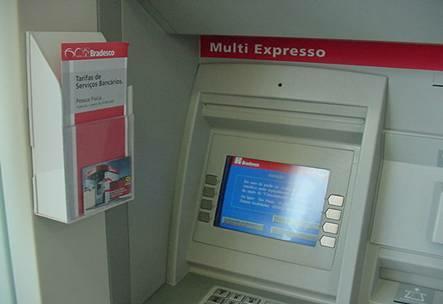
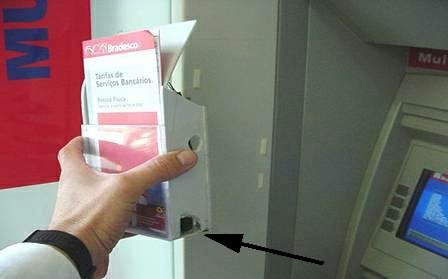
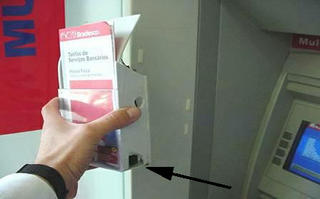
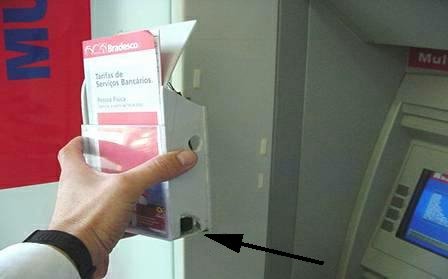
The equipment used to capture your ATM card number and PIN are cleverly disguised to look like normal ATM equipment. A "skimmer" is mounted to the front of the normal ATM card slot that reads the ATM card number and transmits it to the criminals sitting in a nearby car. At the same time, a wireless camera is disguised to look like a leaflet holder and is mounted in a position to view ATM PIN entries.

The thieves copy the cards and use the PIN numbers to withdraw thousands from many accounts in a very short time directly from the bank ATM."


I also found the pictures of this on Snopes.com. Snopes is a site that reports on urban legends and whether, or not they are true. They list this one as true and based on my independent research, I believe they are right. Note that this method is being reported in Europe, South America, North America and Asia.

When going to this site, I also realized that the author of the e-mail had obtained their information from Snopes. Please note, Snopes claims to have gotten their information from the internet, also.

Snopes post, here.

This activity has been around for a few years. In the past, it was primarily done in small retailers, where the skimming device was behind the counter and the camera was over the keypad. It was also done by setting up ATM machines that were completely fake. It's always a GOOD IDEA to conceal your actions when entering your PIN. When you do this, the camera doesn't record your PIN number and they can't clone your card.

I've written a little about this phenomonen (skimming), which I update every so often. All the posts can be viewed, here.

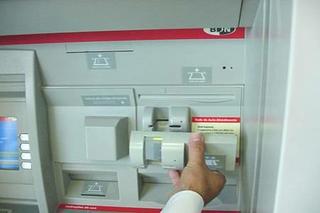
Here is a picture of a ATM Machine after being compromised.


They attach a device over the card slot on the legitimate ATM, which reads the magnetic information. Using the latest wireless technology, it is normally transmitted to fraudsters in a nearby vehicle.


Your ATM is protected by a PIN, but these criminals have a solution for this too. They install a hidden camera, again using the latest technology (wireless) and the PIN is digitally recorded.


Here is a picture of the compromised ATM with the camera installed.


Monday, October 23, 2006

Romanian Illegal Immigrants Install ATM (Fraud) Machines

(Older picture of a skimming device)

Illegal immigration isn't a "victimless crime" and the work they are performing doesn't always help the economy. Apparently Romanian illegal immigrants are installing fake ATM fronts - used to steal debit-card details - for the very same criminal organizations that helped them get into the United Kingdom, illegally.

Justin Penrose of the Sunday Mirror (UK) is reporting:

They have developed a high-tech ATM front which looks exactly like the original - and it steals a victim's details in seconds.

The new cashpoint fascia is so convincing that gangs are selling it to other crooks for £10,000 a time.

The covers even have a sticker which warns customers to watch out for fraudsters. When a victim uses an ATM it records details while a camera videos the pin number. Within seconds these details are sent to a laptop and a cloned card is made. Several wealthy Romanian "godfathers" run crooked empires from their mansions in the Balkans.

Sunday Mirror story, here.

The article also states that these new and very convincing ATM fronts are being produced and sold to other criminal organizations.

I wonder how long it will be before this new "skimming device" is exported from the United Kingdom? In the past couple of years, debit-card fraud has become a worldwide problem.

This reminds me that the best defense against ATM skimming is to always cover your PIN when doing a transaction!

Here is a previous post about the growing problem of debit-card fraud:

Debit Card Breaches, A Growing Problem

And here is an older post, I did (with pictures) of a skimming device:

ATM Machines That Clone Your Card

If anyone has a picture of one of these new devices, please send it to EdwardDickson@SBCGlobal.net.

Friday, January 06, 2006

Get a Quick $20.00 and GO BROKE!

For the last year, I've noticed an increase in "ATM Skimming." ATM Skimming was big a few years ago when criminals would plant a fake ATM Automatic teller machine (portable type) in a public place. The fake machine would electronically take your card information and a hidden camera would record your Personal identification number (PIN).

The crooks would then "copy" your card and then since the hidden camera had recorded your PIN abruptly clean out your account.

This activity seemed to disappear, then reappear (mutate) in a much more dangerous form. With wireless technology, criminals are now attaching hardware to existing ATM's at banks and doing the same thing. The difference being that you are going to your regular ATM (which you trust) and they are capturing the information from a distance.

They often do this over a weekend, or holiday, then remove the devices before anyone notices that the ATM machine has been compromised.

Recently, I've noticed reports of this activity on the rise in Europe, Asia and South America. The activity is increasing in frequency and showing up in North America, also.

Here is a post, I did several months ago, which includes photographs of the hardware and what to be on the look out for: ATM Machines That Clone Your Card. Please note that included in this post are (descriptive photographs) for the average person to learn what to be AWARE OF!

Here is one of many stories from the mainstream media on the latest scam, which hit in New York City, courtesy of the fine people at FOX News:


"A team of clever crooks ripped off more than $100,000 from at least 50 unsuspecting ATM users in Chinatown and on Staten Island in one of the largest ever info-heists from city banks, police said yesterday."

For the full story by FOX, please read, ATM Scam Nets Thieves Over $100G.

Wednesday, June 13, 2007

San Diego Regional Fraud Task Force releases photos of suspected ATM skimmers

Devices to skim payment card information have become a big problem, whether they are portable devices used by dishonest employees at restaurants, PIN pads replaced at merchants, or devices mounted on ATM machines.

Many of the devices used recently -- use wireless technology -- and the card details are transmitted to fraudsters, normally sitting in a vehicle with a laptop.

The San Diego Regional Fraud Task Force is hot on the trail of two suspects, photographed using some of the cloned cards. Cloned cards are counterfeit devices made with the information skimmed from legitimate (credit/debit) payment cards.

Unfortunately, most of the equipment to do this, can be purchased, legally. Some of this equipment is even being sold over the Internet. Loose controls on the sale of this technology -- enables a lot of criminal activity, makes it harder for law enforcement to investigate -- and a lot of people are being victimized by it.


SignOnSanDiego.com reports:

Police are warning ATM users that scammers are using high-tech devices to steal their bank account information, including debit and credit cards numbers and personal identification codes.

Police have released photos taken from surveillance video of two suspects. Anyone with information about either man is asked to call the task force at (619) 744-2534 or the U.S. Secret Service at (619) 557-5640.

The pictures of the current people of interest in this case are featured above (to the left).

I did a post with some interesting pictures of an ATM skimming device, which are pretty educational, can be seen, here.

For other articles about payment card skimming, click here.

SignOnSanDiego.com story, here.

A lot of the skimming in the United States seems to be tied into Armenian organized crime. Glendale, which is a couple of hours North of San Diego, seems to be where a lot of this activity originates.

Maybe someone should post these pictures in the Glendale area?


Skimming device discovered at a gas (petrol) station in the United Kingdom (Courtesy of Flickr). The expression on the employee's face is worth a thousand words.

Saturday, September 16, 2006

New ATM Scam

There has been a lot in the news recently about debit card breaches and ATM skimming, but here is something new. In Virginia Beach - an unknown person - reprogrammed an ATM by punching in a series of numbers - which made the machine issue four times as much money as it should.

The Police are having a hard time investigating it because it took nine days before someone reported getting more money than they should.

I wonder if all the people - who didn't report it - will have to pay the money back?

Story from AP (Associated Press), here.

Here is a previous story, I did on ATM skimming:

ATM Machines That Clone Your Card

9-22-06 (Update): Tom Fragala (Truston) did a post on how easy this was to do - AND the how to "info can be downloaded on the Internet - here.

My comment is , "ouch!"

Thursday, July 12, 2007

Stealing money from ATMs is taken to a more dangerous level

I've written a lot about ATM skimming -- where electronic devices are used to record payment card information, clone the information on a new card -- and steal money.

A new and much more dangerous (potentially deadly) means of stealing money from ATMs is occurring. Although most of this is happening in South Africa, it has happened recently in the United States, also.

Monica Laganparsad of the Times is reporting:

ATM blasts in KwaZulu-Natal have dramatically increased in the past two months.

During the first five months of this year seven ATM bombings were reported in the province, but in the past two months the figure has jumped to 14.

The organised crime unit of the province’s police claims to be hot on the heels of those behind the blasts.

According to the article, there have been 194 ATM bombings in South Africa this year. One man had his arms blown off, while trying to use an ATM!

I would like to have found out that ATM bombings were purely a South African phenomenon, but they are not. On July 2nd, Fox News reported a similar series of attempts in Kansas City, here.

Stealing, or attempting to break into ATMs is nothing new.

Fox News has another video, where a "Bobcat earth mover" was used to steal a ATM machine in Kansas, here.

Times (South Africa) story, here.


ATM machine after being bombed courtesy of Pat Hawks at Flickr

Friday, June 20, 2008

Wawa gas pumps latest target of payment card skimming devices!

When I'm traveling on business in the Mid Atlantic, Wawa is a great place to stop. They literally provide just about anything a road warrior would desire.

Unfortunately their self service pumps are the latest targets of payment card (credit/debit) skimming devices. Just about any self service machine that accepts payments, or dispenses money (ATM machines) can have a skimming device mounted to it.

CBS 3 Philadephia reports:

With gas prices rising and the state of the economy in disarray, even thieves are resorting to more creative measures. At least two Wawa filling stations in the Philadelphia area have fallen victim to a string of recent credit card skimming scams.

"Just like any identity theft, until you see it on your credit card or bank statements, it's really important to check for any usual transactions," said Ela Voluck of AAA.

Thieves place a device over the card reader and can instantly record the information on the card.

Unfortunately, no pictures of the devices at Wawa seem to be available.

Recently, Redbox, a company that dispenses movies at self-service kiosks were the target of skimming devices. I have to commend them for being transparent and proactive by letting the public see exactly how this occurs.

They provided a warning on their website, along with some interesting pictures.

The only defense a person has is to carefully inspect these devices at self service places, such as the gas pumps at Wawa. Some of them are pretty bad and will literally fall off if handled too roughly.

Here are some pictures of skimming devices:


Skimmers are mounted on ATM machines, or any remote self service device. There are also portable ones that dishonest employees use to skim a card when they take it for payment.

Google has a neat sampling of pictures, which can be seen, here.

Tuesday, May 09, 2006

Fraudster Gangs Deal a Blow to Chip and PIN

Picture of ATM skimming device using a hidden camera.

While North America was under attack in the Debit Card breach a few months ago, Britain rolled out Chip and PIN technology. At the time, the experts promised "Chip and PIN" cards would stop fraud dead in it's tracks.

Criminals are already beating this technology with skimming devices, which are mounted on ATM machines. AND it gets even scarier, the latest devices don't need cameras to record a PIN and can be built from parts ordered over the Internet.

Wikipedia already has an extensive section on Chip and PIN. I was amazed to discover that they were very up to date regarding potential security issues.

Chip and PIN is the name given to the initiative in the UK but countries worldwide are launching their own initiatives based on the EMV standard, which is a group effort between Europay, MasterCard and VISA. By the end of 2004, 100 countries will be using compatible systems based on this standard, and France aims to migrate its existing systems to be compatible with the new cards.

Sean Poulter of the Daily Mail reports on the recent Chip and PIN fraud:

Cloned cards belonging to Britons have been used to withdraw more than £1million in cash from machines in the UK, Paris, Sri Lanka, India and Hong Kong.

One card holder is believed to have lost as much as £25,000.

The police and banks have suggested that the problems at Shell petrol stations, which have centered on Surrey, emerged over the last eight weeks.

However, one Daily Mail reader from that area said his card details were cloned - he believes at a Shell outlet - in July last year.

Other readers believe their card details, including PINs, were stolen at garages operated by other companies, including BP and Esso. Cards have also been cloned at cash machines on at least one Total forecourt and at Tesco stores.

Full story, here.

Reading this, I had to reflect on the recent Debit Card breaches in North America. Early in the story, skimming devices were brought up a potential source. As the compromise spread across the continent, we heard rumors (still never confirmed) that retail systems were hacked. In the end, a few people were arrested and the story faded away.

Quite simply, it seems that the financial industry isn't commenting.

Whether the intention of not commenting is to protect the public, or the financial industry; it is clear that something needs to be done about this in the near term. Hopefully, the lack of information being released on these cases is because a strong investigative effort is underway.

It will be interesting to see what information is released on this latest case and how many more victims this latest caper will claim.

Here is a previous post, I did on the Debit Card breach:

Debit Card Breaches, A Growing Problem

Saturday, May 20, 2006

India Seeing a Problem with Cloned Payment Cards

Skimming, cloning, counterfeiting of debit/credit cards (lately debit seems to be preferred) has been a major problem in North America and Europe. India (a new giant in the technology field) is now seeing this type of criminal activity hit home.

IBN is reporting:

One swipe is all it takes. When you hand over your credit card to make a payment in a shop or insert it into an Automated Teller Machine (ATM), you could run the risk of being the next victim of an international crime called "skimming".

And this could drain your account of all your money. Skimming is the latest fraud that has hit India hard.

The cyber crime cell of the Chennai Police recently arrested four people for withdrawing money from ATMs through forged credit cards. The police recovered 160 fake international credit cards through which they had planned to withdraw Rs 15 crore.

Link, here.

Interestingly enough, the authorities are blaming this activity as being tied into a gang from the UK, which uses a device (easily available on the Internet) known as a "skimmer."

If this activity continues to grow in India, we are likely to see "skimming devices" attached to ATM machines, likes the ones, reported in other countries.

Card skimming is growing at alarming rates, seems to be highly organized and now the evidence shows that it is becoming a global problem. It will continue to grow as long as the cards can be easily counterfeited with legal devices, which anyone can purchase.

Here is an earlier post on why technology crimes have become too easy:

Are We Addressing Cyber Crime from the Wrong End

Tuesday, July 31, 2007

Customer stops debit card skimming scheme at AM/PM

Another tale of a skimming device being found at a gas station has surfaced in the local Northern California news. In this instance, a savvy customer figured out what was going on and notified the Police.

Koula Gianulias CBS 13, Sacramento reports:

Skimming at the pump. Hundreds of dollars have been stolen from unsuspecting drivers. Recently, a local driver figured out he was being taken.

When Joe Schroder tried to pay for gas at the ARCO in Newcastle, he had some trouble sliding his ATM card into the slot.

“Got up under it, pry up on this. It popped off in my hand and I knew I had something there,” says Joe Schroeder.
In June, a similar problem occurred at AM/PM stations in Huntington Beach in Southern California. One of the reasons, authorities speculate card skimmers like AM/PM is because they only accept debit cards.

As far as I've heard, the suspects in this case are still at large, also.

Huntington Beach Independent article, here.

Koula got the official statement from the parent company, which is:

”The number one priority of BP, ARCO, AM/PM is the safety and security of our customers' every transaction, every day, at all of our sites. It is unacceptable that our customers and company have been targeted by these thieves. We are continually updating our systems to further protect our customers.”

Of course, in this case, it also helps to have aware customers frequenting your premises!

CBS13 story, here.

There is an excellent video on CBS13 link, showing how one of these devices can be installed at a gas station in 20 seconds, or less!

I've also done a few posts on skimming, which might help educate people, here.

If you scroll all the way to the bottom, there are a lot of pictures and links to more pictures to take a look at.

This activity doesn't only occur in the United States. It's happening all over the world.


Similar device discovered at a gas station in Great Britain. (Courtesy of Flickr)

Story about activity in Finland, here.

Saturday, October 07, 2006

Hillary Calls for Better Protection on Debit Card Transactions

NY1 news is reporting that Hillary Clinton is pushing a bill that would give debit-card holders the same protection as those who use credit cards.

Link, here.

We've seen a lot of activity recently, where debit cards were compromised in a variety of schemes. The article states there was 2.75 billion dollars in fraud attributed to this in the United States last year. Note that this doesn't take into account that this isn't just a problem in the United States.

Besides entire point of sale systems being hacked, ATM skimming seems to be happening at an alarming rate. Here is a post (along with pictures), illustrating how this can happen:

ATM Machines That Clone Your Card

If you are interested in learning what the differences are in protection, US PIRG has some good information, here.

Saturday, March 04, 2006

Debit Card Breaches, A Growing Problem

Last month, 200,000 debit card numbers were breached in the Western United States. News reports speculated that the breach was either at Sam's Club, or Office Max.

Here is one of the posts, I did on this scenario:

Office Max Denies Being Hacked in Debit Card Breach

Now activity seems to be moving to the middle of the country and even to the East Coast.

Indiana's NewsCenter16 Reporter, Kimberly Torres reported on 03/02/06:

"Banks and credit unions, including some here in Michiana, are sending out letters to warn their customers. Someone got into the database of a nationwide store chain, although Visa won't say what store. They stole Visa credit card/debit numbers, and soon after, ATM transactions popped up overseas."

Contact 16: Visa card numbers stolen, Michiana affected

The same day, the Indiana story broke, the Boston News Channel reported:

"Officials said Leominster and Fitchburg area residents are being stung by debit card fraud in amounts of from hundreds of dollars up to almost $2,000."

Towns Stung By Debit Card Fraud

Of course, there is no way to tell if this activity ties in together, but the similarities are amazing. It appears that retailers, debit cards and hacking seem to be involved in most of the scenarios.

This supports the story on February 23rd that Debit Card Fraud Causes FBI To Widen Its Probe ZDNet, which stated:

"Federal investigations into a debit card fraud that has affected about 200,000 cardholders in the western US have been extended to other parts of the US in an effort to identify common factors. In the past week, Bank of America, Wells Fargo and Washington Mutual advised that the debit cards of certain customers would be replaced following an unconfirmed card security breach in which cardholders' names, debit card numbers and PINs were obtained. Fraudulent charges at Wal-Mart's Sam's Club division and at office retailer, OfficeMax, are receiving particular scrutiny in investigations."

No one is saying (directly) how the systems at retailers are being compromised. One thing that has been spotted, with increasing frequency, is the use of skimming devices (often wireless) on ATM machines. Here is a post, I did awhile back with some interesting pictures:

ATM Machines That Clone Your Card

It appears that debit card breaches are a growing problem for both the financial and retail industries. Everyone seems to be extremely tight lipped on how the breaches are occurring and it's hard to say, whether this is because of the ongoing investigation, or for other reasons.

Fox News recently reported:

"Consumer advocacy groups say the public isn't getting the full story on debit cards, which have become so popular that 127 million are in use today."

"Debit cards are the pot of gold at the end of the rainbow for banks," said Ed Mierzwinski of the U.S. Public Interest Research Group (U.S. PIRG), a consumer watchdog organization. "They're a big risk for consumers."

"Mierzwinski said the bank makes $2 on every $100 spent with a debit card, but banks don't tell consumers how difficult it is to reclaim their funds after a theft."

Here is a scary story from MSN Money, Banks hang fraud victims high and dry by Liz Pulliam Weston. In this story, she writes:

"The rules are somewhat different for bank accounts. When a fraudulent debit charge or automatic payment is reported, a section of federal law known as Regulation E requires banks to investigate within 10 days. But banks can extend that period to 45 days if they credit the disputed amount or $2,500, whichever is less, to the customer's account. (Paper checks offer even less protection, as I discussed in "Your paper check is a thief's best friend.")

"But a bank can decide there was no fraud, experts say, and take the money back as long as it provides a written explanation to the customer. That's what happened to the Hendersons and to Los Angeles Times columnist Steve Lopez, who recently wrote about his bank snatching back the $2,020.50 it had restored to his account after a theft."

Problems with debit cards aren't confined to the United States, breaches are being regularly reported throughout the world.

Here is an interesting article from the Canadian Broadcasting Company, which illustrates the growing problem in Canada, also:

CBC News:Debit card fraud an 'epidemic'

Saturday, December 31, 2005

Who is Watching Us

I found this story on Lycos by Ann Harrison about activisim in Europe directed towards having our movements recorded on video.

"BERLIN -- When the Austrian government passed a law this year allowing police to install closed-circuit surveillance cameras in public spaces without a court order, the Austrian civil liberties group Quintessenz vowed to watch the watchers.

Members of the organization worked out a way to intercept the camera images with an inexpensive, 1-GHz satellite receiver. The signal could then be descrambled using hardware designed to enhance copy-protected video as it's transferred from DVD to VHS tape.

The Quintessenz activists then began figuring out how to blind the cameras with balloons, lasers and infrared devices." For the full story read: Hackers Rebel Against Spy Cams.

Not only are there concerns with government agencies, but with all the digital cameras (including a vast array of hidden ones available over the internet), it is becoming very easy for anyone to spy on whomever they want. For anyone interested in viewing any of these products, here is a place to see them, Private Investigators Mall.

Digital cameras inside devices like telephones are also creating a privacy issue.

In December, Alex Eckelberry (CEO, Sunbelt Software) and author of the Sunbelt BLOG did a post on UK Government to track every vehicle.

His comment was "Gulp" and a quote from George Orwell:

“On each landing, opposite the lift shaft, the poster with the enormous face gazed from the wall. It was one of those pictures which are so contrived that the eyes follow you about when you move.” —Orwell

There is a tremendous amount of privacy issues that stem from this technology, which seems available to anyone. Additionally, anyone who has actually used this technology to solve crime could tell you that the criminals and it seems (hackers) already know how to cover their tracks. This can simply be done with rudimentary disguise techniques and as stated in Ann Harrison's article (hacking methods), which leave the recordings useless.

With the technology readily available, it is also being used to assist the criminal element in their illicit endeavors. From wireless devices being attached to ATM machines, which include (hidden cameras) to clerks using their camera phones to record credit card numbers, this technology is already providing new ways to victimize the innocent.

Here is a previous post I did on skimming debit card information, ATM Machines That Clone Your Card.

I'm not questioning the fact that video technology has it's uses, but as usual, we must consider what the abuse implications of this technology. Time and time again, it seems that laws to protect the innocent, can't keep up with the rapid pace in which technology grows in the world today.

Sunday, July 10, 2005

Let the Buyer Beware (Summer Travel)

With the Summer holidays in full swing, many unsuspecting tourists are swindled out of their hard earned vacation money. Remember that fraudsters all over the world rely on one thing- the element of greed to induce someone into falling for one of their scams. If it seems too good to be true, it probably is. Here are some of the more common scams found when traveling.

Black Market Money exchangers, who offer you a higher rate and then short you on the amount and or give you counterfeit currency.

Counterfeit tickets, particularly train, being sold at bargain rates.

Hidden charges on rental vehicles. Make sure you determine the total cost and the hidden charges before renting.

Credit Card and Check fraud. Protect your personal information and be careful what you throw away, especially in hotels. It's a good idea to use safes that are normally provided free of charge, either in the room, or at the front desk.

In some countries, be careful of your credit card being taken out of your view. The information is sometimes being copied to use in making counterfeit credit cards.

Skimming of ATM cards is on the rise. This is when the information is skimmed off your ATM/Debit card and a hidden camera records your actions on the pin pad. Always conceal your actions when putting in your pin number. The result of this is a counterfeit card being produced and your account emptied.

Being offered gems, antique items, or other great deals. Make sure what you are buying isn't counterfeit, or even worse illegal to import.

Although, Traveler's Cheques are considered replaceable, you still have to prove they weren't lost due to your own negligence in many instances.

Most important of all, plan your trip carefully. Scams on travel are all over the place and increasing with the use of the internet.

Here are some tips from the National Fraud Information Center.

"Be skeptical if you receive a call or postcard offering you a free or bargain travel package, especially if the price seems completely unreasonable. Do not give out your credit card number, checking account number or agree to send money up front until you get the full offer in writing with all costs and conditions and have time to check it out."

"Do not be pressured into buying "NOW!" This should be your first warning sign. A good offer today will remain a good offer tomorrow."

"Refuse the offer if you're told that you have 18 months or more to take the trip. By the time you try to make reservations, the company could be out of business. Many illegitimate firms will use stall tactics so your offer will expire before you can take a trip. Besides, promising that bargain prices to a desirable location are available at any time are usually false. Prices and availability vary wildly between peak and off-season. No company can guarantee below normal off-season rates at the peak of the tourist season."

"Get everything in writing. Make sure the written information includes the price of the package plus any additional charges. Find out exactly what is included in the package price and what isn't. Get the names of specific hotels, airports, airlines and restaurants that are a part of the package. Contact these establishments to double check the arrangements (Find the phone numbers yourself. Do not use a number provided by the company). If they've never heard of the firm offering you the trip, don't sign up."

"If the package doesn't include certain parts of your trip, such as air travel to and from the port of embarkation for a cruise, find out if you have to purchase that through the company or if you can arrange your own travel. Some companies offer you the cruise and hotel accommodations at cost, but then make a profit by selling air travel at a ridiculous mark-up."

"Check prices with local travel agencies. Unscrupulous companies often have hidden charges that can end up making a trip cost more than if you'd bought it through a reputable agent. You may not even find out about these charges until you are already in the middle of the trip and are unable to refuse payment. After you get all the information in writing, shop around to see who has the best deal. You may find out that the travel agent down the street can get you a cheaper trip with less hassle."

"If you need advice about a telephone solicitation or you want to report a possible scam, call the NFIC hotline at 1-800-876-7060. You can also ask questions or report fraud using our online forms."

You can go to the NFIC directly by clicking on the title of this post.

Tuesday, April 18, 2006

Profiting at the Expense of the Poor, Electronically

Recently, I was in San Francisco and made a small purchase for about $5.00. While waiting in line, I watched the customer before me use one of the new EBT cards. EBT (Electronic Benefit Transfer) cards have replaced checks and food stamps for that segment of the population receiving government assistance.

The clerk behind the counter asked me whether I wanted to use credit, or debit and I said credit (I hate those pesky ATM fees). Much to my surprise, he put it through as a debit and handed me the PIN pad. I noticed that the amount (taking into consideration sales tax) had increased by $2.00.

When I confronted him, he claimed his command of English wasn't very good. Of course, I demanded a refund (out of principle) and left the store. Interestingly enough, he refunded my money in cash and declined to give me a receipt (which didn't exist).

The reason there was no receipt is that he used a calculator to figure the amount of the purchase. Please note, there was a cash register right in front of him. The only receipt available was from his handy debit card processor, which only accounts for the total dollar amount taken and doesn't break down the transaction.

Pretty handy and makes me suspect he was also skimming sales tax proceeds, which pay for needed government services.

The gentleman with the EBT card was standing near my car so I asked him about the fees. He told me that he gets charged wherever he goes. I mentioned that larger retailers don't charge to use the cards and he informed me that they were too far away and he didn't have a way to get there.

I started to think about it and what amazed me is that someone had just tried to charge me a 40 percent surcharge for using my debit card. Then I reflected on the plight of that poor individual using his EBT card. What was a minor inconvenience to me (I got in my car and drove to a reputable retailer) is something that he is forced to deal on a daily basis.

EBT cards were heralded as a means to reduce fraud and ensure that our tax dollars reached the poor. If they are being charged outrageous fees every time they use the card, it seems to me that this new system isn't helping the poor. Besides paying higher prices at inner city markets, they are getting dinged for a fee every time they use their card.

Alameda County (near San Francisco) has an interesting web page on how people on assistance can avoid surcharges. Please note that it is illegal to add a surcharge on the "food stamp" portion of the card.

A lot of this information is good stuff, but it is unlikely that poor people in inner cities are going to find the places that don't charge the extra fees easy to get to.

Small retailers aren't the only ones profiting from all of this. In fact, most states allow a legal surcharge to administer the cards. This means that certain financial institutions are profiting from processing the transactions. One example of this is Citibank, who contracts nationally to administer EBT. I wonder how profitable this is to their bottom line? At the .53 cents a transaction quoted on the Missouri Poverty at Issue site, it must make a lot of money for them.

Granted, most of this is based on a personal observation, but to me it doesn't seem fair. In fact, it reeks of "welfare reform" gone bad. I wonder how much of our tax money was spent thinking up this program and how many pockets it's lining?

The sad thing is that it probably takes money away from those, who need it the most.

Of course, this happened in California, where welfare reform has been criticized for other abuses. Here is a post, I wrote on that:

Back to Work Programs a Fraud Heaven for Scammers