If you were a hacker or a e-scam artist with malicious intent, would it be valuable to disable a machine's security system? Most of them find it relatively easy to take command and control of unprotected machines, but fully patched and protected machines pose more of a challenge.
Since late last year, hackers have developed a new tool that attacks protected machines, known as the Downadup/Conficker worm. This worm is being called a complex piece of malicious code that is able jump network hurdles, hide in the shadows and even defend itself against security measures, according to a recent report by Symantec.
Symantec has documented its blog posts on this subject in this report, which are available on their site. They also have a blog post by Ben Nahorney that attempts to put this complex threat into terms that can be understood by the general public.
Just this month, Symantec identified the third version of Downadup/Conficker, which has an even more powerful punch designed to take down computer security systems. This version has been dubbed the W32.Downadup.C variant and is still under analysis. The payload from W32.Downadup.C is set is to be triggered on April 1st, and if it is, the damage from it could be huge. SC Magazine aptly summed this up in an article called, "No Joke — Conficker Worm set to explode on April Fool's Day."
Since Downadup/Conficker has the ability to replicate itself — even on USB drives and network shares — by cracking passwords, it can spread like wildfire and wreak havoc on systems.
The report concludes that this is only the beginning of the Downadup/Conficker threat. If you take the time to read through the report, it shows how this malware is evolving and changing to avoid attempts to stop the spread of it.
It is being reported that Downadup Conficker has enabled one of the largest botnets to be formed on the Internet because of the number of systems that aren't protected from it. Of course, it appears that once infected, the worm itself might prevent the patches from be downloaded on a machine.
Botnets generate all the spam we see in our in boxes and are the vehicle of most fraud, phishing and financial misdeeds seen on the Internet. They consist of infected computers that have been taken over and form a super computer capable of spreading a lot of garbage. Of course, becoming infected can also mean that all your personal and financial information will be data-mined and used by less than honest people to steal money or commit other types of crimes.
Information can be stolen to commit espionage or even provide a fake identities, which are then used to support other more serious criminal activity. Although a lot of espionage is industrial, it is on record already that Downadup/Conficker infected computers at the U.K. Ministry of Defence and the Houston Municipal Courts which suggest a more sinister intent than merely committing financial crimes.
Since the beginning of the year, there are different estimates of how many computers are infected, but all them seem to agree it's somewhere around nine million.
Microsoft has announced a $250,000 reward for information leading to the arrest of the authors of this code. It has also announced an industry-wide coalition to fix the threat that Downadup/Conficker poses. Included in this coalition are ICANN, NeuStar, Symantec, CNNIC, Afilias, Public Internet Registry, Global Domains International Inc., M1D Global, AOL, Verisign, F-Secure, ISC, researchers from Georgia Tech, the Shadowserver Foundation, Arbor Networks and Support Intelligence.
Microsoft also provides information on patches and the latest developments on Conficker/Downadup on its site. It also has another page where you can learn more about these types of threats and how to stay safe online.
Showing posts with label Microsoft. Show all posts
Showing posts with label Microsoft. Show all posts
Saturday, March 14, 2009


Friday, December 21, 2007
$500 reward for eBay pirates selling super cheap (counterfeit) software
The Software & Information Industry Association is willing to pay up to $500.00 to anyone, who inadvertantly buys pirated software off an auction site.
Software piracy is a huge problem. The International Anticounterfeiting Coalition estimates that counterfeiting is a $600 billion a year problem. They also estimate that the problem has grown 10,000 percent in the past two decades.
More specific to the counterfeit software part of the all of this was revealed in a Business Software Alliance (BSA) and IDA white paper released in May estimating the problem at $40 billion a year.
Pirated software might not work as well as it is supposed to and it might even contain malicious software, which is often referred to as crimeware. The person, who puts this on their system is likely to have all the personal and financial details stolen and become an identity theft statistic.
Microsoft has a site to help consumers identify counterfeit software. Earlier this month, they filed 52 lawsuits and referred 22 cases for criminal investigation based on an investigation -- jointly conducted with the FBI and Chineses authorities -- into a counterfeiting syndicate based out of China.
Microsoft has also worked with eBay and information is also available on their site on how to avoid buying counterfeit software, here.
A lot of pirated software is sold on auction sites. The Software & Information Industry Association (SIIA) has launched a campaign to go after this problem on auction sites because they believe a lot of auction consumers are being defrauded when pirated software is sold as the real McCoy.
From the SIIA press release on this campaign:
SIIA press release on reward, here.
Counterfeiting is a huge problem which hurts economies (takes jobs) and funds organized criminal and some say (terrorist?) activity. It also puts the person, who inadvertantly buys it at a fair amount of personal risk. Everyone can help fight it by reporting it to the SIIA, or the other links I've included in this post.
Despite what some people believe, counterfeiting is far from a victimless crime!
SIIA home page, here.
BSA and IDA white paper on counterfeit software, here.
Software piracy is a huge problem. The International Anticounterfeiting Coalition estimates that counterfeiting is a $600 billion a year problem. They also estimate that the problem has grown 10,000 percent in the past two decades.
More specific to the counterfeit software part of the all of this was revealed in a Business Software Alliance (BSA) and IDA white paper released in May estimating the problem at $40 billion a year.
Pirated software might not work as well as it is supposed to and it might even contain malicious software, which is often referred to as crimeware. The person, who puts this on their system is likely to have all the personal and financial details stolen and become an identity theft statistic.
Microsoft has a site to help consumers identify counterfeit software. Earlier this month, they filed 52 lawsuits and referred 22 cases for criminal investigation based on an investigation -- jointly conducted with the FBI and Chineses authorities -- into a counterfeiting syndicate based out of China.
Microsoft has also worked with eBay and information is also available on their site on how to avoid buying counterfeit software, here.
A lot of pirated software is sold on auction sites. The Software & Information Industry Association (SIIA) has launched a campaign to go after this problem on auction sites because they believe a lot of auction consumers are being defrauded when pirated software is sold as the real McCoy.
From the SIIA press release on this campaign:
“The sale of pirated software doesn’t only hurt the software industry,” said Keith Kupferschmid, Senior VP Intellectual Property Policy & Enforcement. “It also hurts consumers. Consumers feel “taken” when they buy software, only to find out when it arrives that the software is a fake -- they did not get an instruction manual or can’t get support from the software company. The Don’t Get Mad, Get Even program is a way for unsuspecting buyers to get even with auction sellers who rip them off by selling them counterfeit software.”
SIIA press release on reward, here.
Counterfeiting is a huge problem which hurts economies (takes jobs) and funds organized criminal and some say (terrorist?) activity. It also puts the person, who inadvertantly buys it at a fair amount of personal risk. Everyone can help fight it by reporting it to the SIIA, or the other links I've included in this post.
Despite what some people believe, counterfeiting is far from a victimless crime!
SIIA home page, here.
BSA and IDA white paper on counterfeit software, here.
Thursday, December 28, 2006
Federal Trade Commission will fight Internet Crime across Borders
Internet crime of often "elusive" because it crosses borders with "a click of a mouse." To fight this a new law has just been signed by President Bush, which gives the Federal Trade Commission a license to go after the problem at it's source.
In their recommendations to Congress, the FTC wrote:
Broadening Reciprocal Information Sharing and International Investigative Cooperation.
The FTC can now share confidential information in consumer protection cases with foreign law enforcers. The Act further allows the FTC and foreign law enforcement agencies to obtain investigative assistance from one another, while exempting information from foreign agencies from public disclosure laws. This provision addresses the concern expressed by some foreign government agencies that materials they share with the FTC might be publicly disclosed in response to an inquiry under the Freedom of Information Act (FOIA). This concern is reflected in certain foreign laws where the foreign consumer protection agency is not permitted to share information with the FTC unless the information is kept confidential. For example, Canada's Competition Act and the European Unions enforcement cooperation regulation contain such confidentiality requirements.
Enhancing Confidentiality of FTC Investigations.
Prevents notifying subjects of investigations if they may be likely to destroy evidence or move assets offshore.
Protecting Certain Entities Reporting Suspected Fraud and Deception Violations.
The Act protects a limited category of entities from liability for voluntary disclosures to the FTC relating to suspected fraud and deception. This provision is similar to longstanding protections for financial intuitions making disclosures to the FTC and is necessary to encourage reporting of suspected violations to federal agencies.
Allowing Information Sharing with Federal Financial and Market Regulators.
This provision assists the FTC in tracking proceeds of fraud and deception sent through U.S. banks to foreign jurisdictions so they can be returned to victims.
Enhancing Cooperation between FTC and DOJ in Foreign Litigation.
Permits the FTC to work with DOJ to increase the resources relating to FTC-related foreign litigation, such as freezing foreign assets and enforcing U.S. court judgments abroad.
Clarifying FTC Authority to Make Criminal Referrals.
Authorizes the FTC to share information with criminal authorities, which will improve information sharing with foreign agencies that treat consumer fraud and deception as a criminal law enforcement issue.
Report to Congress.
The Act requires the FTC to report to Congress within three years from the date of enactment, describing the use of the FTC's expanded authority and activities under the Act.
US Safe Web Act FTC document, here.
Although this law has just been enacted, it takes away a lot of the barriers to effectively going after individuals and organizations (businesses) that enable the growing problem of cybercrime.
Recently, I've written that technology will never solve Internet crime. It might stop it, or slow it down - but in the end "technology defeats technology."
Holding individuals and organizations accountable is likely to be a lot more effective. This new law breaks down a lot of the barriers that have prevented law enforcement agencies from doing so.
This (in my opinion) is a start in the right direction.
Interestingly enough, Microsoft has taken a similar approach - taking legal action worldwide. Here is a previous post, I wrote about this approach:
Does Microsoft's Approach to Addressing Counterfeiting Make More Sense?
In their recommendations to Congress, the FTC wrote:
Using Internet and long-distance telephone technology, unscrupulous businesses can strike quickly on a global scale, victimize thousands of consumers, and disappear nearly without a trace, along with their ill-gotten gains. For example, deceptive spammers can easily hide their identities, forge the electronic path of their email messages, and send messages from anywhere in the world to anyone in the world. Fraudulent overseas telemarketers can also victimize American consumers and hide their ill-gotten gains in offshore bank accounts.The US Safe Web Act contains the following provisions:
Broadening Reciprocal Information Sharing and International Investigative Cooperation.
The FTC can now share confidential information in consumer protection cases with foreign law enforcers. The Act further allows the FTC and foreign law enforcement agencies to obtain investigative assistance from one another, while exempting information from foreign agencies from public disclosure laws. This provision addresses the concern expressed by some foreign government agencies that materials they share with the FTC might be publicly disclosed in response to an inquiry under the Freedom of Information Act (FOIA). This concern is reflected in certain foreign laws where the foreign consumer protection agency is not permitted to share information with the FTC unless the information is kept confidential. For example, Canada's Competition Act and the European Unions enforcement cooperation regulation contain such confidentiality requirements.
Enhancing Confidentiality of FTC Investigations.
Prevents notifying subjects of investigations if they may be likely to destroy evidence or move assets offshore.
Protecting Certain Entities Reporting Suspected Fraud and Deception Violations.
The Act protects a limited category of entities from liability for voluntary disclosures to the FTC relating to suspected fraud and deception. This provision is similar to longstanding protections for financial intuitions making disclosures to the FTC and is necessary to encourage reporting of suspected violations to federal agencies.
Allowing Information Sharing with Federal Financial and Market Regulators.
This provision assists the FTC in tracking proceeds of fraud and deception sent through U.S. banks to foreign jurisdictions so they can be returned to victims.
Enhancing Cooperation between FTC and DOJ in Foreign Litigation.
Permits the FTC to work with DOJ to increase the resources relating to FTC-related foreign litigation, such as freezing foreign assets and enforcing U.S. court judgments abroad.
Clarifying FTC Authority to Make Criminal Referrals.
Authorizes the FTC to share information with criminal authorities, which will improve information sharing with foreign agencies that treat consumer fraud and deception as a criminal law enforcement issue.
Report to Congress.
The Act requires the FTC to report to Congress within three years from the date of enactment, describing the use of the FTC's expanded authority and activities under the Act.
US Safe Web Act FTC document, here.
Although this law has just been enacted, it takes away a lot of the barriers to effectively going after individuals and organizations (businesses) that enable the growing problem of cybercrime.
Recently, I've written that technology will never solve Internet crime. It might stop it, or slow it down - but in the end "technology defeats technology."
Holding individuals and organizations accountable is likely to be a lot more effective. This new law breaks down a lot of the barriers that have prevented law enforcement agencies from doing so.
This (in my opinion) is a start in the right direction.
Interestingly enough, Microsoft has taken a similar approach - taking legal action worldwide. Here is a previous post, I wrote about this approach:
Does Microsoft's Approach to Addressing Counterfeiting Make More Sense?
Sunday, April 30, 2006
Counterfeit Goods, A Borderless Problem
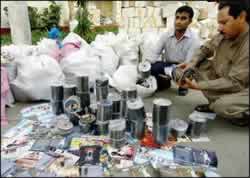
Counterfeit goods are a worldwide problem. With the global economy, the companies being counterfeited are spending a lot of money to try to stop the problem. But have they been successful?
The Daily Times of Pakistan is reporting:
A long campaign to remove pirated goods from shop fronts in Asia is finally having an impact but the crackdown has also changed the nature of the problem and new outlets are flourishing. The results of police raids, a slate of new laws and increased prosecutions can be seen across the region on the back streets of Beijing, Hong Kong, Taipei, Singapore and to a lesser extent Phnom Penh and Hanoi.
To counter the authorities, black market buccaneers are shifting their goods from roadside stalls and shopping malls to the Internet. Su's team now also conducts daily patrols of Internet sites. His point was echoed by industry observers in Mumbai and Seoul, where much like Bangkok and Jakarta, it's business as usual with counterfeit products brazenly on display in the tourist precincts.
In other words, the people behind counterfeiting are very adept at mutating their method of operation and carrying on.
Link to Daily Times article, here.
Of course, we in the West can blame Asia and the third world for this activity, but if weren't for people in the West buying these goods, I doubt it would have grown into an international (worldwide) problem.
AND the companies being counterfeited probably have something to worry about. With the popularity of Internet auctions, the business of counterfeiting goods is likely to grow. Internet auctions are big business and sites, such as eBay refuse to accept blame for the actions of their members. The sale of counterfeit goods is rampant on these sites and Tiffanys and Microsoft are spending a lot of money bringing legal action to try to curb it.
Some of these companies might be contributing to the problem in another way. After all, do you think all the $100.00 tennis shoes we buy are made in North America, or Europe? Not very likely in the global economy. In the quest for cheap labor, long regarded as one of the major expenses of doing business, many of our goods are produced in the same countries that produce the counterfeits. The end result is counterfeits of about the same quality as the item being counterfeited.
I doubt there will be any significant impact on this problem until all parties involved clean up their acts. We can blame and prosecute counterfeiters in far-away lands, but as long as there is a demand and a ready means to distribute these goods, the problem isn't going away.
I recently read a book by Tim Phillips, "Knockoff," which is best analysis of the situation I've seen.
If you are interested, I would highly recommend reading it.

Subscribe to:
Posts (Atom)

