For the past few weeks, the news has focused on all the blood being shed on our southern border. While there is no doubt that this activity is scary and real, these gangs have to be a little more low key when they perform their day-to-day operations.
In order to do this, they need to blend in with the rest of us. When setting up residence to operate their illegal businesses, these criminals need to appear legitimate. The way they do this is with a wide variety of counterfeit documents. These counterfeit documents enable the rest of the illegal activity to occur, which makes them a weapon that could be a lot more dangerous than an assault rifle, IED or RPG.
Although the news media is drawing attention to this problem (yet again) because of the violence on the border, the violence and resulting concerns about border security are nothing new. Neither is the use of counterfeit documents by the criminals crossing over the border and setting up residence in the United States.
A PBS Frontline story from 2001 illustrates the worst case scenario of this problem. It details how terrorists are specifically trained to use counterfeit documents to move across borders. The story states that using counterfeit documents is part of the security training of Al Qaeda operatives. This story also states that the terrorists affiliate themselves with organized criminal syndicates that smuggle humans and provide counterfeit documents to accomplish this.
If an undesirable person has documents that appear to be legitimate, it’s no problem to cross a border or set up residence in a neighborhood just about anywhere.
Because of this, the plea bargain made with Pedro Castorena-Ibarra — who allegedly masterminded the production of high quality counterfeit documents from coast to coast — is an interesting chapter in the long running border security saga. Quite simply, these counterfeit documents enable all kinds of criminal and some say, potential terrorist activity.
At one time, Pedro Castorena-Ibarra was considered one of ICE's most wanted fugitives. A five year investigation uncovered his involvement in the production of millions of counterfeit documents, which were sold to anyone with the money to buy them. The plea bargain stipulates that Castorena will testify against other people in the counterfeit documents trade. When doing the research on this, I noticed that there isn't very much public information on exactly who he is going to testify against.
One of the problems with prosecuting Castorena came about when a lead ICE agent assigned to the case, Cory Voorhis was indicted for using a government intelligence system in an unauthorized manner. While working the Castorena case, Voorhis decided to take a look at former Denver District Attorney Bill Ritter's plea bargains with illegal immigrants.
This information was subsequently used in an attack ad on now Governor Bill Ritter. The specific information used in the ad was about an illegal alien, who received one of these plea bargains after being accused of dealing heroin, and was allowed to plead guilty to trespassing. Voorhis discovered this same illegal immigrant had been previously arrested (but never convicted) on sex charges in California under a different name. How much do you want to bet he had access to counterfeit documents? Ritter called for an investigation and Voorhis ended up getting tried in federal court.
Voorhis was accused of accessing information he wasn't authorized to see in a government database (NCIC), which was later found to be incorrect. The National Crime Information Center is a database maintained by the FBI that records data on crimes. It came out in the trial that he actually used the web based link to this system instead of the TECS (Treasury Enforcement Communication System) that he was accused of accessing. This came out in testimony from a government witness and was corroborated in a FBI forensic analysis of his government computer. Because of this, it was determined that Voorhis never exceeded his authorized level of access.
Additionally, the information he accessed was in the public domain and could probably been found using other tools besides NCIC, some of which are available to anyone.
Voorhis has maintained he was trying to force change in what he considered questionable legal proceedings. There might be a few people out there that agree that it doesn't serve the best interests of justice to allow a heroin dealer to plead guilty to a trespassing charge (?). This person wasn't here legally and we might not even know his true identity.
Voorhis has since lost his job – and despite the outcome of the trial – was not allowed to testify in the Castorena trial. Many believe the attempt to prosecute Voorhis isn't much different than the much more public cases of Ignacio Ramos and Jose Compean.
In a recent article, former Congressman Tom Tancredo wrote about this, he points out that it seems to be more dangerous to be a federal officer charged with protecting our borders than to be one of the criminals crossing it. Please note that in the Ramos/Compean case, as well as, the Voorhis case — the immigrants involved were not here to find honest labor. Voorhis has a website, which has a lot of information on this case.
This includes a press release by Congressman Tancredo calling for ICE to give him his job back. The press release points out that the charges against him were found to be incorrect and he was exonerated. This would lead most of us to believe that this is a reasonable request (?). If it only took two hours to acquit Voorhis, there is a pretty good case that the prosecution's evidence in this case was pretty weak (opinion). It’s ironic that the effort to prosecute Castorena was dealt a death blow when Voorhis wasn’t allowed to testify against him even though he was found innocent.
The Voorhis site has an area, where people can donate to help him pay for the considerable legal costs incurred to defend himself. Of course, there might be another reason for making the deal with Castorena. In the world of plea bargains, deals are sometimes made to go after a bigger fish in the pond. Just who Castorena is going to testify against is open to speculation, but it might be against the Leija-Sanchez organization.
The Leija-Sanchez arm of the counterfeit documents trade operated out of the Chicago area and is reputed to be tied in with the Castorena organization. The step-daughter of the boss of this organization (Manuel Leija-Sanchez) has provided a lot of evidence on the scope and wide reach of this organization to the authorities. Please note, that like the drug cartels in the news recently, this cartel has also been found to be capable of violent activity when someone gets in their way.
Suad Leija is the step-daughter of Manuel Leija, who involved her in the counterfeit documents trade from an early age. Suad was recruited by a mysterious gentleman with obvious ties to the intelligence community, who is now her husband. The intent was to leverage the organization to identify potential terrorists, who had used their services.
The deal fell through and Suad headed north to assist the government in identifying the scope of the operation in North America. Since then there a lot of the key players in the organization have been identified and arrested, but the case is ongoing and ICE will not comment on it in public. Saud’s stated motivation in this effort is to prevent terrorists from using these documents to commit harm against the general public.
The Suad Leija story, which has been covered extensively in the mainstream media, is chronicled on her own site, Paper Weapons. If you want to see how widespread the problem of counterfeit documents is, the site is a good place to start. Suad provided a lot of the information, which tied in the Castorena branch with the Leija-Sanchez organization. The ties are pointed out on her site.
Please note that this is a very brief overview of the Suad story and if you are interested, her site covers it in great detail. The problem with counterfeit documents is a tendency to associate them with illegal immigrants trying to make a better life for themselves or teenagers sneaking into bars. The real issue is that they are sold to anyone and used by criminals who have a more sinister intent than to make a better life for themselves or sneak into a bar.
No matter where you stand on the illegal immigrant issue, the fact that the trade is controlled by criminals often leaves those with dreams of a better life open to a wide-array of abuse. This includes being enslaved and forced to commit crimes by the people, who bring them over the border.
Another common misconception is that these documents are being sold exclusively to our Hispanic neighbors to the south. The truth is they are being sold to anyone with the money to buy them. Our southern border has become the preferred route for anyone who wants to illegally enter the United States. All the resources needed to gain entry (illegally) seem to be readily available there.
On Friday, Sara Carter released an article in the Washington Times about the ties between the drug cartels on the border and Hezbollah joining forces to smuggle drugs and humans into the country. Although not mentioned in the story, these people obviously would need documents to set up shop once they cross the border. In fact, in theory at least, they might use them to cross the border.
Because, I found the story interesting, I made contact with Suad Leija’s husband, who told me that he gave this information to Carter a few years ago and pointed out that Lou Dobbs has also covered aspects of this story. Both Carter and Dobbs have covered the Suad story, and interviewed her, personally.
During this conversation, he told me that the specific information given was about an operation he proposed called “Tag.” Tag predated his involvement in the Leija-Sanchez operation and was designed to set up a means to provide documents to people illegally entering the country and then "chip" them so that specific targets could be tracked.
The original intent of the Leija-Sanchez operation was to get the cartel to cooperate in identifying and monitoring potential terrorists coming into the United States, illegally. Tag might have become part of this operation, if it had ever taken place, according to Suad's husband.
He told me the Hezbollah connection was nothing new and confirmed it comes out of the tri-border area in Paraguay, which hosts a large Islamic population. The residents in this area emigrated from Lebanon primarily in the aftermath of 1948 Arab-Israeli and the 1985 Lebanese civil wars.
He also mentioned that, according to Suad, the Islamic immigrants were paying $5,000 each to be brought across the border when the Leija-Sanchez organization was involved. Complete sets of counterfeit documents were included in the deal.
Parts of this story have surfaced before; MSBC did a story on the tri-border area of Paraguay and the Hezbollah connection. This story covers the terrorist financing aspect and potential threat to the United States. Michelle Malkin also did a post on her blog mentioning that FBI director Robert Mueller mentioned Hezbollah members crossing the border in testimony before Congress in 2006. She also mentions Mueller referring to terrorists assuming Hispanic identities and crossing the border, while in Texas in 2007. In October of last year, the Los Angeles Times did a story about Hezbollah laundering the proceeds of Colombian Drug Money. The story mentions that the cocaine being sold was going to the United States and other destinations.
Carter, who covers the border situation on a regular basis, has also done stories on the Mexican military crossing the border in support of drug smugglers and even firing shots at U.S. law enforcement. In one of the stories about this, which I saw on YouTube, Carter stated she got some of this information for the harder working illegal immigrant types. She mentioned that they hide from these groups in order to avoid being victimized by them.
Maybe these hard working illegal types are trying to tell us something?
Even more ominous, was President Obama's recent revelation that Al Qaeda was planning attacks on U.S. soil from their hideouts in the tribal belt in Pakistan. If this is true, the first thing these terrorists will need when they enter our country are counterfeit documents so they can blend in with the rest of us.
If you take a look at any aspect of the insecure situation on our border, counterfeit documents are more than likely involved in one way or another.
After all, it is a known fact that the last time a terrorist attack was carried out on U.S. soil; it was accomplished by individuals who used fake documents to enter the country to commit their dirty deeds on 9-11-2001.
Showing posts with label suad leija. Show all posts
Showing posts with label suad leija. Show all posts
Saturday, March 28, 2009


Sunday, January 11, 2009
How Foreign Crime Gangs Establish Their Identities
A Washington Post story about a Korean organized crime ring -- operating within driving distance of our nation’s capital -- reveals how these groups are involved in a wide-variety of criminal enterprises designed to create illegal revenue flows. It also shows how foreign criminals establish themselves and operate within our society.
The problem isn’t people trying to make a better life for themselves, the problem is that criminals are able to easily manipulate the security of our borders. There is even a good example in the story of how illegal immigrants are routinely victimized. In order to pay back their debt for being brought in illegally -- they were working in a sweatshop located in a middle-class residential neighborhood — producing counterfeits of designer labels.
On a side note, according to the International AntiCounterfeiting Coalition, counterfeit merchandise is a $600 billion a year problem in itself.
The story, written by Tom Jackman, of the Washington Post details an undercover investigation that starts with manipulating cigarette taxes and progresses into identity theft, mortgage fraud, money laundering, counterfeiting and even murder-for-hire.
The initial scheme with the cigarettes involved buying cigarettes in Virginia — which has a 30 cent per pack tax -- and transporting them to New York where the tax runs $4.25 a pack. Like the designer clothing being knocked-off (counterfeited), the tax stamps were counterfeited. According to an ATF agent quoted in the story, this equates to billions of dollars that have “gone missing” in tax revenue.
The identity theft and resulting crimes, such as mortgage and credit card fraud, were discovered when undercover agents were introduced to an individual selling social-security numbers and passport information obtained from Chinese nationals working in the Marianas Islands. This information was then used to establish credit and obtain identification to make the members of the gang appear to be legitimate members of our society.
The investigation also uncovered a dishonest DMV employee in Illinois, who was providing identification to members of the group. These documents were then traded in for identification from other States. In this case, the State was often Virginia. This sent shivers up my spine as I remembered that Mohammed Atta and crew used Virginia, Florida, New Jersey and California driver’s licenses' — which were obtained after they entered the country with counterfeit documents – to board the planes in what became 9-11.

In the past, I’ve written about and spoken to Suad Leija and her husband, who have been working with the government to expose a cartel that operates throughout the country providing counterfeit identification documents. They have dubbed these documents, “Paper Weapons” because they can be used to commit crimes or even achieve radical political objectives. Suad’s story has been covered in the mainstream media on a fairly regular basis. According to the conversations I've had with Suad and her husband, most of the people illegally entering the country use what are known as "feeder documents" to establish themselves. Their eventual goal is to establish an identity that appears to be as legitimate as yours or mine. Once they accomplish this, the identities can be used to establish credit and even get a mortgage.
In the Washington Post story, no mention of direct fraud involving a financial loss is mentioned. The intent seems to be to use the identities to establish a "seemingly" legal status and then commit other crimes. The story mentions that the group offered to help launder the illegal revenue being made from selling the cigarettes. This was done with personal and cashier’s checks, which suggests the identities were also used to open bank accounts.
These fraudulently established identities were also being used to buy real estate. Although no direct financial fraud is mentioned in the article, it wouldn’t be very hard for people doing this to get some home-equity loans, cash them out and disappear. They could do this if they were leaving the country, or simply move on to another identity and do it all over again. Given that we are in a pretty severe recession, sparked by a mortgage crisis, it again made me wonder how much of it might have been caused by fraud that we aren’t even aware of?
When the sweat shops were raided, crack pipes were found. This was probably to keep the people working in them in a state of addiction, which would assist in keeping them under the control of their keepers. Abuse of illegal immigrants is well-documented and this is probably only one of many examples going on throughout the country at this very moment. It isn’t unknown for illegal immigrants to be forced into smuggling drugs, committing financial crimes or even becoming prostitutes.
This is just one example, but a good one, of how insecure our borders really are. It also shows the more severe consequences of allowing identity theft to run rampant in our society. Now that the election is over, perhaps it’s time for our politicians to stop ignoring the problem. We are a nation of immigrants, and in the end, very few of us are against hard-working people trying to better themselves. The problem is that the way we currently approach the problem enables criminals (and potentially terrorists) to operate and profit at the expense of society.
The problem isn’t people trying to make a better life for themselves, the problem is that criminals are able to easily manipulate the security of our borders. There is even a good example in the story of how illegal immigrants are routinely victimized. In order to pay back their debt for being brought in illegally -- they were working in a sweatshop located in a middle-class residential neighborhood — producing counterfeits of designer labels.
On a side note, according to the International AntiCounterfeiting Coalition, counterfeit merchandise is a $600 billion a year problem in itself.
The story, written by Tom Jackman, of the Washington Post details an undercover investigation that starts with manipulating cigarette taxes and progresses into identity theft, mortgage fraud, money laundering, counterfeiting and even murder-for-hire.
The initial scheme with the cigarettes involved buying cigarettes in Virginia — which has a 30 cent per pack tax -- and transporting them to New York where the tax runs $4.25 a pack. Like the designer clothing being knocked-off (counterfeited), the tax stamps were counterfeited. According to an ATF agent quoted in the story, this equates to billions of dollars that have “gone missing” in tax revenue.
The identity theft and resulting crimes, such as mortgage and credit card fraud, were discovered when undercover agents were introduced to an individual selling social-security numbers and passport information obtained from Chinese nationals working in the Marianas Islands. This information was then used to establish credit and obtain identification to make the members of the gang appear to be legitimate members of our society.
The investigation also uncovered a dishonest DMV employee in Illinois, who was providing identification to members of the group. These documents were then traded in for identification from other States. In this case, the State was often Virginia. This sent shivers up my spine as I remembered that Mohammed Atta and crew used Virginia, Florida, New Jersey and California driver’s licenses' — which were obtained after they entered the country with counterfeit documents – to board the planes in what became 9-11.

In the past, I’ve written about and spoken to Suad Leija and her husband, who have been working with the government to expose a cartel that operates throughout the country providing counterfeit identification documents. They have dubbed these documents, “Paper Weapons” because they can be used to commit crimes or even achieve radical political objectives. Suad’s story has been covered in the mainstream media on a fairly regular basis. According to the conversations I've had with Suad and her husband, most of the people illegally entering the country use what are known as "feeder documents" to establish themselves. Their eventual goal is to establish an identity that appears to be as legitimate as yours or mine. Once they accomplish this, the identities can be used to establish credit and even get a mortgage.
In the Washington Post story, no mention of direct fraud involving a financial loss is mentioned. The intent seems to be to use the identities to establish a "seemingly" legal status and then commit other crimes. The story mentions that the group offered to help launder the illegal revenue being made from selling the cigarettes. This was done with personal and cashier’s checks, which suggests the identities were also used to open bank accounts.
These fraudulently established identities were also being used to buy real estate. Although no direct financial fraud is mentioned in the article, it wouldn’t be very hard for people doing this to get some home-equity loans, cash them out and disappear. They could do this if they were leaving the country, or simply move on to another identity and do it all over again. Given that we are in a pretty severe recession, sparked by a mortgage crisis, it again made me wonder how much of it might have been caused by fraud that we aren’t even aware of?
When the sweat shops were raided, crack pipes were found. This was probably to keep the people working in them in a state of addiction, which would assist in keeping them under the control of their keepers. Abuse of illegal immigrants is well-documented and this is probably only one of many examples going on throughout the country at this very moment. It isn’t unknown for illegal immigrants to be forced into smuggling drugs, committing financial crimes or even becoming prostitutes.
This is just one example, but a good one, of how insecure our borders really are. It also shows the more severe consequences of allowing identity theft to run rampant in our society. Now that the election is over, perhaps it’s time for our politicians to stop ignoring the problem. We are a nation of immigrants, and in the end, very few of us are against hard-working people trying to better themselves. The problem is that the way we currently approach the problem enables criminals (and potentially terrorists) to operate and profit at the expense of society.
Sunday, June 08, 2008
NRF Survey shows Organized Retail Crime activity is growing!
According to FBI estimates, Organized Retail Crime (ORC) is a $30 billion a year business. The National Retail Federation's 2008 Organized Crime Survey shows another alarming trend, which is that the amount of e-fencing to sell stolen merchandise on auction sites like eBay and Craigslist has grown 6 percent.
Also mentioned in the survey are shady e-commerce sites being put up on the Internet to fence the proceeeds of ORC.
In case you've never heard the term, Organized Retail Crime, here is a good description of the activity:
The report acknowledges that these groups are using cloned credit cards to steal merchandise and or get the necessary receipts to refund the merchandise for cash.
In the wake of the TJX data breach, where up to 94 million personal and financial records were hacked, a group was caught in Florida using data from the breach (cloned cards) to buy a reported $8 million worth of gift cards.
Please note that TJX is hardly the only retailer, or financial services institution that has had personal and financial records hacked from their systems in recent history. Attrition.org does a good job of recording the known breaches on their Data Loss Database - Open Source .
Although not addressed in the current report, I suspect the use of fraudulent checks are used to obtain merchandise and receipts, also.
This could be fueled by another organized crime activity. Portable technology has made the counterfeiting of identification documents another growing trend. Over the past two years or so, I've had the pleasure of being able to speak with Suad Leija and her husband about this organized criminal activity on a semi-regular basis. Suad, the step-daughter of one of the top players in this game was recruited in an intelligence operation and eventually exposed a cartel operating throughout North America to the government. Prosecution of members of the cartel is ongoing in this case and Suad is currently working on a book.
These documents, which are available throughout the United States, can be easily used to support both check and refund fraud by using names that get past the data bases designed to protect retailers from these types of fraudulent activity.
Portable technology is also being used to clone payment cards and some of it is easily found on auction, or shady e-commerce sites set up to sell these devices. As of this writing, I was easily able to find credit card encoders for sale on eBay. A site called HackersHomePage.com provides an array of devices that could be used to steal and produce payment (credit/debit) cards. They also provide tools to make counterfeit checks and even, paper for fake prescriptions. They do have a "disclaimer" stating that none of their products are to be used for illegal purposes, but it is pretty obvious someone could.
There is no doubt that there is a lot of technology that is enabling a lot of criminal activity out there!
NRF's Vice President of Loss Prevention, Joe LaRocca, made what I consider a sage comment on this activity:
When I stated that this activity hurts all of us, the reason is that retailers have to make up the $30 billion they are losing to this activity somewhere. This normally equates to higher prices, or in extreme circumstances (especially in tight economic times) cutting payroll. Simply stated, people might be losing their jobs because of this activity.
So far as health risks, the report sums up the obvious risks rather well:
I decided to see if I could find baby formula on eBay. As you can see - there seems to be a lot of it for sale on the site at discounted prices. At the time I checked 26 pages of it were for sale on the site.
Actual cases in the report that support how organized this activity has become are a $60-$100 million dollar case in Florida involving health, beauty, cosmetic products and over-the-counter medicines. Another case mentioned involved a high ranking member Gambino Crime Family and a sophisticated ticket/UPC switching case and extortion. In this case, a planted employee was making up the labels and providing temporary credit cards to move the merchandise through point-of-sale systems.
Recent initiatives to combat Organized Retail Crime include launching LerpNET, which is a crime database available to both retailers and law enforcement. Also highlighted was legislation against ORC throughout the country to "reduce the rewards and increase the risk" to the groups involved in it. Several States have already passed this legislation and more are considering it.
Full 2008 ORC Survey, here.
Also mentioned in the survey are shady e-commerce sites being put up on the Internet to fence the proceeeds of ORC.
In case you've never heard the term, Organized Retail Crime, here is a good description of the activity:
Organized retail crime (ORC) refers to groups, gangs and sometimes individuals who are engaged in illegally obtaining retail merchandise through both theft and fraud in substantial quantities as part of a commercial enterprise. These crime rings generally consist of “boosters” who methodically steal merchandise from retail stores and fence operators who convert the product to cash or drugs, as part of the criminal enterprise. Some of the more sophisticated criminals engage in changing the UPC bar codes on merchandise so they ring up differently at checkout, this is commonly called “ticket switching.” Others use stolen or cloned credit cards to obtain merchandise or produce fictitious receipts to return products back to retail outlets.
The report acknowledges that these groups are using cloned credit cards to steal merchandise and or get the necessary receipts to refund the merchandise for cash.
In the wake of the TJX data breach, where up to 94 million personal and financial records were hacked, a group was caught in Florida using data from the breach (cloned cards) to buy a reported $8 million worth of gift cards.
Please note that TJX is hardly the only retailer, or financial services institution that has had personal and financial records hacked from their systems in recent history. Attrition.org does a good job of recording the known breaches on their Data Loss Database - Open Source .
Although not addressed in the current report, I suspect the use of fraudulent checks are used to obtain merchandise and receipts, also.
This could be fueled by another organized crime activity. Portable technology has made the counterfeiting of identification documents another growing trend. Over the past two years or so, I've had the pleasure of being able to speak with Suad Leija and her husband about this organized criminal activity on a semi-regular basis. Suad, the step-daughter of one of the top players in this game was recruited in an intelligence operation and eventually exposed a cartel operating throughout North America to the government. Prosecution of members of the cartel is ongoing in this case and Suad is currently working on a book.
These documents, which are available throughout the United States, can be easily used to support both check and refund fraud by using names that get past the data bases designed to protect retailers from these types of fraudulent activity.
Portable technology is also being used to clone payment cards and some of it is easily found on auction, or shady e-commerce sites set up to sell these devices. As of this writing, I was easily able to find credit card encoders for sale on eBay. A site called HackersHomePage.com provides an array of devices that could be used to steal and produce payment (credit/debit) cards. They also provide tools to make counterfeit checks and even, paper for fake prescriptions. They do have a "disclaimer" stating that none of their products are to be used for illegal purposes, but it is pretty obvious someone could.
There is no doubt that there is a lot of technology that is enabling a lot of criminal activity out there!
NRF's Vice President of Loss Prevention, Joe LaRocca, made what I consider a sage comment on this activity:
“Law enforcement and retailers alike are fed up with organized retail crime rings and are stepping up efforts to stop them in their tracks,” said NRF Vice President of Loss Prevention Joseph LaRocca. “The brazen and unethical behavior of organized retail crime suspects results in possible health risks for consumers, adds unnecessary fees to consumers’ purchases and funds criminal enterprises, including the mob and terrorist organizations around the world.”
When I stated that this activity hurts all of us, the reason is that retailers have to make up the $30 billion they are losing to this activity somewhere. This normally equates to higher prices, or in extreme circumstances (especially in tight economic times) cutting payroll. Simply stated, people might be losing their jobs because of this activity.
So far as health risks, the report sums up the obvious risks rather well:
For example, criminals may not keep stolen merchandise in a temperature-controlled environment, so merchandise like baby formula and over-the-counter medicines can easily spoil. When criminals sell these items online through third party auction sites consumers are left with no way to guarantee they are getting safe and reliable healthy and beauty products.
I decided to see if I could find baby formula on eBay. As you can see - there seems to be a lot of it for sale on the site at discounted prices. At the time I checked 26 pages of it were for sale on the site.
Actual cases in the report that support how organized this activity has become are a $60-$100 million dollar case in Florida involving health, beauty, cosmetic products and over-the-counter medicines. Another case mentioned involved a high ranking member Gambino Crime Family and a sophisticated ticket/UPC switching case and extortion. In this case, a planted employee was making up the labels and providing temporary credit cards to move the merchandise through point-of-sale systems.
Recent initiatives to combat Organized Retail Crime include launching LerpNET, which is a crime database available to both retailers and law enforcement. Also highlighted was legislation against ORC throughout the country to "reduce the rewards and increase the risk" to the groups involved in it. Several States have already passed this legislation and more are considering it.
Full 2008 ORC Survey, here.
Saturday, March 01, 2008
Will counterfeit documents enable the next terrorist attack?

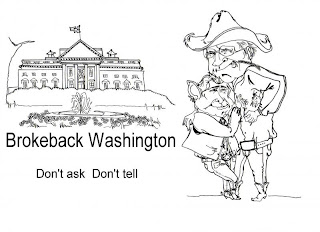
(Cartoon by Suad Leija. Suad is the artist, however the political opinions are those of her husband. More cartoons can be seen on her new site, here.)
With the 2008 election in full swing, most of the candidates seem content to dodge the issue of border security.
Tied into another controversial issue, which is illegal immigration, discussing it is probably considered a no-win situation. It's probably likely that no matter what stance they take, it will cost them votes.
Perhaps, the reason it's so controversial is that we are a country of immigrants and most of our ancestors came to this country to seek a better life.
In most cases, what we consider poverty in this country, is a far better standard of living than where they are coming from.
Businesses take advantage of this "cheap labor" (payroll is always a key expense in any business) and because of their illegal status, illegal immigrants don't tend to complain about low wages and no benefits.
Since illegal immigrants are human beings and get sick etc., the taxpayer normally ends up paying for all the social costs associated with their employment. This is a pretty good deal for the employers using this "in-sourced" form of labor.
If you really wanted to solve the illegal immigration problem, it would probably be pretty simple. All you'd have to do is go after the businesses hiring them.
If the process were more transparent, they would probably have to take care of the people, who work for them a little better, also.
The biggest problem with illegal immigration is that all sorts of criminals, and some say, people with political agendas (terrorists) can easily camouflage themselves in the worldwide exodus of people from poor and war-torn countries. The illegal immigration process is controlled by organized criminals, who only care if the person they are bringing in has the money to pay them.
If you think illegal immigration consists of only people from Mexico, this is no longer the case. More and more, they are coming from a lot of different places and illegal immigration is hardly a problem just in the United States.
Whether they are here to find work, commit crimes or plan the next 9/11 -- the first thing someone entering a country illegally needs to do is make themselves appear to be legal. The way they do this is by using counterfeit documents to establish a (seemingly)legitimate identity.
In the hands of terrorists, counterfeit documents are an enabler to murder innocent people because they were at the wrong place at the wrong time. Given that Atta and the 9/11 crew used counterfeit documents to establish themselves in the U.S., it amazes me that as I write this, the business in them is booming.
The story of Suad Leija has been covered extensively in the mainstream media. Suad is the stepdaughter of one of the prominent leaders of an organized counterfeit document cartel operating throughout North America. Suad met and eventually married an American businessman, with alleged ties to the intelligence community.
The businessman then tried to strike a deal with Suad's family to use their database to identify potential terrorists -- who had been provided counterfeit documents -- in exchange for the release of a prominent member of the family, who had been arrested in Chicago.
The operation took a turn when the cartel refused to provide this information and Suad ended up assisting the authorities in identifying the main players in the cartel, as well as, the scope of their operation throughout the United States.
There have been 38 arrests and the court case is still underway.
Please note that ties to an intelligence operation have not been confirmed by a government source. Nonetheless, if you've followed the story, this is probably a fairly good deduction.
I wouldn't expect the government to confirm, or deny this story. Revealing details about intelligence operations compromises their efforts. This is probably why the intelligence community is and always will be the unsung heroes in the "War against Terror."
Charlie Wilson's War, the Tom Hanks movie, although probably a little "Hollywood" in nature is probably a good example of how a few good intelligence types can make a big difference. True stories, such as this one, normally are only officially confirmed years after the fact.
Just the other day, Newsweek released an update to the Suad story, with more details about the operation.
Joe Contreras (Newsweek) writes:
When federal prosecutors indicted 22 members of the Leija Sánchez counterfeit ID organization in Chicago last April, they described the arrests as "a significant setback" to one of the largest criminal enterprises of its kind ever to operate in the United States. But they made no mention of Suad Leija and the remarkable tale of how her marriage to an undercover American agent and her choice of country over family led to the downfall of the fake-document ring. Suad began cooperating with the U.S. Immigration and Customs Enforcement (ICE) agency in January 2006 and gave investigators the names and addresses of her stepfather's siblings and top lieutenants, who had been photographed while under surveillance by the Feds. Her decision to aid ICE officials, she says, grew out of concern that the fake green cards, driver's licenses and Social Security cards churned out by her family's document mills could be used by terrorists to stage another devastating attack on American soil. "Just as I wouldn't help a drug peddler sell narcotics to kids, there's no way I'd do it for terrorists who want to use fake identification produced by my family," Suad told NEWSWEEK in a phone interview from an undisclosed location. "If another September 11 were to happen and I'd done nothing to stop my family, then I would be just as guilty."
The Newsweek story also points out that these counterfeit documents are hardly being only sold to illegal immigrants, who want them to get a job:
Senior ICE officials also see the booming fraudulent documents business as a bona fide threat to national security. The industry generates annual revenues in the hundreds of millions of dollars, and its primary markets are the estimated 12 to 20 million foreigners living illegally in the United States and teenagers wanting to sneak into a bar. But some of the 9/11 hijackers obtained legitimate ID documents under false pretenses, and a terrorist suspect linked to Al Qaeda named Nabil al-Marabh allegedly produced fake ID documents at his uncle's print shop in Toronto prior to the attacks on New York and Washington. Though the clientele of the Leija Sánchez ring was overwhelmingly Latin American in origin, federal prosecutors say that documents were sold to Algerians, other Arabs and Pakistanis. "That's where the vulnerability is," says James Spero, a deputy assistant director in the ICE office of investigations. "You can buy a set of documents that will make it appear you are legally in the U.S. for as little as $100, and nobody in these organizations does background checks on their customers."
The article ends with the conclusion by Mr. Contreras based on interviews with ICE officials:
ICE agents have arrested 38 members of the Leija Sánchez organization to date, and from his Mexican prison cell Manuel is currently fighting extradition to the U.S. His old business associate Pedro Castorena was flown from Mexico to Denver last month to stand trial later this year on fraud, conspiracy and money-laundering charges, and Suad is expected to testify for the prosecution. But as the decline and fall of Pablo Escobar's Colombian Medellin cartel proved in the 1990s, the decapitation of a criminal organization's leadership will not disrupt the industry as long as there is strong demand for its product. And as of this week, ICE officials reported no decline in the availability of bogus documents on the streets of any major U.S. city.
Not mentioned in the Newsweek article is that the lead ICE agent on this case, Cory Voorhis, was arrested and is being charged with "exceeding his unauthorized access to a federal criminal database."
Voorhis and his legal team contend that he was only exposing plea bargain practices that allowed illegal immigrants charged with serious crimes to not be deported by the Denver DA's office.
Please note the crimes in question are a little more serious than just crossing the border without the right documentation.
Some are comparing this case to another case, which has received a lot more attention in the media. As stated on his legal defense site:
There are troubling parallels with the 2005 prosecution in El Paso, Texas of two Border Patrol agents, Ignacio Ramos and Jose Compean. Ramos and Compean were convicted of shooting a fleeing drug smuggler primarily on the testimony of the drug smuggler himself, who was granted immunity by the US Attorney. It has since been revealed that the US Attorney knew of the smuggler’s long criminal history yet succeeded in withholding this evidence from the jury.
A news release from his legal defense site stated that this might jeopardize the current prosecution of the Castorena-Leija counterfeit documents cartel.
From the news release:
The federal prosecution of Cory Voorhis, the Immigration and Customs Enforcement (ICE) agent who is charged in a high-profile case with three federal misdemeanors for allegedly illegally accessing a restricted database, could lead to the dismissal of charges or to drastically reduced charges for the alleged head of the notorious Mexico-based criminal Castorena Family Organization (CFO), some say.The Suad Leija story isn't over yet and only time will tell what the final outcome will be. The full story of Operation Paper Tiger can be purchased (which includes actual wiretap transcripts) on the Paper Weapons site.
The most recent Newsweek story written by Joe Contreras can be seen in full (recommended), here.
In case you are interested in the Cory Voorhis case, a lot of information can be seen on his legal defense site, here.
Suad has also put up a new site, to further her personal interests once this story comes to a conclusion. Please note that Suad is only 23 years old and hopefully has other things in her life to pursue once this drama is over.
Below is another example of her work, which can be seen on her site (linked above). Please note that she is only the artist and the expressed views of those of her husband.
Sunday, February 17, 2008
Is identity theft on the rise, or declining?

(Sign above DMV trash can in LA courtesy of willnorris at Flickr)
Identity theft is making the news again with the FTC's release of their statistics for 2007.
From the press release:
The FTC today released the list of top consumer fraud complaints received by the agency in 2007. The list, contained in the publication “Consumer Fraud and Identity Theft Complaint Data January-December 2007,” showed that for the seventh year in a row, identity theft is the number one consumer complaint category. Of 813,899 total complaints received in 2007, 258,427, or 32 percent, were related to identity theft.Broken down a little further, the report stated that credit card fraud was the most prevalent form of identity theft (23 percent). Utilities and employment fraud followed at 18 percent and 14 percent respectively. Bank fraud was at the bottom of the big 4 at 13 percent.
I found it interesting that utilities fraud and employment fraud ranked in the top four identity theft complaints. Maybe starting to hold employers accountable to match a social security number to an actual name is starting to take a toll on the statistics? In the past -- anyone has been able to use any SSN for employment purposes -- even if the number was made up out of thin air.
Enforcement of no match social security numbers is currently being held up in federal court, but a few States are already taking matters into their own hands.
It’s going to be interesting to see how much of an effect this has on identity theft if full enforcement is implemented. There are a lot of people, who believe the problem of illegal immigration is primarily caused by the people hiring them to hold down their labor costs.
In the current FTC report, Arizona came out #1 in identity theft (again) and is one of the States taking matters into their own hands.
So far as utilities fraud, I remembered a series of conversations I had with Suad Leija and her husband. In case you've never heard of Suad -- she is the stepdaughter of one of the main players of a counterfeit documents cartel -- who has been assisting the government in identifying and going after members of the cartel. Saud told me that in the world of counterfeit documents, utility bills are considered feeder documents. Feeder documents are used by people to establish more legitimate identities, which is normally the goal of people, who need to establish an identity other than their own.
I tried to find something in the current report about this, but I couldn't find anything that suggested why one category was higher than another.
In all fairness -- with all the financial crimes stemming from identity theft and all the crime that hides itself in illegal immigration -- it's extremely difficult to track any of the categories to a particular reason. With all the variables, identity theft isn't a very transparent subject.
There are a lot of people writing about the report. Martin Bosworth (Consumer Affairs) added some telling commentary that supports the contention I made in the above paragraph that the reasons behind identity theft aren't always very transparent.
The agency offered a caveat in its report that the data was not from a survey, but from unverified self-reported complaints.Martin also commented on something, I also noted that was inconsistent for those of us, who follow the identity theft phenomenon:
The FTC's surveys and complaint reports have acted as a counterpoint to claims from the financial industry that identity theft and related fraud are on the decline. A new survey released by Javelin Research & Strategy, and funded in part by Visa, claimed that identity theft dropped by 12 percent from previous years, even as costs of individual cases rose to $691 per affected victim.The dollar amount seems inconsistent between the two reports, either. Javelin says it is $691 per incident and the FTC states the cost is $349.
Whatever report you want to believe, the fact remains that identity theft continues to be a problem and I strongly suspect we have a long way to go before it no longer is an issue.
FTC press release, here.
Full report, here.
The FTC also has some great free resources for people, who want to learn more, or recover from identity theft:
FTC's Identity Theft
OnGuard Online
Fraud: Recognize It. Report It. Stop It.
Sunday, January 27, 2008
Cloned business and law enforcement vehicles used as a smuggling tool

(Picture of "toy" Border Patrol vehicle courtesy of SpongeBob22 at Flickr)
It appears that the criminals exploiting our notoriously "not very secure" Southern border have a new tool in their arsenal.
Vehicles bearing fake logos of the Border Patrol, Fedex, DirecTV and everyone's favorite source of outsourced goods, "Walmart" are being used to smuggle illicit merchandise and human beings across the border.
Brian Ross (ABC News) reports:
A fake U.S. Border Patrol van was found to be carrying 31 illegal aliens in Casa Grande, Ariz.The ABC report didn't have much source information about this case so I decided to do a little digging.
An alert agent recognized that the "H" in the van's serial number is a letter used only on U.S. Border Patrol Jeep Wranglers. It should have been a "P."
"Neither emergency service vehicles nor any government vehicles are exempt from terrorist or other criminal use," the report warns its law enforcement readers.
I started at the Border Patrol site -- and although a found press releases with an impressive (overwhelming) amount of illegal activity they are catching -- I couldn't find anything on cloned vehicles.
Sadly enough, we are seeing border patrol agents pay the ultimate price trying to defend our borders, and as most people know two of them are in prison for shooting a known drug smuggler.
Digging a little deeper, I found a story on WFAA TV (Dallas) by Rebecca Lopez with more detail on this. Both reports reference a report (I couldn't find) from the Texas Department of Public Safety.
Of note, there is concern that terrorists could use this method to obtain entry (or worse) into the United States. The report referenced has allegedly been passed out to law enforcement agencies nationwide.
The WFAA story also references a cloned vehicles fact sheet put out by National Insurance Crime Bureau. Apparently cloning vehicles is a known method used by auto theft rings to fence their stolen merchandise.
Recently, there was quite a bit of uproar over Mexican truck drivers being given carte blanche access to U.S. roadways. Sadly enough, with cloned vehicles and the easy availability of counterfeit documents (identification) -- it might be difficult to tell which the difference between legitimate and illegitimate truck drivers.
I've covered counterfeit documents, as well as, the ease in which they are obtained frequently on this blog. A lot of these posts reference Suad Leija, who has been covered frequently in the press regarding the assistance she has given the government in exploring the problem we face with counterfeit documents (paper weapons).
Suad assisted the government in their prosecution of the largest counterfeit document cartel operating in this country. The case is still pending in court.
ABC News story by Brian Ross, here. Of note, boingboing, which a much more popular blog than this one linked to the Brian Ross story on this, also.
My daughter and her partner sent me the boingboing link, which inspired me write this rant.
WFAA did a video presentation of this story, which is on YouTube:
Saturday, December 29, 2007
Will you be the next person arrested after a criminal borrows your identity?
With new Social Security verification laws on the horizon, up to 20 million illegal aliens are probably will have to come up with a legitimate identity in order to remain employed.
Up until now, anyone has been able to make up a number and pass it off with false identification. DHS (Department of Homeland Security) was supposed to begin going after businesses that employed people with "no match social security numbers" in September, but a law suit has temporarily blocked them from implementing the process.
Interestingly enough, one of the arguments is that Social Security records aren't accurate enough to ensure mistakes won't be made. This is probably a "no brainer" defense with all the fraud that exists with social security numbers.
Given that a lot of illegal immigrants look Hispanic, a lot of them will probably seek out legitimate identities of U.S. citizens with Hispanic surnames.
Hidden within the camoflauge that illegal immigration creates is a lot of criminal activity. When another person's identity is used to commit a crime, there is a potential that they are going to face more than financial problems after becoming a victim.
Here is a scary story -- possibly a premonition of things to come -- of a senior U.S. citizen, who obviously had his identity stolen by a criminal. The story also reveal why relying on social security numbers to identify people might lead to mistakes being made.
Eloisa Ruano Gonzalez of the Yakima Herald-Republic wrote:
Of course, Hispanic identities aren't the only ones used by criminals. In fact, there are more and more reports of innocent people being charged with crimes after a criminal assumes their identity, commits crimes and disappears into the mist after making bail or being released because the jail is full.
The issue of people wrongfully getting arrested because they are suspected of illegal immigration is probably only one small part of the overall problem.
Stealing personal and financial information and putting it on counterfeit documents has become an organized activity. I was recently in the Mission District of the sanctuary city of San Francisco and full sets were being offered, along with a variety of drugs for as little as $200.00. A full set is normally a drivers license, Social Security and green card.
Please note, I've personally seen this activity in other cities besides San Francisco. It's pretty much out in the open and little to nothing seems to be done about it.
Suad Leija -- the stepdaughter of the "Jefe" of an organized counterfeiting cartel --recently provided evidence to the government that counterfeiting documents is an extremely organized enterprise, which operates across the entire United States.
One of the more ironic things Suad was able to show the government was proof of her Uncle serving a prison sentence in Texas under an assumed name.
There is also considerable evidence that hackers have already stolen millions (billions?) of people's information and sell it pretty openly in anonymous Internet venues.
Put these two organized activities together and they will likely easily defeat any legislation requiring Social Security numbers to match.
I started this post with an observation about Hispanic identities being targeted, but the truth of the matter is that the 20 million or so illegal immigrants seeking legitimate identities is only one small part of a bigger problem. Even if the problem were simply related to illegal immigration -- people of Hispanic origin aren't the only ones crossing our borders illegally.
Figuring out exactly what country an illegal immigrant came from is difficult. Most of them aren't likely to reveal very many personal details. I was able to find a rather outdated study from DHS.gov that reveal some old statistics on the matter:
Even with NATO having boots on the ground in Afghanistan, opium production is at an all time high. Most of this is allegedly being bought by the Taliban, who now seem to operate pretty freely from the tribal areas in Pakistan.
Criminals trafficking narcotics aren't the only ones using false identities. In fact, more and more, the use of false (other people's) identities is being used to facilitate all kinds of criminal activity.
Identity theft may very become the great facilitator (enabler) of more and more crime. If criminals are able to get away with using someone else's identity, we are going to see a lot of more people victimized.
As long as we continue to consider identity theft a "low priority issue," it will continue to grow and multiply like a cancer.
The bottom line is that until we start addressing the factors that make enable stealing and using information too easy, we aren't going to fix the problem.
Doing this is going to take the cooperation of everyone from the average citizen to executive types in major corporations and our leaders in government.
Yakima Herald-Republic story, here.
Up until now, anyone has been able to make up a number and pass it off with false identification. DHS (Department of Homeland Security) was supposed to begin going after businesses that employed people with "no match social security numbers" in September, but a law suit has temporarily blocked them from implementing the process.
Interestingly enough, one of the arguments is that Social Security records aren't accurate enough to ensure mistakes won't be made. This is probably a "no brainer" defense with all the fraud that exists with social security numbers.
Given that a lot of illegal immigrants look Hispanic, a lot of them will probably seek out legitimate identities of U.S. citizens with Hispanic surnames.
Hidden within the camoflauge that illegal immigration creates is a lot of criminal activity. When another person's identity is used to commit a crime, there is a potential that they are going to face more than financial problems after becoming a victim.
Here is a scary story -- possibly a premonition of things to come -- of a senior U.S. citizen, who obviously had his identity stolen by a criminal. The story also reveal why relying on social security numbers to identify people might lead to mistakes being made.
Eloisa Ruano Gonzalez of the Yakima Herald-Republic wrote:
It seemed like a bad dream when 72-year-old retiree Rafael "Ralph" Franco woke up to a loud pounding on his front door, opened it, and found four federal agents waiting to seize him.
The longtime Yakima resident was arrested about 6 a.m. on Nov. 28 at his South Second Street apartment. Immigration officers believed that Franco, a U.S. citizen, was an undocumented immigrant convicted of several alcohol- and weapon-related crimes.
Of course, Hispanic identities aren't the only ones used by criminals. In fact, there are more and more reports of innocent people being charged with crimes after a criminal assumes their identity, commits crimes and disappears into the mist after making bail or being released because the jail is full.
The issue of people wrongfully getting arrested because they are suspected of illegal immigration is probably only one small part of the overall problem.
Stealing personal and financial information and putting it on counterfeit documents has become an organized activity. I was recently in the Mission District of the sanctuary city of San Francisco and full sets were being offered, along with a variety of drugs for as little as $200.00. A full set is normally a drivers license, Social Security and green card.
Please note, I've personally seen this activity in other cities besides San Francisco. It's pretty much out in the open and little to nothing seems to be done about it.
Suad Leija -- the stepdaughter of the "Jefe" of an organized counterfeiting cartel --recently provided evidence to the government that counterfeiting documents is an extremely organized enterprise, which operates across the entire United States.
One of the more ironic things Suad was able to show the government was proof of her Uncle serving a prison sentence in Texas under an assumed name.
There is also considerable evidence that hackers have already stolen millions (billions?) of people's information and sell it pretty openly in anonymous Internet venues.
Put these two organized activities together and they will likely easily defeat any legislation requiring Social Security numbers to match.
I started this post with an observation about Hispanic identities being targeted, but the truth of the matter is that the 20 million or so illegal immigrants seeking legitimate identities is only one small part of a bigger problem. Even if the problem were simply related to illegal immigration -- people of Hispanic origin aren't the only ones crossing our borders illegally.
Figuring out exactly what country an illegal immigrant came from is difficult. Most of them aren't likely to reveal very many personal details. I was able to find a rather outdated study from DHS.gov that reveal some old statistics on the matter:
In October 1996, 15 countries were each the source of 40,000 or more undocumented immigrants (See Table 1). The top five countries are geographically close to the United States--Mexico, El Salvador, Guatemala, Canada, and Haiti. Of the top 15 countries, only the Philippines, Poland, and Pakistan are outside the Western Hemisphere. The estimated undocumented population from Poland has declined by more than 25 percent, from 95,000 to 70,000, since 1988, possibly reflecting changed conditions in that country over the last several years.Sara Carter of the Washington Times did an article in August about a report she saw from the DEA (Drug Enforcement Administration) that people of Middle Eastern/South Asian descent were posing as Hispanics. The article alleged that a partnership was being formed by something they have in common, or trafficking narcotics.
Even with NATO having boots on the ground in Afghanistan, opium production is at an all time high. Most of this is allegedly being bought by the Taliban, who now seem to operate pretty freely from the tribal areas in Pakistan.
Criminals trafficking narcotics aren't the only ones using false identities. In fact, more and more, the use of false (other people's) identities is being used to facilitate all kinds of criminal activity.
Identity theft may very become the great facilitator (enabler) of more and more crime. If criminals are able to get away with using someone else's identity, we are going to see a lot of more people victimized.
As long as we continue to consider identity theft a "low priority issue," it will continue to grow and multiply like a cancer.
The bottom line is that until we start addressing the factors that make enable stealing and using information too easy, we aren't going to fix the problem.
Doing this is going to take the cooperation of everyone from the average citizen to executive types in major corporations and our leaders in government.
Yakima Herald-Republic story, here.
Wednesday, November 07, 2007
A few hard questions for Governor Spitzer to answer
I've written a few posts about Suad Leija, the young woman who has provided a lot of the evidence leading to the recent arrests of the main players (jefes) involved in the largest counterfeit documents cartel operating in the United States and Mexico.
These documents are sold to whoever has the money to buy them. Besides illegal immigrants, it’s safe to assume a portion of them have been sold to criminals and possibly even terrorists.
The cartel I'm referring to is known as the Castorena Leija-Sanchez organization.
According to ICE (Immigration and Customs Enforcement), this organization was making about $300 million a year selling counterfeit documents. If one were to consider that each one of these documents has a street price of about $100, this would mean they are responsible for about 60 million counterfeit documents being put in circulation.
If each person bought two of these counterfeit documents that would equate to about 30 million people, who have used these documents.
On the site PaperWeapons.net -- Suad’s husband, who uses the pseudonym of Lazarus -- has put up a video with a few questions directed at Governor Eliot Spitzer (NY) regarding his intent to issue driver's licenses to illegal immigrants.
You might want to know what the Castorena Leija-Sanchez and Eliot Spitzer have in common? The answer is that counterfeit documents issued by the Castro Leija-Sanchez organization will probably be used to establish the identifying information for the driver's licenses in New York State.
When this happens, we will have a lot of legitimately issued driver's licenses with not very legitimate information on them!
Here are the questions, which have been made into a video and released on YouTube:
1. Is Governor Spitzer replacing the members of the Castorena Leija-Sanchez organization by providing identification documents to people, who have broken the law?
2. Is a public official, who is sworn to uphold the laws of the United States and the State of New York aiding in the commission of criminal activity by providing documents that support illegal immigration?
3. If it is Governor Spitzer’s sworn duty to uphold the law should the people he serves insist his driver's license is taken away and he be impeached?
4. Is it fair for Governor Spitzer to break the law to get votes?
5. Since this card identifies the holder as someone, who has broken the law is it a get out of jail free card?
When law enforcement personnel discover that a illegal immigrant has broken the law, they are supposed to report them to the federal authorities. This is so they can be deported. Unless I'm missing something in all the hype that has resulted from this issue, this license will clearly identity the holder as a illegal alien.
If I were an illegal immigrant, I might be worried that if the political climate shifted, the licenses might be used to track down and deport people. Most of them are probably going to continue to use counterfeit documents that will not identify them as people, who are breaking the law.
Some of these concepts might be confusing to the average person, who has had the pleasure of living in a sanctuary city.
In a sanctuary city, the politicians tell the police not to ask any questions about a suspect’s immigration status. In other words, they are directed to bury their heads in the sand on this law. Sadly enough, this is also the case when illegal immigrants are arrested for serious crimes.
Here is a story from CBS5.com about an attorney (David Klehm), who is suing the San Francisco PD for not reporting illegal aliens. The same attorney has filed similar law suits in Los Angeles and San Jose.
The problem with issuing any identification document for a person -- who has entered the country illegally -- is how we know the document they are using to get a legitimate ID is in fact legitimate, itself.
This explains how most of the 9/11 terrorists managed to operate pretty freely before committing their heinous crime.
Most of the 9/11 hijackers used counterfeit documents, sometimes known as feeder documents to get legitimate driver’s licenses. Feeder documents are documents that are used to obtain legitimate documents. The goal of most people using counterfeit documents is to eventually get legitimate documents.
I doubt seriously that issuing driver's licenses to illegal immigrants is going to stop their primary goal, which is to establish themselves as legitimate citizens.
In 2004, Congressman Ed Royce made the following statement about provisions being stripped from the 9/11 bill regarding border security:
The 19 9/11 hijackers had 63 validly issued U.S. driver's licenses between them. What were they using that many for? They were moving around the country undetected and plotting and planning. In fact, as many as eight of them were even registered to vote. They then used those bogus licenses to board U.S. planes.
Congressman Royce further put things into perspective by saying:
Driver's licenses were the 9/11 terrorists' license to kill and to kill massively. We know that.
"They had 63 of these driver's licenses between them, for the 19 of them. And these identification documents gave these hijackers unfettered access to nearly everything they needed to plan and carry out their attacks on Washington, D.C. and on New York City. And the identification cards also allowed them to remain in the country with the appearance of legitimacy long after their visas had expired and their presence in the United States became illegal.
These provisions, designed to protect our borders were taken out of the bill despite the fact that 87 percent of the public supported having them included.
On a personal level, I’m more worried about National Security than anything else, but there are a lot of people saying these driver’s licenses enable voter fraud, also.
The Wall Street Journal published an editorial by John Fund on November 2nd, which explains this better than I can.
The editorial states one reason some politicians might be in favor of handing out these driver's licenses:
The background here is the National Voter Registration Act, commonly known as "Motor Voter," that President Bill Clinton signed into law in 1993. It required all states to offer voter registration to anyone getting a driver's license. One simply fills out a form and checks a box stating he is a citizen; he is then registered and in most states does not have to show any ID to vote.
Come to think of it, there has been a lot of controversy this week about how Bill’s better half answered some questions regarding this issue.
Perhaps, she can help Eliot answer the questions posed to him? After all, they both represent the great State of New York. Her answers have seemed to get a lot of attention already.
The problem of illegal immigration isn't going to be easily fixed. Granting driver's licenses to illegal immigrants adds fuel to an already out of control fire we are facing in this country. This is especially true when we lack the means to verify exactly, who they are in the first place.
The bottom line is that it enables more serious crimes than illegal immigration and our politicians have a sworn duty to protect us from being harmed by it!
There is an e-book written about Operation Paper Tiger, which documents the story of how the Castorena Leija-Sanchez family was investigated by the authorities. The book contains transcripts (taken from wire taps) of the organization in operation.
If you were on the fence as to whether or not our borders are secure, or just want to know how insecure they really are, the book is a must read.
Currently, the book is only available on the Paper Weapons site, here.
Friday, October 26, 2007
Counterfeit Document Gang Jefe(s) "Chiefs" charged with murder, racketeering and conspiracy

Recent picture of Suad Leija taken at an undisclosed location. Although not mentioned in many of the articles about this arrest, Suad is responsible for providing a lot of the information used in this latest indictment. Her story has been covered in the mainstream media by Lou Dobbs, Paula Zahn, Fox, CNN, La Opinion and Univision.
Operation Paper Tiger, the federal investigation into the organized trade in counterfeit documents has resulted in the arrest of three of the Jefes (Chiefs) of the largest organized gang (the Castorena Leija-Sanchez organization) involved in the trade.
Also arrested was one of the hit-men associated with the gang. The latest charges include murder, racketeering and conspiracy. These charges have been added to previous charges (already) filed regarding the organized counterfeiting of identification documents by the organization.
All 23 defendants arrested thus far are from the Castorena Leija-Sanchez counterfeit document organization. Three of the people arrested include Manuel Leija-Sanchez, Pedro Leija-Sanchez and Julio Leija Sanchez -- three brothers who allegedly are in control of the organization throughout the United States and Mexico.
There is a lot of evidence that this organized gang, which the government describes as International in nature, is responsible for providing counterfeit documents to ANYONE with the money to buy them. This would include not only millions of illegal immigrants, but a LOT of criminals and potentially, even terrorists.
On Wednesday, the Department of Justice announced the indictment of the three leaders of this cartel in a press release:
Federal racketeering conspiracy and murder-related charges were added against three brothers – now all in custody and charged together for the first time – and their alleged “hitman” in Mexico to a pending indictment resulting from the dismantling in April of an international counterfeit identification document business that allegedly generated profits between $2.5 million and $3 million a year in Chicago’s Little Village Community. Manuel Leija-Sanchez, 40, who was arrested in Mexico last Friday, and his brother, Pedro Leija-Sanchez, 35, who was arrested in Mexico in August, are facing extradition to the United States. Together with a third brother, Julio Leija-Sanchez, 31, who was arrested in Chicago in April, the three are among a total of 23 defendants facing charges in Chicago as part of Operation Paper Tiger, an investigation led by U.S. Immigration and Customs Enforcement (ICE). Also facing extradition from Mexico is the alleged hit-man, Gerardo Salazar-Rodriguez, 34, who was charged previously and was arrested in Augustin Mexico, federal law enforcement officials announced today.
Not mentioned in the press release, or most of the news articles, I saw appear on this story is the fact that most of this was made possible by a young woman by the name of Suad Leija.
Suad Leija is the step-daughter of Manuel Leija-Sanchez -- who has been providing information to the authorities about the gang's inner-operations and identifying members -- previously unknown to law enforcement.
The Chicago Tribune (Antonio Olivo) was the one mainstream source, I'm aware of, who refers to Suad's involvement in the case. I've also been told by Suad's husband that she has completed two recent interviews with Univision and was featured on the Minutemen Project the other day.
Suad started providing information on the organization after discovering her husband was trying to gather intelligence on potential terrorists, who the organization had provided with counterfeit documents. This led to her having to make a hard choice, which was whether to side with her family, or her husband. Suad chose her husband after being educated on the dangers this trade poses to the United States.
I would have to speculate that a lot of evidence used to arrest Manuel, Pedro and Julio was obtained as a result of information Suad has provided to the authorities.
If one refers to the Paper Weapons site, it also shows that the earnings of this cartel are a lot higher than $2.5 - 3.0 million allegedly earned by the Chicago cell of the organization. The figure quoted on the site is actually closer to $300 million. This figure includes the earnings of the numerous cells of the organization, which are located in cities throughout the country and operated as franchises.
Suad's story has been well-documented by mainstream media types, such as Lou Dobbs, Paula Zahn, Fox, CNN, Univision and La Raza. She has also produced a series of YouTube videos, which reveal why she decided to educate the public on how counterfeit documents are actually "paper weapons."
Interestingly enough, her story has been covered extensively in the Spanish media. One reason for this might be that pending legislation will force employers to respond to no-match social security numbers. Because of this, legal Hispanic identities will likely be targeted for identity theft purposes. In the past, making up a name was sufficient to pass muster for employment purposes.
Suad and her husband have written a novel describing the full detail of their involvement in Operation Paper Tiger, which is currently only available from the Paper Weapons site. This book reveals what might be at stake if we continue to allow criminals to control our borders.
Included in the book are transcripts from actual wire-taps, many of which, tie into this most recent indictment.
They are currently writing another novel, which will detail Suad's personal story.
Here is my original post, I did on Operation Paper Tiger, which introduces the book:
Operation Paper Tiger - the true story, which reveals why our borders aren't very secure!
I highly recommend it to anyone, who is concerned about our Nation's security.
DOJ press release on the arrest of the Leija-Sanchez brothers, here.
Indictment from Eastern Court of Illinois, here.
ICE (Immigration and Customs Enforcement) has a slightly different version of this latest development in the story, here.

(Passport photo -- which are frequently used to make counterfeit documents -- of Pedro Castorena-Ibarra)

(Pedro Leija-Sanchez doing time for another crime under an assumed name)

(Julio Leija-Sanchez)
Wednesday, October 10, 2007
Operation Paper Tiger - the true story, which reveals why our borders aren't very secure!

(Mohammed Atta of 9/11 infamy used counterfeit documents to get this legitimate Florida Driver's License. Counterfeit documents used to get legitimate ones are known as "feeder documents.")
Border security has become a major concern for all us ever since 9/11 revealed how vulnerable we really are.
Counterfeit documents paved the way for the terrorists in 9/11 to get into our country and cause the terrible event, which has forever changed the way we live.
In 2006, Suad Leija, who was raised as the stepdaughter of the founder of the largest counterfeit documents cartel in the United States began assisting the federal authorities in discovering how widespread this problem has become.
Suad has been able to identity members of the organization, who were previously unknown to law enforcement and provide historical data on the organization dating back to the late eighties.
The story begins with Suad meeting and marrying an American businessman, who runs businesses in Mexico and Central America.
Although, this part of the story still isn't completely clear, her husband turned out to be a little more than a person operating businesses in foreign lands.
Saud discovered her husband was trying to gather intelligence on suspected terrorists the cartel had supplied with counterfeit documents. The information he was interested in was contained in an extensive database of the cartel's business dealings.
Upon this discovery, Suad had to make a hard choice. The choice was between her family, or her husband and the United States.
After her husband described the terrorist threat -- comparing it to the violent drug gangs operating in Mexico, she chose to support him -- and ultimately the United States of America.
There is an excellent description of how this occurred in a La Raza article, which has been translated into English on the Paper Weapons site, here.
I found it interesting that La Raza was covering this story, given their political agenda. La Raza isn't the only Spanish media outlet covering the story, Saud has been featured on La Opinion and Univision, also. This would indicate to me that a lot of Hispanic Americans are worried about the criminal and possible terrorist implications that counterfeit documents pose to all of us.
Eventually, Suad and her husband fled to the United States and this is where Operation Paper Tiger begins.
Operation Paper Tiger documents the federal investigation into the widespread use of counterfeit documents in the United States, which are available to anyone, who can come up with the money to pay for them. It also reveals how these documents, which are produced in large numbers, aren't very expensive, either.
The book introduces a term (Paper Weapons), which might unfamiliar to the general public:
Counterfeit documents are Paper Weapons. The first weapon a terrorist needs to "FIT IN" in the United States is a document. Once he has this weapon and cover he can then go about his business of causing great harm to the United States and its citizens.Here is a description of the cartel and their scope of operations:
The Castorena Leija-Sanchez crime organization is the major supplier of counterfeit documents/paper weapons in the United States. They are Mexico based and have been operating in the United States for 17 years. They are in every major American city and earn approx.300 million dollars per year. They also deal in narcotics and human smuggling. They are the new silent terrorist. Just about every illegal immigrant has purchased documents or knows some one who has from this organization. This book will go into the history, organization in Mexico and the United States, money laundering, illegal document manufacturing, human smuggling and murder.Counterfeit documents are easily purchased in most major U.S. cities. Most of us have been led to believe that they are used by illegal immigrants, who are trying to make a better life for themselves.
While this is partially true, these documents are also used by criminals to commit a lot of different crimes and have been used by terrorists to blend into our society. The book is able to substantiate this with factual information from government sources, as well as, information revealed during Operation Paper Tiger.
If you were to consider the criminal activity alone, it would include narcotics, white slavery, and a host of financial crimes. More violent crimes result out of these so-called lesser crimes, also.
In fact, Suad once asked her grandfather if the family would sell documents to terrorists. His reply was chilling, “terrorism is an American problem, not a Mexican one.”
The novel includes actual transcripts of wiretaps, revealing a lot of criminal activity, including a pretty gruesome description of a murder within the cartel.
Also revealed are some amusing blunders made by members of the cartel and how the business of counterfeiting documents is set up much like any other successful organization.
It even shows how inmates in prison are serving their sentences under assumed identities.
Operation Paper Tiger shows how these documents are enabling benefits fraud and points out that most of the people, who immigrate here are poor and need assistance. In other words, it shows how the American taxpayer is picking up the cost for all this.
Benefits fraud is another growing problem. In 2006, Los Angeles was losing an estimated $1.5 billion dollars to benefits fraud.
Also revealed is how the recently defeated amnesty legislation wouldn't have done much to stop the flow of illegal immigrants across our Southern border. Quoting the book, itself:
Border Patrol agents have found fraudulent utility bills -- dating back more than five years, and thus proving residency under the Senate's bill --in the possession of those illegally crossing the border into the United States. Many of the immigrants with the documents had never visited or lived in the country, said one Border Patrol agent who requested anonymity.
This fact is substantiated in the wiretaps, which are available in the book.
Quite simply had this legislation passed, counterfeit documents would have made it easy for just about anyone to qualify as having been here for five, or more years.
Given this, it's possible the bill would have caused a rush to our borders by people seeking to get in on the amnesty provision.
If you are interested in knowing the truth about all the criminal activity, which is hidden in illegal immigration, Operation Paper Tiger is a must read.
Suad has paid a price for revealing this information. Her life has been threatened by the cartel and she is forced to remain in hiding. Since she is hiding with the borders of the United States, one has to assume this cartel has a pretty far reach.
Operation Paper Tiger can be bought directly on the Paper Weapons site, here.
Suad has been interviewed extensively by the mainstream media, including Lou Dobbs, Paula Zahn, Fox, CNN, Univision and La Opinion. Many of these stories are linked to the Paper Weapons site.
She has also produced her own set of YouTube videos, which can also be seen on the site.
I highly recommend reading this novel, which reveals Suad's and the government's efforts to keep us out of harm's way!

Pedro Leija-Sanchez serving time in prison under an assumed name.
Previous posts, where Suad is mentioned can be seen, here.
Saturday, September 08, 2007
SIRAS PI - tracking theft to the source

Graphic demonstration of anti-theft technology courtesy of SIRAS.com.
Criminals, who steal goods, whether with bogus financial instruments, or by more physical means might be in for a little surprise if the merchandise is protected by SIRAS PI.
Last week, SIRAS made this announcement in a press release:
SIRAS.com, the pioneer in Point-Of-Sale Electronic Product Registration used by leading manufacturers and retailers, has announced the nationwide launch of SIRAS P.I., a groundbreaking initiative to aid law enforcement officials in determining whether products they recover are, in fact, stolen, and if so, from where. Piloted by the Mesa, Arizona Police Department, SIRAS’s P.I. (Product Information) Database has already proven to be effective in helping law enforcement officials identify stolen items, report suspicious items, and apprehend and convict thieves. The database will be available, free of charge, to police and law enforcement agencies nationwide.
The way SIRAS works is simple, but effective. It tracks a product by recording the UPC (Universal Product Code) and the product serial number. SIRAS has the capability to determine where merchandise was stolen, whether from a merchant, manufacturer, or individual.
Earlier this year, SIRAS did some testing that revealed a substantial reduction in TV and MP3 player losses on products, where their technology was being used.
If deployed properly at the merchant level -- it could also determine how an item was purchased, and whether or not -- the method of payment used was legitimate. In theory, a merchant could also use the technology to impact credit card chargeback and fraud check losses.
I say "deployed properly" and "in theory" because the information to accomplish this (sales data) belongs to the company using SIRAS technology. Because of this, the capability to track sales information would have to be implemented inside the company. At most larger companies, this information is already tracked and analyzed to prevent and detect dishonest activity.
For years, most high-theft (shrink) merchandise has been secured so a thief can't merely pick it up from a shelf. When high-theft merchandise that was secured is stolen, it's normally because of one of two reasons. It was purchased with a bogus financial instrument, or an insider was involved in the theft.
Other reasons for secured merchandise being stolen might be a theft, directly from the manufacturer, or a theft during the shipping (transport) process. In these instances, if the merchandise was registered at the manufacturer, SIRAS can identify the point of compromise, also.
Technology has made it a lot easier for criminals to obtain and use fraudulent forms of payment. Information being compromised (data breaches) and anonymous places to communicate like Internet chat rooms, have given a lot of common criminals access to bogus financial instruments.
Along with the increased availability of fraudulent forms of payment, obtaining counterfeit identification documents has become fairly easy, and the identity used on them normally belongs to someone else. This has made it easy for a lot of retail criminals to operate as someone else.
Because of these new trends, current systems that record personal information to prevent fraud are becoming less effective than they use to be. I often wonder (no one probably really knows) how much of the information contained in them is incorrect.
In the recent data breach at TJX, one of the systems compromised was their refund database. Stories have circulated recently about the wrong people being pegged as frequent refunders, or bad check writers after their identities were stolen.
Neither one of these situations fosters good will, or trust with customers. Besides that, data breaches are becoming costly. The last I heard TJX has spent approximately $256 million dealing with the breach. With pending litigation, the cost is liable to keep going up.
With SIRAS, using personal information isn't necessary to determine, whether or not, a return is legitimate. SIRAS already has proven to be highly effective in reducing refund fraud without asking for one item of personal information.
An example of how some of the TJX data was used in a retail theft scenario can be seen, here.
Given that criminals that steal merchandise want to turn it into money, two methods are normally used. They either refund it somewhere, or fence it. Auction sites provide an easy and when combined with account-takeover activity (anonymous) venue for criminals to fence merchandise.
In the auction world, seller accounts are taken over all the time. This normally occurs when seller accounts are compromised by a phenomenon known as phishing. Phishing occurs when a person is tricked into giving up their access information after receiving a spam e-mail.
Compromised seller accounts are sold on the Internet the same way financial information is, and there is a trend in DIY (do-it-yourself) phishing kits being sold that enable non-technical criminals to get into the game.
eBay and PayPal are two of the most heavily phished brands. Once these accounts are compromised (taken over), they are used by criminals to fence merchandise and launder the monetary proceeds of their illicit sales.
Another growing trend related to phishing is when malware, also sometimes known as crimeware is used to steal information. The difference here is information is stolen from systems automatically (normally by keylogging software) and social engineering (trickery) is no longer necessary to get people to give up information.
Malware is often picked up by a computer system by clicking on a spam e-mail link, or by visiting a website designed to inject the software on a system. PC World recently did one of the many stories floating around about malware being sold on the Internet in the form of DIY kits.
In the story they wrote:
The global market for criminal malware now operates like a supermarket, complete with special offers and volume discounts, a security company has discovered.
Here again, this capability enables not very technically inclined criminals to get into the game. This has become a growing problem and I expect it to get worse before it gets better.
With the availability of all this personal and financial information, being sold on an economy of scale, current fraud protection systems are routinely being compromised by a lot of criminals.
There is an old saying in the investigations world, which is if you want to solve a crime, the easiest way is to follow the money.
SIRAS takes this one step further by tracking both the merchandise and can track the money ( if programmed to do so by the user). When you do this, the odds are far greater that the true culprit will be identified. They are normally associated with either the money, and or the merchandise.
Since the technology records both physical and UPC information, the database can determine exactly where the merchandise was compromised (stolen). Given that many merchants use digital video systems -- which are capable of storing video footage for a long time, it's also possible to obtain video evidence of the original transaction -- when sales information has been programmed to tie into the technology.
SIRAS has been used by select manufacturers and merchants for several years now -- however a new initiative, SIRAS PI, which was tested with Mesa PD -- makes the database available to law enforcement agencies free of charge.
Law enforcement can access the database either via the Internet, or by telephone. They can also add items to the database when they are reported stolen. If someone later tries to refund the merchandise at a participating retailer, the transaction can be automatically flagged.
Although a lot of fencing now occurs on the Internet, the technology is equally as effective in investigating more traditional property crimes, also. The bottom line is once merchandise is discovered, it can be tracked by SIRAS, if the item has been registered.
Recently, Chris Hansen (MSNBC), did a story about iPod theft. When Apple was approached about tracking the merchandise using Apple's registration database, they decided not to cooperate with MSNBC.
Undaunted by this, MSNBC purchased a bunch of iPods and engineered the registration disc to send them the information when the iPod was registered. They then left the iPods (new in the box) unattended, let them get stolen and tracked them to the crooks once the iPod was registered.
Chris Hansen made an excellent point on how databases can track stolen merchandise -- but in this instance, brand new iPods had to be left in public places to be stolen -- then registered to make the point.
If Apple used SIRAS technology to protect their merchandise -- it would have already been traceable, even if it was stolen from an individual -- who didn't provide the thief with the registration disc. It also would eliminate privacy concerns, which might be why Apple didn't want to cooperate with the MSNBC investigation?
When registering any product, a lot of personal information is normally asked for.
In any event, most criminals of the smarter variety aren't going to provide their personal information in the registration process. Most of them shy away from doing things, which might get them caught.
It would be interesting to have MSNBC, or another investigative news source do the same story with merchandise protected by SIRAS. The story might expose more than people, who stole because of an almost "too good to be true" opportunity was provided to them.
MSNBC iJacking story, here.
This brings up another potential benefit to this technology. Expensive portable electronics and other expensive toys like mountain bikes are stolen from the people who buy them (customers) all the time. Using SIRAS technology might even be a selling point that instills customer trust in the product they are purchasing.
This technology has prevention/investigation applications for corporations, law enforcement agencies and individuals, alike. It also doesn't require using people's personal information, which isn't as effective as it used to be, and is becoming more unpopular all the time.
In my opinion, this technology has the ability to make it a lot harder to get away with stealing merchandise and converting it into money.
Of course, the more it is used, the more effective it will become. Databases have a tendency to do this, or become more useful as they contain more information.
There are a lot of anti-theft/fraud technologies that claim to prevent theft/fraud. Very few of them also claim to be able to go after and hold the criminals committing the fraud/theft personally accountable.
The last I heard, most criminals still fear getting caught!
If you would like more information on the organized trade in counterfeit identification documents, the story of Suad Leija can be seen, here.
Suad's story has been covered extensively in the media, including by Lou Dobbs. Currently, she is writing a book and I keep in touch with her occasionally.
More information about bogus financial instruments can be seen, here and here.
A chronology of data breaches is compiled by the Privacy Rights Clearinghouse, here.
The best source on phishing is the Anti-Phishing Working Group and if you are interested in learning even more about phishing and want to see some totally fake banking sites, Artists Against 419 is another good place to visit.
Last, but not least, if you are interested in learning more about SIRAS PI, you can do so by visiting their site, here.
Subscribe to:
Posts (Atom)

