Showing posts with label counterfeit postal money orders. Show all posts
Showing posts with label counterfeit postal money orders. Show all posts
Sunday, April 06, 2008
Model Networking Site (Babe Warehouse) being used to scam aspiring models
This summary is not available. Please
click here to view the post.


Saturday, September 29, 2007
Tools to verify those too good to be true financial instruments you got in the mail

(Counterfeit check picture courtesy of cknlomein at Flickr)
There are a record amount of counterfeit cashier's checks, official checks, money orders, travelers and gift cheques in circulation. This is an attempt to pass on information that the average person can use to tell IF the item is real or a counterfeit (fake).
As a disclaimer -- this is only a guide and if you deposit or cash items from people you don't know -- you do so at your own risk. The quality of these items is getting better all the time.
I’ve put together a list of the known counterfeit items in circulation, along with the current telephone numbers to verify them. You will probably receive these items after being lured with a (too good to be true) get rich quick scheme that doesn't make very much sense.
The best method to verify an item is to go to the maker, or issuer of the check (cheque). They probably will know if they issued it. The key here is to make sure you are speaking with the real issuer (maker) of the item.
Never trust a number provided on the instrument, fake telephone numbers are sometimes set up that will even verify in 411 (information).
Simply stated, as long as the communication companies think they are being paid, setting up a fake number is no problem. We are seeing fake numbers set up by scammers pretty frequently.
Since these numbers are often set up in 411 (information) rather easily, I recommend using Phonevalidator.com. This site provides a service that shows if a number belongs to a cell, or a land line. It also provides telephone directory and Google results for the number queried.
Quite often, fake numbers set-up to verify checks are cell phones.
The Internet is a good way to find the true issuer (maker) of an item. The key is to make sure you are visiting a legitimate site.
Fake websites (especially those pretending to be financial institutions) are a growing problem, also. An easy way to check if a site is legitimate is by using TrustWatch, which verifies whether a site is known (trusted) or not.
If you are interested in taking a look at some fake sites, claiming to be financial institutions the Artists Against 419 has some great examples of them on their site.
A common denominator in most of the scams is that there will be a request to send the proceeds, minus your paltry cut (normally via wire transfer) back to the person sending you the instruments. That is (unless) they are buying goods from you. In this case, your property is what they want you to send to them.
Some of these lures include, but aren't limited to (new lures surface frequently), secret shopper, romance, lottery, work-at-home and auction scams.
The National Consumers League recently set up a site (fakechecks.org), which is a great reference on Internet scams involving checks (complete with visual presentations), here.
So far as auction scams, eBay will no longer offer any protection for paper financial instruments on their site.
Here are some of the known items being counterfeited in large quantities and literally circulating worldwide:
Visa Travelers Cheques: 1-800-227-6811.
MoneyGram Money Orders (counterfeits may still use the old Travelers Express logo): 1-800-542-3590.
US Postal Money Orders: 1-877-876-2455 (mail fraud) option 4, then go to option 2.
American Express Gift and Travelers Cheques: 1-800-221-7282.
FDIC Alerts on the counterfeit cashier's and official checks in circulation, here. There is a feature that allows you to search them. I would try it by using the name of the institution.
Counterfeit cashier's and official checks change almost daily. The counterfeiters use legitimate account numbers and convincing looking check stock that will verify in most automated telephone verification systems.
It's probably good advice to never trust an automated system. In the case of a counterfeit, real ABA/account numbers are used by the counterfeiters. Because the information is real, they get past an automated verification system fairly easily. If you really want to know and believe an item is a counterfeit, ask to speak to a live person, preferably in the fraud department.
If you are dealing with a suspected counterfeit cashier's, or official check, I highly recommend reading a post I collaborated on with Tom Fragala (CEO of Truston Identity Theft Protection Services):
Counterfeit Cashier's Checks Fuel Internet Crime
Bank employees sometimes verify counterfeit instruments as legitimate. In some instances, especially at a teller window, they have been mistaken. If this occurs, you will be notified days later and the bank will take no responsibility.
Even more alarming, I have talked to and get comments/e-mails from people all the time who are getting arrested after trying to negotiate these items.
Here is what I wrote about this growing phenomenon in a previous post, along with my personal speculation as to why this is happening more frequently:
When the check is discovered to be fraudulent, anywhere from right on the spot to about ten days later the person passing the item is left holding the bag. This can translate into a loss of their freedom (getting arrested), being held financially liable, or a combination of both these consequences.
The real victims can probably blame this new phenomenon on all the criminals, who are pretending to be victims and then cashing the items themselves. Here is how I described this in a recent post, where an International task force discovered millions of dollars (face value) of these items destined to be shipped, worldwide:
A new trend has been noted called reverse-scamming, also. This occurs when scammers have the bogus instruments sent to them, cash them and then never follow the instructions to wire the money.
If confronted, these reverse scammers will normally claim to be victims. A key way to pick out a reverse scammer is that, in most instances they forget to wire the money back to the scammer that sent them the counterfeit instrument.
Tuesday, April 17, 2007
Counterfeit MoneyGram Money Orders being passed via Internet Scams
Recently, MoneyGram removed the Travelers Express name from their money order product. The new version is branded simply as MoneyGram, printed in Spanish (Espanol) in addition to English.
The old version with the Travelers Express name have been counterfeited and circulated via Internet scams for a couple of years. A lot of them had Walmart's logo printed on them. We've seen similar counterfeit American Express Gift Cheques and Postal Money Orders in recent years, also. Some of these items are still in circulation, including the older Travelers Express version.
The newer version (MoneyGram) printed in both Spanish and English are now being counterfeited and being circulated via Internet scams. The one I saw was accompanied by a letter from Walmart Financial Services.
Like other counterfeit financial instruments, we'll probably see these circulated via romance, auction, job, secret shopper and lottery scams. The common theme is that the scammer will always request that you send a portion of the money back to them (wire transfer is the preferred method).
In the case of auction scams, they may be used to buy expensive merchandise.
Cashing these items will leave you at a minimum, financially liable. I've also been told by readers that people are sometimes getting arrested for passing them!
The new version (recently seen) have receipts attached to them. Money Order companies often attach receipts to their products as a security feature. These receipts are used to obtain refunds, if a money order is lost, or stolen.
The counterfeiters have probably added this feature to instill a false sense of security.
Like their predecessors, these counterfeit Money Orders are (normally) easy identified by calling in and verifying their authenticity.
MoneyGram has an automated system to do this, which can be accessed by calling 1-800-542-3590. Live customer service help is available during normal business hours.
MoneyGram also has a page with a lot of relevant information on how to SAFELY negotiate these items, here.
Since this is something new, if anyone would like to help get the word out, please leave a comment on this post, or drop me a line at EdwardDickson@SBCGlobal.net.
The old version with the Travelers Express name have been counterfeited and circulated via Internet scams for a couple of years. A lot of them had Walmart's logo printed on them. We've seen similar counterfeit American Express Gift Cheques and Postal Money Orders in recent years, also. Some of these items are still in circulation, including the older Travelers Express version.
The newer version (MoneyGram) printed in both Spanish and English are now being counterfeited and being circulated via Internet scams. The one I saw was accompanied by a letter from Walmart Financial Services.
Like other counterfeit financial instruments, we'll probably see these circulated via romance, auction, job, secret shopper and lottery scams. The common theme is that the scammer will always request that you send a portion of the money back to them (wire transfer is the preferred method).
In the case of auction scams, they may be used to buy expensive merchandise.
Cashing these items will leave you at a minimum, financially liable. I've also been told by readers that people are sometimes getting arrested for passing them!
The new version (recently seen) have receipts attached to them. Money Order companies often attach receipts to their products as a security feature. These receipts are used to obtain refunds, if a money order is lost, or stolen.
The counterfeiters have probably added this feature to instill a false sense of security.
Like their predecessors, these counterfeit Money Orders are (normally) easy identified by calling in and verifying their authenticity.
MoneyGram has an automated system to do this, which can be accessed by calling 1-800-542-3590. Live customer service help is available during normal business hours.
MoneyGram also has a page with a lot of relevant information on how to SAFELY negotiate these items, here.
Since this is something new, if anyone would like to help get the word out, please leave a comment on this post, or drop me a line at EdwardDickson@SBCGlobal.net.
Saturday, May 20, 2006
Counterfeit Postal Money Orders Showing Up in IScams Again
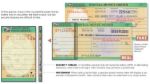
If someone you know over the Internet asks you to cash a money order -- or offers it you as a form of payment -- it's probably best to remember the old legal term "Caveat emptor, or "Buyer Beware."
As reported by readers and other sources, the Internet market is (again) being flooded with counterfeit U.S. Postal Money Orders. After not being around for awhile, these items are raising their ugly head again.
The U.S. Postal Inspectors have speculated in the past that these items are being counterfeited in Western Africa and Eastern Europe. For an interesting article from the NY Times about this, link here.
This is probably the best article, I've read on this subject.
The Postal Inspectors also have a page on how to identify counterfeit money orders.
Yes, counterfeit Postal Money Orders are making a come back, but the core activity has never stopped. The Internet is full of counterfeit methods of payment and the best way to avoid becoming a victim is to recognize the social hook the criminal uses, or "something too good to be true."
While we thought counterfeit Postal Money Orders were a thing of the past, they were replaced with counterfeit items from other money order issuers and legitimate money orders, which were altered.
Of course, there are also those counterfeit cashiers checks, which have been done from so many different financial institutions, it seems impossible to keep up with.
Internet fraud artists are constantly mutating their methods to confuse their victims.
In a recent post on Internet scams, I wrote:
"Thus far, these money orders are showing up mostly in Advance fee fraud (419) scams.
The Advance Fee scam is where a ruse is used to get a victim to send them money (nowadays normally wire-transfer) in anticipation of riches (or sometimes love) to come. The best known is the "Nigerian Letter," but the activity has mutated into romance, lottery, auction, check cashing, work at home and reshipping (as mentioned below) scams.
In a lot of the more recent Advance Fee activity, the victim is tricked into involving themselves in criminal activity, whether it be forwarding stolen merchandise, or negotiating bogus financial transactions and sending the funds elsewhere."
When someone from a Internet source offers free money, romance, or to pay more than something is worth - you are probably dealing with a fraudster.
When someone from a Internet source offers free money, romance, or to pay more than something is worth - you are probably dealing with a fraudster.
Anyone, who does this for them, ends up with a huge loss. Even if you can convince the authorities you are a victim, the civil responsibility will still fall on you.
To make matters worse, a lot of petty criminals are getting in on the action, also. They get on the Internet, impersonate victims, get the instruments and then cash them with no intention of sending money back to the crook that sent them the item.
I predict, it's going to get harder and harder to convince the authorities that the person cashing them is totally innocent. Recently - in a "Judge Judy" episode - her "honor" chewed a defendant up and down for cashing a bunch of counterfeit money orders (through her sister's account) and claiming to be "totally innocent." In less than a minute, Judge Judy was easily able to establish that this victim had benefited financially from her transaction and had in fact never wired any money anywhere.
Best bet for all of this is to learn how to spot this activity and when we do, run away from it as fast as we can!
Of course, reporting it and making other's aware can help, also.
Sunday, April 16, 2006
Postal Money Order Romance Scam
Altered Money Orders have been around for a long time. Before new technology made counterfeiting money orders pretty easy, it was a common method of committing fraud.
Criminals buy a large number of them for a small amount, normally $1.00. The $1.00 money orders are then altered, using chemicals, and a much higher dollar amount is put on them.
Because financial institutions are fairly aware of this activity AND the "getting caught" factor is a risk, they find creative ways to get a less knowledgeable person to take the risks and send them the rewards.
These "less knowledgeable" people frequently suffer the consequences, or take the RAP for them, also.
While altered money orders (not just the Postal variety) have been around for quite some time, convicts seem to have a new way of getting them cashed.
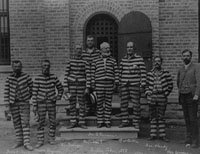
They place ads in the personal section seeking pen pals. Once they have gained the confidence of the person, they trick them into cashing the altered instruments and sending the money back to them.
The Postal Inspection Service warns:
Be aware of the telltale signs of this unusual scheme. If you begin to write letters to a prisoner who is attempting to cultivate you for his mail fraud scheme, he will slowly attempt to gain your trust and confidence. If you are a single woman, he may even send you love letters and handsome photos, and promise to marry you upon his release. Male prisoners posing as women try to lure men into the scheme as well.Link to bulletin, here.
While confessing their love for you, he will also admit that he is serving a prison term for a tax violation or other non-violent offense. But he will say his prison term is almost up, and he's looking forward to starting a new life together with you when he is freed.
Eventually, he will ask you to cash one or more postal or other money orders for him, claiming that he needs the money to pay attorney fees or court fines. Where does he get each high-value money order (often as much as $700)? He will obtain them from an accomplice outside the prison who buys them in small denominations (often only $1) and then smuggles them inside the prison, where inmates alter them to reflect higher values.
When you assist your pen pal by cashing any such money order--and sometimes there are many of them totaling thousands of dollars--you are told to send the money to a "friend" of the prisoner, whom you're told is helping with his legal defense. Of course, this friend is the outside accomplice. You will be told first to deposit the money orders in your personal bank account for temporary "safe-keeping" and then to pay out the funds to the outside accomplice.
Shortly after sending the money, you will receive a cruel "Dear Jane or John" letter asking you to understand that your pen pal only did what he or she "had to do" to survive, and now that he's out, the relationship is over. But he's not out. He's still in prison. And what's even worse, he now has your money, because the bank will charge your account for the phony money orders you deposited. Since the U.S. Postal Service routinely compares all of its cashed postal money orders with the original money order receipts, all altered postal money orders will ultimately be discovered.
Under current law, the person who cashes, or deposits and then withdraws, an altered money order is responsible for its total value--in this case, the altered value. Therefore, shortly after you pay out the temporarily held funds from your bank account, your bank will notify you that you must pay the difference between the issued amount and the raised amount. For example, if you cash a $1 money order that has been altered to $700, you will end up being charged $699 of your own money.
Although convicted criminals committing crime from behind bars makes a good news story, they might not be the only group involved in this type of activity.
Nigerian fraudsters are also known to be involved in Romance scams. Of course, there are other places the scam originates besides Nigeria, also.
Altered Money Orders don't only come from the prison system, either.
The U.S. Department of Justice reported:
At trial, the national money order fraud coordinator for the U.S. Postal Service testified that document fraud rings operating in West Africa, are known to be involved in altering U.S. Postal Money Orders and shipping them back into the U.S. to be cashed.Link, here.
Counterfeit money orders might be more common in a lot of Internet scams, but altered money orders are still being produced and successfully used.
If you happen to receive any of these altered money orders, they can be reported to the Postal Inspectors, here.
Subscribe to:
Posts (Atom)

