On Monday, Federal authorities informed the public of a series of arrests where identity theft was used to steal the equity out of homes. I guess we've already lost so much money in the mortgage crisis, the identity thieves figured it wouldn't matter?
The four arrested on Monday were Derek Polk, Oluda Akinmola, Oluwajide Ogunbiyi, and Oladeji Craig. The four appeared in federal court in Los Angeles, Newark, Buffalo, and Springfield. Also arrested for home equity schemes between August and October were Daniel Yumi (Brooklyn), Yomu and Olokodana Jagunna (Queens), and Abayomi Lawal (Brooklyn).
Strangely enough — although no one in the mainstream media is saying — most of these names sound slightly foreign. Judging by the surnames my best guess is that they are originally from West Africa, probably Nigeria. Stories of Nigerian fraud are extremely popular in the media so I'm surprised no one took this opportunity to put that twist to this story.
In all fairness, in previous posts, I've lamented that fraudsters often pose as Nigerians or the media incorrectly pegs fraud as coming from Nigeria when it doesn't. There is no doubt Nigeria is known for a lot of fraud, but they didn't invent it and are not the only players in the game.
It should also be noted (out of fairness) that court documents reflect the federal authorities stating that this is the result of an investigation into a multi-national identity theft ring. There are a lot of fraud groups out there, both foreign and domestic, and many of the experts have concluded they are working together when it suits them.
The proceeds of these home equity scams were wired all over the world, including South Korea, Japan, China, Vietnam, Canada, and the United Kingdom. According to news accounts about $2.5 million was wired and the total take in the scheme was about $10 million.
Sadly — although this has been called out as a problem frequently — a lot of fodder (information) used in the scams was obtained by none other than public record searches. The public records used even contained credit applications, credit reports, and the victims' signatures, according to the FBI. BJ Ostegren — who was kind enough to give me a personal demonstration a while back — is the champion of exposing just how much of this information is out there for anyone to grab. If you want to see exactly how much information is available, her website is a good place to start.
Also mentioned in the criminal complaint was that fee-based Internet services were used to obtain some of the information. This is a huge business, which nets billions of dollars a year for the people selling it. I did notice that no one is saying which one of the services were used.
It should also be noted that information like this is bartered in forums on the Internet. Symantec just released a report showing how cheaply some of this information can be obtained. This type of activity is fairly well known and the FBI recently cracked one of the forums (Dark Market). This group allegedly racked up about $70 million in fraud, worldwide.
The individuals arrested in this scheme also used a lot of known technological fraud crutches, such as caller ID spoofing, prepaid cellular, and forwarding calls without the owner's knowledge. Tricking a phone company into forwarding calls is no problem for most fraudsters as little to no due diligence is performed before it is done. You can have your carrier block this feature, or password protect it (recommended) — however doing this is left entirely up to you. So far as caller ID spoofing — it's essentially legal — and anyone can purchase the means to do it right over the Internet.
There probably won't be any effort to change call forwarding, or caller ID spoofing as it is a lucrative income stream for telecom businesses.
You would think as long as we are in a world-class financial crisis, we might begin to wake up and smell the coffee? Although, we can't blame fraud as the cause of the entire crisis, I often wonder how much of a contributing factor it is. We've made identity theft too easy to do and hard to control. The people who committed this latest form of identity theft probably aren't the sharpest tools in the shed. They are just taking advantage of other people making a lot of money by making too much information available and not protecting it.
If you look in the mirror you might get an idea who suffers from this seeming inability to fix a growing problem. Even if you aren't victimized, we all pay for it in the end — either in an organization's expense line or in the form of a government bail-out.
I'll close with a with an interesting satire written by Phillip Maddocks, which came out in the Norwich Bulletin entitled, "Credit card fraud gangs say they can fix economy but need government loan." This satire is about the heads of several credit card gangs who are seeking a government handout to keep credit card fraud alive because it is beneficial to the economy.
Although this is a satire — it has a ring of truth to it!
Unfortunately, we allow a lot of dumb things to continue because someone thinks it's beneficial to the economy.
Showing posts with label nigerian fraud. Show all posts
Showing posts with label nigerian fraud. Show all posts
Friday, November 28, 2008


Saturday, April 14, 2007
Oprah's name spoofed in sweepstakes scam
At about the same time, Oprah did a show on Internet scams, the Illinois Attorney General (Lisa Madigan) issued (another) alert about scammers using Oprah's name to instill (trust) in the garbage they send.
Although, Oprah has run some sweepstakes recently, this one is a scam!
From Attorney General Madigan's press release:
Full release, here.
Oprah covered this (and a lot of other scams) on her show yesterday, which can be seen on her site, here.
She also mentions this and another scam involving tickets to see her show on her site, here.
Tom Fragala (MyTruston) and I collaborated on a post about counterfeit checks being used in a variety of I-Scams a few months ago:
Counterfeit Cashier's Checks Fuel Internet Crime
Oprah's name is being used because of her immense popularity, which is a common theme in a lot of this activity. Popular brands, disasters and even government agencies are used in same manner, also!
Although, Oprah has run some sweepstakes recently, this one is a scam!
From Attorney General Madigan's press release:
According to Harpo Productions, Inc., which produces The Oprah Winfrey Show, several legitimate sweepstakes were held in the summer of 2006 through Oprah.com but all winners were previously notified. Harpo Productions, Inc. has not sent any letters in 2007 announcing additional winners for this sweepstakes. The sweepstakes letters being mailed to consumers have a check enclosed that is made payable to the letter recipient. The checks look real but are actually counterfeit. Consumers should disregard these letters and should not attempt to cash the checks.
The letters and checks are props in an especially devastating form of consumer fraud—conning check recipients into believing the checks are real, convincing recipients to deposit the checks into their banks, and even persuading the recipients to wire their own money to the con artists.
Full release, here.
Oprah covered this (and a lot of other scams) on her show yesterday, which can be seen on her site, here.
She also mentions this and another scam involving tickets to see her show on her site, here.
Tom Fragala (MyTruston) and I collaborated on a post about counterfeit checks being used in a variety of I-Scams a few months ago:
Counterfeit Cashier's Checks Fuel Internet Crime
Oprah's name is being used because of her immense popularity, which is a common theme in a lot of this activity. Popular brands, disasters and even government agencies are used in same manner, also!
Wednesday, April 04, 2007
Google name used in Internet deployed Lottery Scam
If it's too good to be true, it probably isn't (especially on the Internet). A spam e-mail, I received today informed me that I've won Google's lottery and 500,000 euros.
Trusted names are used to provide a false sense of legitimacy. Since I myself am a Google fan (user), I decided to comment on this one.
When the (eventually unfortunate) winner answers one of these, they are asked to send (wire transfer is preferred) money to cover taxes and tariffs to get their prize released.
Frequently, the scammer will send a counterfeit check (normally official, or cashier type) for their intended victim (winner) to cash. Eventually, the counterfeit check is discovered and the lottery winner is left hold the bag. Besides, financial consequences, (if I am to believe people reading this blog), cashing these items can cause someone to get arrested, also.
Unfortunately, the crooks behind these scams are normally safe in another country and rarely (if ever) get caught.
For a more detailed explanation on how these scams work (the lottery variety is one mutation of them), I did a post:
Counterfeit Cashier's Checks Fuel Internet Crime
A lot of the spam deploying these scams is facilitated using botnets (groups of zombie computers) that were taken over after another unfortunate Internet user opened an attachment in a spam e-mail, they probably shouldn't have.
Here is a post, I did at the beginning of the year describing this problem (getting worse all the time):
2006 was the Year of Internet Crime - 2007 is predicted to be even worse
Here is the e-mail I received (complete with all the bad grammar and spelling mistakes). Bad grammar and spelling mistakes are common in these e-mail lures.
Another clue is always the instruction not to tell anyone they are a winner.
From:nelson@nelsonbeilean.orangehome.co.uk
Subject:ISP Nomination/Email Award.
Date:Wed, 4 Apr 2007 17:53:07 +0200 (CEST)
To:FROM: LOTTERY COORDINATOR,INT. PROMOTIONS AND PRICE AWARD DEPARTMENTGOOGLE. Bolos Avenue 12900 kd .RESULTS FOR CATEGORY "A" DRAWS
Congratulations to you as we bring to your notice, the results of the First Category draws of E-MAIL LOTTERY organised by GOOGLE INT. We are happy to inform you that you have emerged a winner under the First Category, which is part of our promotional draws. The draws were held on 30th of March 2007 and results are being officially announced today 4th of April 2007. Participants were selected through a computer ballot system drawn from 5,500,000 email addresses of individuals and companies from Africa, America, Asia, Australia, Europe, Middle East, and Oceania as part of our International Promotions Program. Your e-mail address, attached to ticket number 675432890044/376, with serial number 2200-33 drew the lucky numbers 1-0-11-44-03-22 and consequently won in the First Category. You have therefore been awarded a lump sum pay out of One million (1,000,000.00) euros, which is the winning payout for Category A winners. This is from the total prize money from 1,500,000 euros shared among the 2 winners in this category. Your fund is now deposited with the paying Bank. In your best interest to avoid mix up of numbers and names of any kind, we request that you keep the entire details of your award strictly from public notice until the process of transferring your claims has been completed, and your funds remitted to your account. This is part of our security protocol to avoid double claiming or unscrupulous acts by participants / non participants of this program. Please contact your claims agent immediately for due processing and remittance of your prize money to a designated account of your choice:To file for your claim, please contact the CLAIMS agent.
Mr.Windy Smith.Cable Trust AgencyEmail: *(e-mail
addresses and telephone numbers removed) Academias53,11269 Athens
Greece.
You are advised to contact the agents by Email address.
NOTE: For easy reference and identification, find below your reference and Batch numbers.
Remember to quote these numbers in every one of your
correspondence with your claims agent.
REFERENCE NO:GPINT/7980/4376/06 BATCH
NO: 33/904/G3K. Congratulations once again from all our staff and thank you for
being part of our promotions program.
Sincerely Yours,
Dr.
Nelson Beilean.
PROMOTIONS COORDINATOR.
Trusted names are used to provide a false sense of legitimacy. Since I myself am a Google fan (user), I decided to comment on this one.
When the (eventually unfortunate) winner answers one of these, they are asked to send (wire transfer is preferred) money to cover taxes and tariffs to get their prize released.
Frequently, the scammer will send a counterfeit check (normally official, or cashier type) for their intended victim (winner) to cash. Eventually, the counterfeit check is discovered and the lottery winner is left hold the bag. Besides, financial consequences, (if I am to believe people reading this blog), cashing these items can cause someone to get arrested, also.
Unfortunately, the crooks behind these scams are normally safe in another country and rarely (if ever) get caught.
For a more detailed explanation on how these scams work (the lottery variety is one mutation of them), I did a post:
Counterfeit Cashier's Checks Fuel Internet Crime
A lot of the spam deploying these scams is facilitated using botnets (groups of zombie computers) that were taken over after another unfortunate Internet user opened an attachment in a spam e-mail, they probably shouldn't have.
Here is a post, I did at the beginning of the year describing this problem (getting worse all the time):
2006 was the Year of Internet Crime - 2007 is predicted to be even worse
Here is the e-mail I received (complete with all the bad grammar and spelling mistakes). Bad grammar and spelling mistakes are common in these e-mail lures.
Another clue is always the instruction not to tell anyone they are a winner.
From:nelson@nelsonbeilean.orangehome.co.uk
Subject:ISP Nomination/Email Award.
Date:Wed, 4 Apr 2007 17:53:07 +0200 (CEST)
To:FROM: LOTTERY COORDINATOR,INT. PROMOTIONS AND PRICE AWARD DEPARTMENTGOOGLE. Bolos Avenue 12900 kd .RESULTS FOR CATEGORY "A" DRAWS
Congratulations to you as we bring to your notice, the results of the First Category draws of E-MAIL LOTTERY organised by GOOGLE INT. We are happy to inform you that you have emerged a winner under the First Category, which is part of our promotional draws. The draws were held on 30th of March 2007 and results are being officially announced today 4th of April 2007. Participants were selected through a computer ballot system drawn from 5,500,000 email addresses of individuals and companies from Africa, America, Asia, Australia, Europe, Middle East, and Oceania as part of our International Promotions Program. Your e-mail address, attached to ticket number 675432890044/376, with serial number 2200-33 drew the lucky numbers 1-0-11-44-03-22 and consequently won in the First Category. You have therefore been awarded a lump sum pay out of One million (1,000,000.00) euros, which is the winning payout for Category A winners. This is from the total prize money from 1,500,000 euros shared among the 2 winners in this category. Your fund is now deposited with the paying Bank. In your best interest to avoid mix up of numbers and names of any kind, we request that you keep the entire details of your award strictly from public notice until the process of transferring your claims has been completed, and your funds remitted to your account. This is part of our security protocol to avoid double claiming or unscrupulous acts by participants / non participants of this program. Please contact your claims agent immediately for due processing and remittance of your prize money to a designated account of your choice:To file for your claim, please contact the CLAIMS agent.
Mr.Windy Smith.Cable Trust AgencyEmail: *(e-mail
addresses and telephone numbers removed) Academias53,11269 Athens
Greece.
You are advised to contact the agents by Email address.
NOTE: For easy reference and identification, find below your reference and Batch numbers.
Remember to quote these numbers in every one of your
correspondence with your claims agent.
REFERENCE NO:GPINT/7980/4376/06 BATCH
NO: 33/904/G3K. Congratulations once again from all our staff and thank you for
being part of our promotions program.
Sincerely Yours,
Dr.
Nelson Beilean.
PROMOTIONS COORDINATOR.
Saturday, March 17, 2007
Auction Fraud Tops FBI's 2006 Internet Crime Report
The FBI's Internet Crime Report for 2006 has been released. It shows that 45 percent of the complaints are for auction fraud and that "old standards" like the Nigerian letter still hook victims.
In fact, according to the report, the Nigerian Letter accounted for the highest median loss ($5,100).
Other Internet crimes covered in the report are identity theft, investment fraud, cyberstalking, phishing, spoofing and spamming.
The report indicates more crimes were reported to the FBI in 2006 than in any other previous year.
While we might like to believe that Internet crime comes from afar, the report shows 61 percent of Internet fraudsters come from the United States. Other countries of origin listed were the U.K., Nigeria, Canada, Romania, and Italy.
74 percent of the victims were contacted via e-mail.
Full report, here.
The report has tips on how to avoid becoming a victim.
More tips can be viewed on the IC3 site, here.
In fact, according to the report, the Nigerian Letter accounted for the highest median loss ($5,100).
Other Internet crimes covered in the report are identity theft, investment fraud, cyberstalking, phishing, spoofing and spamming.
The report indicates more crimes were reported to the FBI in 2006 than in any other previous year.
While we might like to believe that Internet crime comes from afar, the report shows 61 percent of Internet fraudsters come from the United States. Other countries of origin listed were the U.K., Nigeria, Canada, Romania, and Italy.
74 percent of the victims were contacted via e-mail.
Full report, here.
The report has tips on how to avoid becoming a victim.
More tips can be viewed on the IC3 site, here.
Thursday, March 08, 2007
Nigerian (419) fraud is a worldwide problem
Nigerian (419) fraud is showing an alarming increase in India (900 percent) in one year. Pramit Pal Chaudhuri of the Hindustan Times is reporting:
Pramit quoted some interesting figures in his article suggesting the worldwide bill for this type of fraud is $3.88 billion.
Pramit's (interesting) story, here.
Pramit cites intelligence from the Dutch firm Ultrascan Advanced Global Investigations. They have a lot of interesting facts about Nigerian fraud, here.
In October (2005), I did a post exploring how some rationalize this activity in Nigeria:
419 From the Other Side of the Fence
The post references a Nigerian pop singer (Osofia) and a song he did about the infamous scam:
"I go chop your dollar"
Perhaps, Osofia should update his song to include all the other currencies being chopped?
The world's most widespread financial fraud, the Nigerian 419 scam, is finding new pastures in Asia. India is the third fastest growing market with the defrauders' earnings from Indians increasing nine-fold in one year, says a report by the Dutch firm Ultrascan Advanced Global Investigations.
Almost every cellphone and email user has been solicited by a 419 con man. The best-known ploy is a message claiming there are unclaimed fortunes in banks that can be accessed if someone puts up a little money upfront.
Pramit quoted some interesting figures in his article suggesting the worldwide bill for this type of fraud is $3.88 billion.
Pramit's (interesting) story, here.
Pramit cites intelligence from the Dutch firm Ultrascan Advanced Global Investigations. They have a lot of interesting facts about Nigerian fraud, here.
In October (2005), I did a post exploring how some rationalize this activity in Nigeria:
419 From the Other Side of the Fence
The post references a Nigerian pop singer (Osofia) and a song he did about the infamous scam:
"I go chop your dollar"
Perhaps, Osofia should update his song to include all the other currencies being chopped?
Wednesday, January 17, 2007
OCC is warning the public about counterfeit cashier's checks

I've written a lot about counterfeit cashier's checks, which have spread via the Internet in a number of different scams. Known scams include winning the lottery, secret shopping, overpayment for an item sold on an auction site, or assisting a romantic interest found in a chat-room.
The people who do this are creative and you never know what new "scam mutation" will be discovered tomorrow.
The OCC is warning:
However, cashier’s checks lately have become an attractive vehicle for fraud when used for payments to consumers. Although the amount of a cashier’s check quickly becomes “available” for withdrawal by the consumer after the consumer deposits the check, these funds do not belong to the consumer if the check proves to be fraudulent. It may take weeks to discover that a cashier’s check is fraudulent. In the meantime, the consumer may have irrevocably wired the funds to a scam artist or otherwise used the funds – only to find out later, when the fraud is detected – that the consumer owes the bank the full amount of the cashier’s check that had been deposited.
The OCC offers a lot of insight about the growing problem of counterfeit cashier's checks, here.
Also contained is a FDIC Bank locator, which is an excellent tool because in a lot of scams - the crooks set up phony telephone numbers and even addresses to make themselves appear legitimate.
In the case of cashier's checks, the issuing bank (not yours) is the best place to validate whether an item is legitimate, or not.
FDIC tool, here.
If you would like to see if a particular bank has been targeted with counterfeit cashier's checks - the FDIC issues alerts, here.
Another item to key on is the "scam behavior," which normally will always involve sending money to someone in anticipation of something that is too good to be true!
Sunday, January 14, 2007
Does anyone know - whether or not - check fraud is on the rise?
I sometimes wonder - whether or not - anyone really knows how much check fraud is out there?
Law enforcement jurisdictions often have dollar amounts (some fairly high), which must be met before a case is actively investigated - causing it to be recorded as a statistic. And in the private sector - a lot of NOT very "clear reasons" are used to return checks, which might or (might not) mean fraud.
My two favorites reasons the banks use to return checks are "refer to maker" and "stop payment." This might mean someone was unhappy with a service that was performed, or it could mean the item is counterfeit and the owner of the account placed "stop payments" on the checks. It's even possible that items returned as NSF (non-sufficient funds) are forgeries, or counterfeits because the owner of the account has yet to discover their account has been compromised.
The same holds true with "fraud accounts" that banks open for crooks (new account fraud). New account fraud occurs when fraudster(s) open an account (often with fake information), write a series of checks for a lot more than what is in the account, and disappear (literally).
Often they do this over a weekend, and withdraw the amount they initially deposited, also.
New account fraud items normally return as (NSF) non-sufficient items until the bank closes the account. Once this occurs, they are classified as "account closed." Non-sufficient fund and account closed items are normally not considered a fraud classification.
The only thing that is certain is that the loser is going to be the party, who accepted the check, and not the banks. In fact -- some believe the banks are the winners in this process -- because they make a lot of money from "bounced check" fees.
In a lot of the recent Internet scams, customers have even gone to a bank employee to ask if an item is good. After trusting the employee's expertise, the check was deposited and the funds were made "available." A few days later, the item was returned as fraud and the customer's account was "garnished."
And in all the cases, I've heard where this happened, the bank didn't accept any liability. Here's a post, I wrote about this:
Don't Trust a Bank to Tell You Whether a Check is Good, or Not
The other day, I came upon an article by SmartPros, indicating that a "possibility exists" that check fraud will rise in the coming year.
According to SmartPros:
In case no one has been watching - check fraud appears to have been growing rapidly over the past several years. It's true that all the bogus "financial paper" circulating aren't only checks, we are seeing a lot of counterfeit money orders, also.
Counterfeit cashier's checks and other bogus paper financial instruments (money orders, travelers and gift cheques) have been showing up in secret shopper, romance, lottery, work-at-home and auction scams at ever increasing rates. The situation seems to be getting worse - as more and more people - become Internet users.
In fact, eBay recently announced they will no longer offer any protection for paper financial instruments on their site.
And so far as the amount of them out there, there is evidence that bogus paper financial instruments are being produced on an industrial level:
Are Counterfeit Documents being Mass-Produced in Nigeria?
The Federal Deposit Insurance Corporation sends out alerts on all the counterfeit cashier's checks, which are pretty hard to keep up with. If you want to see what I mean, link here.
We read a lot about "DIY" (do-it-yourself) kits being sold to commit phishing and eBay fraud in shady Internet crime forums -- but in the case of checks -- DIY kits are openly sold in stores, and available on e-commerce sites.
In fact, there are a lot of "legitimate companies" selling all sorts of software, printers and even magnetic ink, which are capable of turning out some pretty convincing counterfeits. Throw in a computer, and it's not very difficult to start making checks.
To show all the "DIY check technology" for sale on the Internet, I ran a Google search, here. Of course, a lot of this (including the paper) can be bought at your local office supply store, also.
As with a lot of fraud, technology seems to be enabling the problem.
Although check fraud might continue to grow, there is little doubt that it's already a huge problem. BankersOnline did an article in 2002 stating:
Since this report is now 5 years old and it is using figures that were 5 years old -- no one probably knows how much check fraud is really going on.
I guess until everyone comes up with some uniform standards, it's going to be impossible to determine how much check fraud is really out there.
BankersOnline article by Barbara Hurst, here.
A great resource on check fraud is the National Check Fraud Center. Their site provides a lot of expert information on check fraud and how to protect yourself from it.
Is check fraud on the rise? Despite the lack of statistics - my best guess is that it is!
Law enforcement jurisdictions often have dollar amounts (some fairly high), which must be met before a case is actively investigated - causing it to be recorded as a statistic. And in the private sector - a lot of NOT very "clear reasons" are used to return checks, which might or (might not) mean fraud.
My two favorites reasons the banks use to return checks are "refer to maker" and "stop payment." This might mean someone was unhappy with a service that was performed, or it could mean the item is counterfeit and the owner of the account placed "stop payments" on the checks. It's even possible that items returned as NSF (non-sufficient funds) are forgeries, or counterfeits because the owner of the account has yet to discover their account has been compromised.
The same holds true with "fraud accounts" that banks open for crooks (new account fraud). New account fraud occurs when fraudster(s) open an account (often with fake information), write a series of checks for a lot more than what is in the account, and disappear (literally).
Often they do this over a weekend, and withdraw the amount they initially deposited, also.
New account fraud items normally return as (NSF) non-sufficient items until the bank closes the account. Once this occurs, they are classified as "account closed." Non-sufficient fund and account closed items are normally not considered a fraud classification.
The only thing that is certain is that the loser is going to be the party, who accepted the check, and not the banks. In fact -- some believe the banks are the winners in this process -- because they make a lot of money from "bounced check" fees.
In a lot of the recent Internet scams, customers have even gone to a bank employee to ask if an item is good. After trusting the employee's expertise, the check was deposited and the funds were made "available." A few days later, the item was returned as fraud and the customer's account was "garnished."
And in all the cases, I've heard where this happened, the bank didn't accept any liability. Here's a post, I wrote about this:
Don't Trust a Bank to Tell You Whether a Check is Good, or Not
The other day, I came upon an article by SmartPros, indicating that a "possibility exists" that check fraud will rise in the coming year.
According to SmartPros:
Identity theft trends in the next year may include an increase in check fraud, check synthesizing and check counterfeiting, according to The Identity Theft Resource Center, a nonprofit victim assistance center.SmartPros story, here.
In case no one has been watching - check fraud appears to have been growing rapidly over the past several years. It's true that all the bogus "financial paper" circulating aren't only checks, we are seeing a lot of counterfeit money orders, also.
Counterfeit cashier's checks and other bogus paper financial instruments (money orders, travelers and gift cheques) have been showing up in secret shopper, romance, lottery, work-at-home and auction scams at ever increasing rates. The situation seems to be getting worse - as more and more people - become Internet users.
In fact, eBay recently announced they will no longer offer any protection for paper financial instruments on their site.
And so far as the amount of them out there, there is evidence that bogus paper financial instruments are being produced on an industrial level:
Are Counterfeit Documents being Mass-Produced in Nigeria?
The Federal Deposit Insurance Corporation sends out alerts on all the counterfeit cashier's checks, which are pretty hard to keep up with. If you want to see what I mean, link here.
We read a lot about "DIY" (do-it-yourself) kits being sold to commit phishing and eBay fraud in shady Internet crime forums -- but in the case of checks -- DIY kits are openly sold in stores, and available on e-commerce sites.
In fact, there are a lot of "legitimate companies" selling all sorts of software, printers and even magnetic ink, which are capable of turning out some pretty convincing counterfeits. Throw in a computer, and it's not very difficult to start making checks.
To show all the "DIY check technology" for sale on the Internet, I ran a Google search, here. Of course, a lot of this (including the paper) can be bought at your local office supply store, also.
As with a lot of fraud, technology seems to be enabling the problem.
Although check fraud might continue to grow, there is little doubt that it's already a huge problem. BankersOnline did an article in 2002 stating:
About five years ago, U S NEWS and WORLD REPORT did the most in-depth study on this that we've had, and I've used their figures ever since. They probably are low by now. They said the financial institutions in the United States lose about $12 Billion a year in check fraud, and the retail industry loses a like amount. The total loss being $24 Billion as a result of check fraud. I think identity theft is getting a lot of publicity now - but it's been around for a long time. We just never gave it the designation of identity theft.
Since this report is now 5 years old and it is using figures that were 5 years old -- no one probably knows how much check fraud is really going on.
I guess until everyone comes up with some uniform standards, it's going to be impossible to determine how much check fraud is really out there.
BankersOnline article by Barbara Hurst, here.
A great resource on check fraud is the National Check Fraud Center. Their site provides a lot of expert information on check fraud and how to protect yourself from it.
Is check fraud on the rise? Despite the lack of statistics - my best guess is that it is!
Saturday, December 16, 2006
Discarded Computers might still have a lot of Sensitive Information on them
One of the ways identities are compromised is when computers are discarded without properly "washing" the hard-drive with specialized software, or destroying the hard-drive, itself.
I did a post in about this, here.
Bill Lambrecht of the St. Louis Post - Dispatch wrote an interesting article, where they purchased several old computers in Nigeria and were able to get a lot of information from them.
Interestingly enough, he quotes a prominent Nigerian, Oladele Osibanjo, who is a regional coordinator for the Basel Convention - a global treaty intended to protect people from the mishandling of hazardous materials as saying:
"The e-waste you are exporting is coming back to you in the form of cyber-crime. Maybe when Americans realize what is happening, they will be a little more careful."
While Mr. Osibanjo is trying to warn us about identity theft, I'm certain his true concerns lie more with hazardous materials that are damaging people's health in other countries. When I went to their site, the fact that this occurs, alarmed me.
St. Louis Post - Dispatch article, here.
Although the article is extremely informative - and there is ample proof of fraud coming from Nigeria - I continue to be amazed at the amount of press they receive about it.
With the recent ABC 20 20 story brought about by a certain former politician, who is behind bars and might be Chelsea Clinton's father-in-law someday, Nigerian fraud is again making headlines.
Stealing and using information is a worldwide problem and there are criminals involved in the "trade" in a lot of places.
So far as Chelsea, it must be hard to be Bill and Hillary's daughter, and she certainly doesn't seem to get in as much trouble as some twins, who were in South America recently.
Saying that, the story calls attention to what I consider the potential of a huge problem. Companies and organizations are constantly upgrading their computers and a lot of them get discarded.
Besides identity theft, there is a huge potential that "sensitive information" could be sifted from these hard-drives that would compromise trade secrets, or even government information.
I did a post in about this, here.
Bill Lambrecht of the St. Louis Post - Dispatch wrote an interesting article, where they purchased several old computers in Nigeria and were able to get a lot of information from them.
Interestingly enough, he quotes a prominent Nigerian, Oladele Osibanjo, who is a regional coordinator for the Basel Convention - a global treaty intended to protect people from the mishandling of hazardous materials as saying:
"The e-waste you are exporting is coming back to you in the form of cyber-crime. Maybe when Americans realize what is happening, they will be a little more careful."
While Mr. Osibanjo is trying to warn us about identity theft, I'm certain his true concerns lie more with hazardous materials that are damaging people's health in other countries. When I went to their site, the fact that this occurs, alarmed me.
St. Louis Post - Dispatch article, here.
Although the article is extremely informative - and there is ample proof of fraud coming from Nigeria - I continue to be amazed at the amount of press they receive about it.
With the recent ABC 20 20 story brought about by a certain former politician, who is behind bars and might be Chelsea Clinton's father-in-law someday, Nigerian fraud is again making headlines.
Stealing and using information is a worldwide problem and there are criminals involved in the "trade" in a lot of places.
So far as Chelsea, it must be hard to be Bill and Hillary's daughter, and she certainly doesn't seem to get in as much trouble as some twins, who were in South America recently.
Saying that, the story calls attention to what I consider the potential of a huge problem. Companies and organizations are constantly upgrading their computers and a lot of them get discarded.
Besides identity theft, there is a huge potential that "sensitive information" could be sifted from these hard-drives that would compromise trade secrets, or even government information.
Saturday, November 25, 2006
Are Counterfeit Documents being Mass-Produced in Nigeria?
In the past several years, we've seen all sorts of counterfeit financial instruments (money orders, cashiers checks and now American Express gift cheques) being passed in Internet scams.
A recent TimesOnline story stated:
The TimesOnline article also mentions that the UK is a staging ground for a lot of the stolen merchandise, which are proceeds of auction fraud.
According to the article, the activity also enables the criminals to return (easily) should they get caught:
It's true that the article is about activity in the United Kingdom, but the problem isn't contained to the British Isles.
And Nigeria isn't the only place counterfeit documents are being made.
Asia has also been a reported "source" for a lot of counterfeiting. For instance, it's widely believed that North Korea has been flooding the world with "supernotes" (counterfeit $100 bills) that are almost impossible to tell from the real thing. Wikipedia article, here.
If you read through the article, it tells of ties to terrorist organizations and organized crime syndicates.
Nigeria might be a source of counterfeit documents, but they aren't the only one. The United States also is known to have a lot of counterfeit documents being produced, also.
If they didn't, it would be hard for the 14 to 20 million illegal immigrants to find jobs.
Swapmeetdave.com has an interesting page has an interesting page (with pictures) of a lot of the counterfeit items (from Nigeria), here.
A recent TimesOnline story stated:
Nigerians are forging passports and cheques on an industrial scale and that huge numbers of false documents are passing through provincial British airports.Story, here.
The face value of the fraudulent financial instruments discovered in "routine checks" amounted to millions of dollars, and the documents (non-financial) are probably used in "illegal immigration.
The TimesOnline article also mentions that the UK is a staging ground for a lot of the stolen merchandise, which are proceeds of auction fraud.
According to the article, the activity also enables the criminals to return (easily) should they get caught:
Suspected Nigerian fraudsters, who have been deported in exchange for charges against them being dropped, are re-entering Britain using forged travel documents and resuming their activities, according to the study.
Other suspects are absconding and disappearing because, unless they are accused of crimes involving more than £50,000, they are being released on bail.
I wonder how many of them get bailed out on a stolen identity, assume another one, and go right back into business?
We seem to see story after story about what a huge problem counterfeiting has become. One of the main reasons is that technology makes it easy to do, and if anyone is caught, the consequences are minimal.It's true that the article is about activity in the United Kingdom, but the problem isn't contained to the British Isles.
And Nigeria isn't the only place counterfeit documents are being made.
Asia has also been a reported "source" for a lot of counterfeiting. For instance, it's widely believed that North Korea has been flooding the world with "supernotes" (counterfeit $100 bills) that are almost impossible to tell from the real thing. Wikipedia article, here.
If you read through the article, it tells of ties to terrorist organizations and organized crime syndicates.
Nigeria might be a source of counterfeit documents, but they aren't the only one. The United States also is known to have a lot of counterfeit documents being produced, also.
If they didn't, it would be hard for the 14 to 20 million illegal immigrants to find jobs.
Swapmeetdave.com has an interesting page has an interesting page (with pictures) of a lot of the counterfeit items (from Nigeria), here.
Tuesday, November 07, 2006
Russian Expert Cites 99 Percent of Internet Brides are a Scam
Romance scams happen on the Internet, daily. Here is a story, which indicates that despite "Internet legends" not all of them start in Nigeria.
Mosnews (a Russian publication) reports:
Link, here.
Interestingly enough, they mentioned one group making a million dollars off these scams AND that in one instance involving "Russian brides," it was an American that was behind the scam.
While I was reading this story - I happened to see another one that claims that a senior Russian prosecutor claims that corruption in Russia amounts to 240 billion a year, read here.
Russian organized crime seems to have it "claws" in a lot of illicit activities - including cybercrime. The U.S. Department of Justice published a document going into great detail about it, here.
I started this post with the comment that despite "Internet legend" not all fraud originates in Nigeria. I will close with that all of it doesn't come from Russia either. In fact, according to the Anti-Phishing Working Group, there are more malicious websites "hosted" in the United States than anywhere else in the world.
Of course, I could go on and on about this - but the bottom line is that Internet criminals can come from anywhere and so can "good people," who are doing their best to fight it.
Mosnews (a Russian publication) reports:
All online dating sites suffer from dating scammers, 99 percent of the emails are hoaxes designed by professional Internet criminals says Elena Petrovathe founder of Russian Brides Cyber Guide, Prweb.com Website reports.
Internet criminals use sophisticated scripts and custom-built software to contact thousands of male users of Internet personals, creating fake Russian women identities and requesting money for airplane tickets.
Link, here.
Interestingly enough, they mentioned one group making a million dollars off these scams AND that in one instance involving "Russian brides," it was an American that was behind the scam.
While I was reading this story - I happened to see another one that claims that a senior Russian prosecutor claims that corruption in Russia amounts to 240 billion a year, read here.
Russian organized crime seems to have it "claws" in a lot of illicit activities - including cybercrime. The U.S. Department of Justice published a document going into great detail about it, here.
I started this post with the comment that despite "Internet legend" not all fraud originates in Nigeria. I will close with that all of it doesn't come from Russia either. In fact, according to the Anti-Phishing Working Group, there are more malicious websites "hosted" in the United States than anywhere else in the world.
Of course, I could go on and on about this - but the bottom line is that Internet criminals can come from anywhere and so can "good people," who are doing their best to fight it.
Saturday, November 04, 2006
More and More - The Jefferson Scandal Does Appear to be a Nigerian Fraud

In late May, I did a post about the Jefferson scandal - where money was discovered in a freezer - that was allegedly "earmarked" for the Vice President of Nigeria, Abubakar Atiku.
At the time, Vice President Atiku stated "that Jefferson was name dropping and obviously committing a 419 (Nigerian Penal Code for Advance Fee) scam."
For anyone that is unfamiliar with advance fee (419):
"Nigeria is one of main sources for all sorts of Advance fee fraud (419) fraud scams. The Advance Fee scam is where a ruse is used to get a victim to part with their money (nowadays normally via wire-transfer) in anticipation of riches (or sometimes love) to come. The best known is the "Nigerian Letter," but the activity has mutated into romance, lottery, auction, check cashing, work at home and reshipping scams."
I also wondered in the post, whether or not, the EFCC (Economic Financial Crimes Commission) would investigate further. Apparently, they did with assistance from the FBI.
Brian Ross of ABC news is reporting:
Acting on information provided by the FBI, Nigerian fraud investigators have now indicted Vice President Atiku Abubakar on 14 counts of corruption, involving tens of millions of dollars allegedly diverted from government accounts.
According to Nuhu Ribadu, head of a new anti-corruption squad created by Nigeria's president, $23 million of the diverted money is still missing. Ribadu said $6.7 million of the missing funds has been traced to a U.S. company tied to Congressman Jefferson's family.
Link to Brian Ross story, here.
Meanwhile both Congressman Jefferson and Vice-President Atiku still deny everything and Mr. Jefferson -- who is running for re-election -- has yet to be charged.
In the original AP story, two of Jefferson's associates have been found guilty of bribery and admitted giving Jefferson other money to bribe African officials. The story also reports some pretty "damning" statements Jefferson made while being taped without his knowledge.
I wonder if and when he (Jefferson) will be charged - $90,000.00 in a freezer is a little hard to explain - even if it is a drop in the bucket when compared to the 6.7 million alleged by the Nigerian investigation.
The EFCC site has a lot of coverage (from a Nigerian perspective) on Mr. Atiku's woes.
Sadly enough - Congressman Jefferson is leading in the polls:
Congressman Jefferson Race Gets National Eyes And New Orleans Ayes
Of note - Jefferson has lost the support of the Louisiana Democratic Party, which seems a wise move on their part.
Nigerian fraud is legendary on the Internet - and the EFCC has had a lot of success in "taking a bite" out of it. Here is a picture of Nuhu Ribadhu, who is in charge of the EFCC and managed the Nigerian part of this investigation:
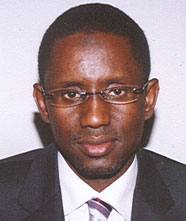
Since most fraud today has a global reach, some might argue the EFCC is stopping people from being victimized, worldwide.
You can view Mr. Ribadhu's biography, here.
Saturday, July 22, 2006
Aids Cure, Another Lure in the Internet Fraud Saga
Research has come a long way since Aids was discovered in the early 80's, but no cure has been found yet.
SophosLabs is reporting that a new advance fee (spam) e-mail is circulating claiming to have found a cure for aids. Here is what they have to say:
"However, Sophos warns computer users that this is a ruse to steal personal details, and that the fraudsters behind the scam campaign can use such information to steal money from bank accounts and commit identity fraud."
"People who receive this email may believe they are helping the world fight AIDS, as well as potentially make themselves some money from the proceeds of any distribution of a successful cure. However, the scammers are just using another method to try to dupe computer users into divulging sensitive information," said Carole Theriault, senior security consultant for Sophos. "It's particularly sick of the hackers to exploit human illness in their search for innocent computer users to fleece."
"This email con-trick is the latest of many 419 scams. These scams are named after the relevant section of the Nigerian penal code where many of the scams originated and are unsolicited emails where the author offers a large amount of money. Once a victim has been drawn in, requests are made from the fraudster for private information which may lead to requests for money, stolen identities, and financial theft."
There is a copy of the letter on the alert from Sophos.
Unfortunately, the alert - which contains the e-mail in question - is cut-off before it is clear exactly what the scam entails. It also makes references to stealing personal information (identity theft) - which can be done via "social engineering," or by visiting a "rogue website" and picking up some malware on your system.
I decided to "dig a little deeper" and used one of my favorite tools, "Google."
Sure enough, I was able to find more information on this - including "WHOIS" data regarding the origin of the e-mails. Interestingly enough, this version of the scam has been around for since February, 2005. The e-mail in the Sophos alert was dated this month (July).
This version was reported by Joe Wein, who runs a Japanese software company that sells spam and on-line fraud protection.
In this version, the e-mail using a UK e-mail address from a IP address in Nigeria. The letter claims to be from an Indian doctor.
It appears Joe corresponded with the scammer and the lure to obtain personal information appears to be of a "social engineering" (human con) type. The e-mail asks for patients medical information, which in turn will probably be used for "identity theft" purposes.
The additional e-mails also mentions having the "aids drugs" sent to people. Please note that there also is a big problem with the sale of "useless" counterfeit drugs on the Internet. Most of us get spam e-mails about this all the time, at least in our spam filters.
In both of the e-mails, I was unable to find any "direction" to a "rogue site," which might install spyware, malware, or crimeware on a computer.
If you would like to view this version, link here.
Having the proper protection on your computer is extremely important, but being knowledgeable of "social engineering" is critical, also.
The term "buyer beware" (caveat emptor) is a good thing to think about before proceeding with a transaction on the Internet. A little "digging" and verifying facts is prudent, also.
"If it's too good to be true - it might not be."
SophosLabs is reporting that a new advance fee (spam) e-mail is circulating claiming to have found a cure for aids. Here is what they have to say:
"However, Sophos warns computer users that this is a ruse to steal personal details, and that the fraudsters behind the scam campaign can use such information to steal money from bank accounts and commit identity fraud."
"People who receive this email may believe they are helping the world fight AIDS, as well as potentially make themselves some money from the proceeds of any distribution of a successful cure. However, the scammers are just using another method to try to dupe computer users into divulging sensitive information," said Carole Theriault, senior security consultant for Sophos. "It's particularly sick of the hackers to exploit human illness in their search for innocent computer users to fleece."
"This email con-trick is the latest of many 419 scams. These scams are named after the relevant section of the Nigerian penal code where many of the scams originated and are unsolicited emails where the author offers a large amount of money. Once a victim has been drawn in, requests are made from the fraudster for private information which may lead to requests for money, stolen identities, and financial theft."
There is a copy of the letter on the alert from Sophos.
Unfortunately, the alert - which contains the e-mail in question - is cut-off before it is clear exactly what the scam entails. It also makes references to stealing personal information (identity theft) - which can be done via "social engineering," or by visiting a "rogue website" and picking up some malware on your system.
I decided to "dig a little deeper" and used one of my favorite tools, "Google."
Sure enough, I was able to find more information on this - including "WHOIS" data regarding the origin of the e-mails. Interestingly enough, this version of the scam has been around for since February, 2005. The e-mail in the Sophos alert was dated this month (July).
This version was reported by Joe Wein, who runs a Japanese software company that sells spam and on-line fraud protection.
In this version, the e-mail using a UK e-mail address from a IP address in Nigeria. The letter claims to be from an Indian doctor.
It appears Joe corresponded with the scammer and the lure to obtain personal information appears to be of a "social engineering" (human con) type. The e-mail asks for patients medical information, which in turn will probably be used for "identity theft" purposes.
The additional e-mails also mentions having the "aids drugs" sent to people. Please note that there also is a big problem with the sale of "useless" counterfeit drugs on the Internet. Most of us get spam e-mails about this all the time, at least in our spam filters.
In both of the e-mails, I was unable to find any "direction" to a "rogue site," which might install spyware, malware, or crimeware on a computer.
If you would like to view this version, link here.
Having the proper protection on your computer is extremely important, but being knowledgeable of "social engineering" is critical, also.
The term "buyer beware" (caveat emptor) is a good thing to think about before proceeding with a transaction on the Internet. A little "digging" and verifying facts is prudent, also.
"If it's too good to be true - it might not be."
Sunday, June 11, 2006
Nigerian Scam Humor - At Least We Can Chuckle While They "Chop Our Dollars."
If a scammer from Nigeria offers you a bogus payment for your eBay auction item - failure to ship the merchandise to him might bring action from law enforcement authorities.
Apparently, this actually happened as reported by the Register:
"Just thought I had to share this one with you - a scammer won an ebay auction and then sent me a fake paypal receipt to try and get me to send the goods to Nigeria; I ignored them, obviously...but now they've got the police onto me!"
No one was arrested, but this does make for an amusing story. I suppose in the "electronic age," where we register our complaints to a "computer," it was a matter of time before this happened.
For the full story, link here.
Of course in a land, where popular music paints the 419 artists as heroes, it's no wonder we are seeing this. Osofia, a Nigerian musician, had a recent hit called "I Go Chop Your Dollar," which is a parody of the 419 (Advance Fee Scam).
For the video, click here.
The anti 419 folks are known to have a sense of humor, also. Here is a link to the Ebola Monkey Man and Artists Against 419. Sadly enough, it seems that there are a lot of people fed up with the fraud coming from Nigeria (and elsewhere) and trying to do something about it.
And in the recent bribery scandal rocking Congress in the United States- Nigerian Vice President Abubakar Atiku (who was the alleged intended recipient of the bribe) released a statement through a staff-member - accusing Congressman William Jefferson of Louisiana of being a 419er.
Innocent, or guilty - Vice President Atiku obviously has a pretty good sense of humor. I guess time will tell (and the court system), who is joking and who is telling the truth?
Maybe we can get Osofia and Congressman Jefferson on Saturday Night Live to do a parody? Winona Ryder's appearance during her shoplifting trial was immensely popular.
Here is an alternative view of Nigerian Fraud:
419 From the Other Side of the Fence
For more on the alleged 419 scam involving a Congressman:
Is the Latest Congressional Scandal a Nigerian Fraud
Apparently, this actually happened as reported by the Register:
"Just thought I had to share this one with you - a scammer won an ebay auction and then sent me a fake paypal receipt to try and get me to send the goods to Nigeria; I ignored them, obviously...but now they've got the police onto me!"
No one was arrested, but this does make for an amusing story. I suppose in the "electronic age," where we register our complaints to a "computer," it was a matter of time before this happened.
For the full story, link here.
Of course in a land, where popular music paints the 419 artists as heroes, it's no wonder we are seeing this. Osofia, a Nigerian musician, had a recent hit called "I Go Chop Your Dollar," which is a parody of the 419 (Advance Fee Scam).
For the video, click here.
The anti 419 folks are known to have a sense of humor, also. Here is a link to the Ebola Monkey Man and Artists Against 419. Sadly enough, it seems that there are a lot of people fed up with the fraud coming from Nigeria (and elsewhere) and trying to do something about it.
And in the recent bribery scandal rocking Congress in the United States- Nigerian Vice President Abubakar Atiku (who was the alleged intended recipient of the bribe) released a statement through a staff-member - accusing Congressman William Jefferson of Louisiana of being a 419er.
Innocent, or guilty - Vice President Atiku obviously has a pretty good sense of humor. I guess time will tell (and the court system), who is joking and who is telling the truth?
Maybe we can get Osofia and Congressman Jefferson on Saturday Night Live to do a parody? Winona Ryder's appearance during her shoplifting trial was immensely popular.
Here is an alternative view of Nigerian Fraud:
419 From the Other Side of the Fence
For more on the alleged 419 scam involving a Congressman:
Is the Latest Congressional Scandal a Nigerian Fraud
Saturday, May 20, 2006
Counterfeit Postal Money Orders Showing Up in IScams Again
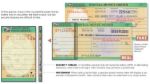
If someone you know over the Internet asks you to cash a money order -- or offers it you as a form of payment -- it's probably best to remember the old legal term "Caveat emptor, or "Buyer Beware."
As reported by readers and other sources, the Internet market is (again) being flooded with counterfeit U.S. Postal Money Orders. After not being around for awhile, these items are raising their ugly head again.
The U.S. Postal Inspectors have speculated in the past that these items are being counterfeited in Western Africa and Eastern Europe. For an interesting article from the NY Times about this, link here.
This is probably the best article, I've read on this subject.
The Postal Inspectors also have a page on how to identify counterfeit money orders.
Yes, counterfeit Postal Money Orders are making a come back, but the core activity has never stopped. The Internet is full of counterfeit methods of payment and the best way to avoid becoming a victim is to recognize the social hook the criminal uses, or "something too good to be true."
While we thought counterfeit Postal Money Orders were a thing of the past, they were replaced with counterfeit items from other money order issuers and legitimate money orders, which were altered.
Of course, there are also those counterfeit cashiers checks, which have been done from so many different financial institutions, it seems impossible to keep up with.
Internet fraud artists are constantly mutating their methods to confuse their victims.
In a recent post on Internet scams, I wrote:
"Thus far, these money orders are showing up mostly in Advance fee fraud (419) scams.
The Advance Fee scam is where a ruse is used to get a victim to send them money (nowadays normally wire-transfer) in anticipation of riches (or sometimes love) to come. The best known is the "Nigerian Letter," but the activity has mutated into romance, lottery, auction, check cashing, work at home and reshipping (as mentioned below) scams.
In a lot of the more recent Advance Fee activity, the victim is tricked into involving themselves in criminal activity, whether it be forwarding stolen merchandise, or negotiating bogus financial transactions and sending the funds elsewhere."
When someone from a Internet source offers free money, romance, or to pay more than something is worth - you are probably dealing with a fraudster.
When someone from a Internet source offers free money, romance, or to pay more than something is worth - you are probably dealing with a fraudster.
Anyone, who does this for them, ends up with a huge loss. Even if you can convince the authorities you are a victim, the civil responsibility will still fall on you.
To make matters worse, a lot of petty criminals are getting in on the action, also. They get on the Internet, impersonate victims, get the instruments and then cash them with no intention of sending money back to the crook that sent them the item.
I predict, it's going to get harder and harder to convince the authorities that the person cashing them is totally innocent. Recently - in a "Judge Judy" episode - her "honor" chewed a defendant up and down for cashing a bunch of counterfeit money orders (through her sister's account) and claiming to be "totally innocent." In less than a minute, Judge Judy was easily able to establish that this victim had benefited financially from her transaction and had in fact never wired any money anywhere.
Best bet for all of this is to learn how to spot this activity and when we do, run away from it as fast as we can!
Of course, reporting it and making other's aware can help, also.
Thursday, February 09, 2006
Phishing for a Lonely Heart
 Romance Scams are not new on the internet. In the past, they have become a variation of Advance fee fraud (419) activity. The typical ploy was to establish e-mail/IM contact with a victim and get them to send money.
Now, it seems, the stakes are getting higher. Valentines Day could bring on a surge of phishing attacks designed to install malware (malicious software) on computer systems. The end-result of many of these attacks is personal and financial information being stolen and used to commit identity theft .
Here is a warning from Michael Carr of Purdue University, courtesy of TMCNet:
Electronic Valentine cards promising sweet nothings may instead infect loved ones' computers with a nasty surprise from a cyber scam artist, according to a Purdue University computer security expert.
"An e-mail or instant message from a 'secret admirer' on Valentine's Day may be specifically designed to pique your curiosity," says Michael Carr, Purdue's chief information security officer. "It's human nature and exactly what the bad guy is counting on."
According to the article, and Mr. Carr, here are items to be wary of:
- Not clicking on links or attachments unless they are part of an expected e-mail or instant message from a reliable, known source.
- Protecting your computer with current anti-virus software and manufacturer-recommended system patches.
- Checking the authenticity of a questionable message by contacting the sender via telephone or another messaging technique.
Sometimes dangerous e-mails can even arrive having been forwarded by or appearing to have been forwarded by people known by the recipient. Carr says even these messages also need to be evaluated and confirmed by a phone call to the sender.
"If you continue to have doubts about the e-mail or instant message, just delete the message," Carr says. "It is not worth the risk of being a victim."
"Information Technology at Purdue, also known as ITaP, provides free- of-charge computer security advice, including how to identify spam and phishing scams, on the Web at http://www.purdue.edu/SecurePurdue.
Here is the full story by TMCNet:
Expert: Electronic Valentine Cards Present Cyber Security Risk
Here is a previous post, I did on Romance Scams:
Criminal Activity on Dating Sites
A lot of these scammers lurk on dating sites and there is a Yahoo Group, Romance Scam 419 Yahoo Group (US) that is (in my opinion) the best resource out to learn how to avoid being a victim, or go to if you have become one. The members of this group support victims and actively go about scamming the scammers.
Here is what they do, in their own words:
"Welcome to the group Romancescams. Please feel free to tell us your story whether it is your own personal story or that of someone you know. This group provides a safe haven for all, free of criticism and judgment. Our goal is to educate by getting the word out to as many people as possible. Check out our photo, link, database, and file pages when you get the opportunity."
I highly recommend you find the opportunity to visit them and educate yourself. The group and it's members truly give a lot of themselves to help others, which is a noble cause. They also get quite a bit of revenge on the immoral people, who take advantage of other's feelings.
Saturday, November 19, 2005
Nigerians convicted in $242 Million Fraud Scam
The Nigerian Government is trying to improve it's image, especially in Advance fee fraud (419) scams. According to the Associated Press two Nigerians were convicted in an international fraud scheme that led to the collapse of a Brazilian Bank. The amount of this scheme allegedly is $247 million. An insider at the bank illegally transferred funds, up to $4.75 million in one transaction at a time, to accounts specified by Frank Nwude and Nzeribe Okuli (the Nigerian defendants).
According to the AP, "Okoli was sentenced to four years in prison, while Nwude received five five-year sentences, to be served concurrently, and was ordered to pay the bank $110 million as well as a $10 million fine, said Ibrahim Lamode, a top official at the Economic and Financial Crimes Commission. A third defendant was convicted earlier in the scheme."
Let's see, $247 million minus $110 million equals $137 million still missing. Since the definition of concurrently in legal terms means together, Okoli will serve only five years and Nwudi four. If they were to split up the time (minus a $10 million fine for the Nigerian goverment), this equates to $14.1 million profit per year for each year they serve. Not too shabby in a country, where the average person can barely afford to eat.
I wonder if there sentences will include "time off for good behavior?" With the amount of money left over, it probably would be easy to arrange in a country, which is notorious for corruption.
The sad fact is the majority of Nigerians live in an extreme state of poverty, despite being a member of OPEC and the eleventh largest producer of petroleum in the world. A select few in Nigeria (along with foreign companies) have been the recipients of massive profits, yet the majority of the country lives in poverty.
No wonder there are so many willing recruits into the seedy world of 419.
I'm glad the Nigerian government is going after some of this, but to me this case is merely an attempt at publicity. They and the foreign companies doing business there need to realize that providing a better standard of living for the eighty percent (who live in severe poverty) is the only thing that will make a lasting change against the rampant corruption and violence that exists in Nigeria today.
To understand the situation in Nigeria, all one needs to do is read the CIA's analysis: U.S. State Department's Travel Warning - Nigeria.
For further reading, here is a previous post, I did on 419 in Nigeria, 419 From the Other Side of the Fence.
According to the AP, "Okoli was sentenced to four years in prison, while Nwude received five five-year sentences, to be served concurrently, and was ordered to pay the bank $110 million as well as a $10 million fine, said Ibrahim Lamode, a top official at the Economic and Financial Crimes Commission. A third defendant was convicted earlier in the scheme."
Let's see, $247 million minus $110 million equals $137 million still missing. Since the definition of concurrently in legal terms means together, Okoli will serve only five years and Nwudi four. If they were to split up the time (minus a $10 million fine for the Nigerian goverment), this equates to $14.1 million profit per year for each year they serve. Not too shabby in a country, where the average person can barely afford to eat.
I wonder if there sentences will include "time off for good behavior?" With the amount of money left over, it probably would be easy to arrange in a country, which is notorious for corruption.
The sad fact is the majority of Nigerians live in an extreme state of poverty, despite being a member of OPEC and the eleventh largest producer of petroleum in the world. A select few in Nigeria (along with foreign companies) have been the recipients of massive profits, yet the majority of the country lives in poverty.
No wonder there are so many willing recruits into the seedy world of 419.
I'm glad the Nigerian government is going after some of this, but to me this case is merely an attempt at publicity. They and the foreign companies doing business there need to realize that providing a better standard of living for the eighty percent (who live in severe poverty) is the only thing that will make a lasting change against the rampant corruption and violence that exists in Nigeria today.
To understand the situation in Nigeria, all one needs to do is read the CIA's analysis: U.S. State Department's Travel Warning - Nigeria.
For further reading, here is a previous post, I did on 419 in Nigeria, 419 From the Other Side of the Fence.
Friday, November 11, 2005
Vigilantes on the Internet
Recently in the mainstream press, there has been a lot of news and commentary regarding Vigilantes on the southern borders of the United States. Vigilantism against cybercriminals is also becoming an organized effort on the internet via websites, who play along with the scams in order to waste the time of the fraudsters. This post is dedicated to those involved in fighting 419 (Advance fee fraud) activity.
These groups are organized by websites, such as 419Eater.com. Here in their own words is how they play the game, "So what is scambaiting? Well, put simply, you enter into a dialogue with scammers, simply to waste their precious time and resources. Whilst you are doing this, you will be helping to keep the scammers away from real potential victims and screwing around with the minds of gutless thieves."
There are a lot of these sites out there, here are some of them;
Scamorama.com, great collection of information and scambaits
419 Eater, one of the most famous scambaiting sites
419 Eater's scam baiting community - Forum
The Nigerian Letters
Ebola Monkey Man: Pissing Off Nigerian Scammers
(This one is very amusing)
Frank Rizzo and the 419 Zeros - Scamming the Scammers Without Mercy!
P-P-P-Powerbook, scammer ripped off with really fake Apple laptop
thescambaiter.com, many famous freight-baits originated here
Artists Against 419 - Home of the fake bank database and the FlashMob
scammers-exposed.com - notorious 419 scammers revealed by scam baiters
Conversations with a Nigerian Bank Scammer
One that I visited recently, (which is a Yahoo Group) is "Romance Scam 419 Yahoo Group (US)." When I signed up for this group, I started getting more than 200 e-mails daily from them forcing me to "unsubscribe" due to other commitments. They (as many of the sites do) post pictures of their scammers for everyone to see. I did see evidence that they report activity to the authorities and they claim that law enforcement does monitor the site for intelligence purposes.
Many of these sites do expose fake financial and credit services and I would imagine they have the potential to be a intelligence conduit for law enforcement.
Before engaging in any of this, there are dangers to consider. Here is a warning from 419.Eater.com:
"Please remember that these people are CRIMINALS and should be treated as such.
Under no circumstances must you enter into any communications with these people unless you feel you are adequately prepared to deal with them.
Under NO CIRCUMSTANCES give them ANY real private information about yourself. These guys may appear dumb and clueless, but I suspect it wouldn't be so funny if you were to come face-to-face with one of them, although I'll be the first to admit the chances of this happening are astronomical - unless of course you are dumb enough to fly over to meet them in person, in which case you need to be sectioned ASAP!
The tips below are for INFORMATION ONLY. I cannot be held responsible for what you decide to do with the information.
If you are unsure of what you are doing please LEAVE WELL ALONE!"
I would like to add that as technology increases, anyone involved in this activity should become well-versed on the dangers of malware, which is used fraudulent internet activity. Malware can be executed against one's computer system via e-mail and even IM's (instant messaging).
In theory (if not protected properly) this could lead to the scammer turning the tables on the scam baiter and stealing information from their personal computer and even worse, identifying the scambaiter.
There is also the potential in this for sites, or people to be damaged, if wrongfully identified. This has happened in the case of similar sites, which go after sexual predators.
These sites do serve a purpose in fighting fraud and their efforts in most instances are admirable. They can also be used to provide valuable intelligence to law enforcement, who have the resources and expertise to verify the criminal activity and deal with it. If they are simply used for cybersport, then it will confuse and frustrate the scammer, but only temporarily. Nonetheless, these sites serve to raise awareness, which is key in the fight with 419. Besides that sometimes a little revenge is "Chicken Soup for the Soul."
Here is a link, courtesy of my friends at Quatloos, where you can find a lot of resources to report any activity to Law Enforcement.
For the last word from the Ebola Monkey Man, click on the title of this post.
These groups are organized by websites, such as 419Eater.com. Here in their own words is how they play the game, "So what is scambaiting? Well, put simply, you enter into a dialogue with scammers, simply to waste their precious time and resources. Whilst you are doing this, you will be helping to keep the scammers away from real potential victims and screwing around with the minds of gutless thieves."
There are a lot of these sites out there, here are some of them;
Scamorama.com, great collection of information and scambaits
419 Eater, one of the most famous scambaiting sites
419 Eater's scam baiting community - Forum
The Nigerian Letters
Ebola Monkey Man: Pissing Off Nigerian Scammers
(This one is very amusing)
Frank Rizzo and the 419 Zeros - Scamming the Scammers Without Mercy!
P-P-P-Powerbook, scammer ripped off with really fake Apple laptop
thescambaiter.com, many famous freight-baits originated here
Artists Against 419 - Home of the fake bank database and the FlashMob
scammers-exposed.com - notorious 419 scammers revealed by scam baiters
Conversations with a Nigerian Bank Scammer
One that I visited recently, (which is a Yahoo Group) is "Romance Scam 419 Yahoo Group (US)." When I signed up for this group, I started getting more than 200 e-mails daily from them forcing me to "unsubscribe" due to other commitments. They (as many of the sites do) post pictures of their scammers for everyone to see. I did see evidence that they report activity to the authorities and they claim that law enforcement does monitor the site for intelligence purposes.
Many of these sites do expose fake financial and credit services and I would imagine they have the potential to be a intelligence conduit for law enforcement.
Before engaging in any of this, there are dangers to consider. Here is a warning from 419.Eater.com:
"Please remember that these people are CRIMINALS and should be treated as such.
Under no circumstances must you enter into any communications with these people unless you feel you are adequately prepared to deal with them.
Under NO CIRCUMSTANCES give them ANY real private information about yourself. These guys may appear dumb and clueless, but I suspect it wouldn't be so funny if you were to come face-to-face with one of them, although I'll be the first to admit the chances of this happening are astronomical - unless of course you are dumb enough to fly over to meet them in person, in which case you need to be sectioned ASAP!
The tips below are for INFORMATION ONLY. I cannot be held responsible for what you decide to do with the information.
If you are unsure of what you are doing please LEAVE WELL ALONE!"
I would like to add that as technology increases, anyone involved in this activity should become well-versed on the dangers of malware, which is used fraudulent internet activity. Malware can be executed against one's computer system via e-mail and even IM's (instant messaging).
In theory (if not protected properly) this could lead to the scammer turning the tables on the scam baiter and stealing information from their personal computer and even worse, identifying the scambaiter.
There is also the potential in this for sites, or people to be damaged, if wrongfully identified. This has happened in the case of similar sites, which go after sexual predators.
These sites do serve a purpose in fighting fraud and their efforts in most instances are admirable. They can also be used to provide valuable intelligence to law enforcement, who have the resources and expertise to verify the criminal activity and deal with it. If they are simply used for cybersport, then it will confuse and frustrate the scammer, but only temporarily. Nonetheless, these sites serve to raise awareness, which is key in the fight with 419. Besides that sometimes a little revenge is "Chicken Soup for the Soul."
Here is a link, courtesy of my friends at Quatloos, where you can find a lot of resources to report any activity to Law Enforcement.
For the last word from the Ebola Monkey Man, click on the title of this post.
Friday, October 21, 2005
419 From the Other Side of the Fence
 There is an interesting article by Robyn Dixon of the LA Times, who interviewed an allegedly former 419 (Advance fee fraud) scam artist named Samuel. He describes a murky world of cybercafes, where the Nigerian fraudsters congregate and send out the infamous e-mails. According to the article "they even have an anthem "I Go Chop Your Dollars," hugely popular in Lagos, which hit the airwaves a few months ago as a CD penned by an artist called Osofia:
"419 is just a game, you are the losers, we are the winners.
White people are greedy, I can say they are greedy White men, I will eat your dollars, will take your money and disappear.
419 is just a game, we are the masters, you are the losers."
For the video, click here.
Samuel goes on to describe the long lost riches and the dating scams, as well as the money some have made off these schemes. You can read the entire article by going to:
''I Will Eat Your Dollars''
The lyrics of this song might be offensive to some, but it is probably reality to many in Nigeria.
Quite simply, in Nigeria, 419 is a means to escape poverty. For years, foreign companies have made themselves and a "select" few Nigerians extremely rich (via vast oil reserves). Meanwhile the majority of the population lives in conditions that would make a "welfare recipient" in the West appear wealthy. In fact, the CIA estimates that 70 percent of the country lives in poverty, despite the fact that they are a member of OPEC and the eleventh largest producer of petroleum in the world.
To a Nigerian, their perception of these companies is probably just what the song states, or "greedy white men."
There is another headline that has been hitting the press about Microsoft and the Nigerian goverment working together to end scams. Neil Holloway (President Microsoft Europe) said "It's the first-ever agreement Microsoft has signed with an African country to aid law enforcement efforts. Microsoft's aid will include providing information to law enforcement in addition to training. The company has already been working with Nigerian authorities over the last three to six months. We think we have a responsibility to make an impact in this particular area."
Hopefully, the Microsoft Computer Security types have received additional training in self-defense, or have been augmented by other security types, preferably former special forces personnel. Here is the latest CIA Travel report: U.S. State Department's Travel Warning - Nigeria. My understanding is that the oil companies, who have billions invested in Nigeria, have a large budget for security there.
The Nigerian government has also made numerous headlines lately in it's battle against 419. Numerous arrests have been made and money has even been returned to victims. After years of bad press (a lot of it from 419), they do seem to be trying to take measures to improve their image in the world.
Still, the majority of the people live in standards that we couldn't even imagine in the West. I fear, if this problem (which is probably the cause) is allowed to continue, there will always be a steady stream of willing recruits into this seedy business.
Unfortunately, these actions by the Nigerian government and Microsoft only address the suffering created in the West by 419.
If we really want to address the problem of 419 in Nigeria, we probably should take a look putting pressure on the government over there to provide a better standard of living for their people. I would challenge all the foreign companies doing business in Nigeria (particularly from the petroleum industry) to take this to heart.
Microsoft is a newcomer in Nigeria and there is no doubt they are doing a lot of charitable work around the world. I salute them in their efforts and hope their partnership with the Government of Nigeria reduces the amount of suffering created by 419. I would hope that Microsoft and (others) also take the time to address the reason that 419 is a means of escape for many young Nigerian's, like Samuel.
It would be sad that if in the end, they "too" were perceived as "greedy white men."
If anyone is interested in a Nigerian view of corruption in Nigeria, click on the title of this post.
For some of the bad press on the internet regarding 419, here are some sites courtesy of the 419 Coalition (US) :
419eater.com
419 Fraud (US)
419 Legal (South Africa)
419letter.org
African Anti-Fraud Control Agency (AAFA) (Norway)
Africaservice.com (Norway)
American Association of Retired Persons (AARP) (US)
AnthonyParsons.com
Anti African Scam Commission
Artists Against 419 (US)
Australian Institute of Criminology
Avant Solutions Inc. (US)
BankersOnline.com (US)
Bart De Wolf's Site (El Salvador)
Brian Wizard Inc. - 419 Novel Available Now - (US)
BusinessInAfrica.com (US)
California Society of Certified Public Accountants (US)
Canadian Council of Better Business Bureaus
Classic Car Fair (New Zealand)
ConsumerAffairs.com (US)
Consumer Protection Association of America
Crimes of Persuasion (US)
Data Wales (Wales, UK)
Delaware Scam Victims (US)
eBay Scamkillers (US)
Economic and Financial Crimes Commission (EFCC) (Nigeria)
Edofolks.com (Nigeria)
Email Scams and Frauds (Dr. Robert J. O'Hara's site) (US)
Fighting back at Nigerian 419 Advance Fee Fraud Scammers (UK)
Financial Scandals Website (UK)
Forensic Services SA (South Africa)
FraudAid (US)
Freeman Institute (US)
G2 (US)
Globrocks Information Systems (US)
GreaterThings.com (US)
I Need a Trustworthy and Honest Business Partner (Denmark)
Idaho Department of Finance (US)
InterGOV (US)
International Investigation Services (IIS) (Iceland)
Internet Crime Prevention and Control Institute (US)
Internet Fraud Complaint Center (IFCC) (US)
Internet Scambusters E-Zine (US)
Involution.Org (US)
Lads Of Lagos (US)
London Metropolitan Police (UK)
Loss Prevention Concepts Ltd. (US)
Ministry of Fair Trading, Government of Western Australia
Money From Africa Letter Collection (Poland)
Monitor das Fraudes (Brazil-Portuguese Language)
Monks of Adoration (US)
Motherland Nigeria (US)
Mr. Ugo Watt's Scam Baiter Pages (UK)
National Association of Credit Management (NACM) (US)
National Criminal Intelligence Service (UK)
National Fraud Information Center - Internet Fraud Watch (US)
Nigeria 419 Scam (US)
Nigeria Master Web (Nigeria)
Nigeria Scam Alert (US)
Nigerian Business Proposal (.com) (US)
Nigerian Fraud Email Gallery (US)
NigerianGemScam.com (US)
Nigerian Letters (Australia)
Nigeria Master Web (Nigeria)
Nigerian Nightmare (US)
Nigerian Scams (WONST) (US)
Nigerian Spam.com (India)
Offshore Finance Canada Magazine/Ezine (Canada)
PeaceProject (US)
Pennsylvania Attorney General (US)
Phonebusters (Canada)
Policia Judiciaria (Portugal-Portuguese language)
Poppage1 Site (Canada-India)
Popsubculture.com (US)
Quatloos! (US)
Quatrocantos.com (Brazil-Portuguese Language)
Regulatory Intelligence Agency (RIA) (Vanuatu)
Romance Scam 419 Yahoo Group (US)
RCMP/GRC Royal Canadian Mounted Police (English & French language)
Scam.com (US)
Scambuster419.co.uk (UK)
Scam o Rama (US)
Scams.net (US)
ScamWatch (US)
Scam Victims United (US)
Scott Bidstrup Site - Onsite Personal Viewpoint on Nigeria (US)
Sierra-Leone.org (Sierra Leone)
Silicon Valley Business Law (Law Offices of Thomas Gross) (US)
Snopes.com Urban Legends Reference Pages (US)
South African Police Service (South Africa)
Southwest Georgia Com (SOWEGA.COM) (US)
Spam, Scams and Hoaxes (US)
Stentorian.com (US)
Stop 419s (UK)
StorOslo Sikkerhetstjeneste AS (Norway)
Svensk 419/Nigeriabrev-site (Sweden-Swedish Language)
The Big Scam (Sweden)
The Internet Project (TIP) (Australia)
The Nigerian Scam Buster
The Nigerian Muse (Dr. Mobolaji Aluko) (US & Nigeria)
TheThin.net (US)
United Nigeria Association Tulsa (UNAT) (US)
United States Department of Commerce International Trade Administration
United States Department of State Bureau of Consular Affairs
United States Department of State Bureau of International Narcotics and Law Enforcement
United States Department of the Treasury FinCEN
United States Embassy Nigeria
United States Federal Bureau of Investigation
United States Federal Trade Commision
United States National Archives and Records Administration
United States Postal Service
United States Secret Service
United States Senator Russ Feingold
Venture Research Institute (US)
Virginia Attorney General
War On Spam (US)
Waruno Mahdi's Website (Germany)
Web Police (US)
Whatsthebloodypoint.com (US)
ZYRA.org (UK)
Thursday, September 22, 2005
Counterfeit (MoneyGram) Travelers Express Money Orders
I'm surprised I haven't seen many reports in the media on counterfeit Travelers Express Money Orders. They seem to be frequently appearing in advance fee scams, particularly on auctions, such as E-Bay. Please note that these scams don't only happen on auction sites, they can occur on dating sites, within chatrooms and arrive via spam e-mails etc. etc.
I was even recently contacted by a reader where the (advance fee scam) attempt was made with a Qchex, (checks you can have e-mailed to you) as payment for a rental. Of course, the reader was then solicited to wire the excess $4,500.00 to someone, who was supposed to arrange furnishings. Upon verification, the check turned out to be counterfeit and our reader avoided becoming a victim of this scam.
Here is my most recent post on Qchex: Addressing QChex Fraud.
The counterfeit items reported to me are being made in the $1,000.00 to $1,500.00 range. They are being passed either for high value merchandise, or given as overpayments on the asking price of the merchandise. The seller is then being duped into wiring the money, normally overseas.
Some of the items reported to me also had Walmart and Ace Check Cashing logos on them.
Recently, there have been a lot of counterfeited U.S. and Canadian Postal Money Orders used in internet scams. Here is a post, I did on them: More on Postal Money Order Scam.
According to the U.S. Postal Service, they were being produced in Nigeria and Eastern Europe.
The items being passed seem to mutate. For some time, they were counterfeit cashier (official) checks, then came the official government money orders and now it seems, money orders in general. The thing to be aware of is the behavior, which is a come-on (normally over the internet) to cash the items for a percentage, or to negotiate them over the amount of something you are trying to sell and wire the excess money. Once in awhile they are to free some beautiful model from Eastern Europe, or Nigeria, who is facing oppression in her homeland.
For information on how to determine if a Travelers Express Money Order is good, click on the title of this post.
I was even recently contacted by a reader where the (advance fee scam) attempt was made with a Qchex, (checks you can have e-mailed to you) as payment for a rental. Of course, the reader was then solicited to wire the excess $4,500.00 to someone, who was supposed to arrange furnishings. Upon verification, the check turned out to be counterfeit and our reader avoided becoming a victim of this scam.
Here is my most recent post on Qchex: Addressing QChex Fraud.
The counterfeit items reported to me are being made in the $1,000.00 to $1,500.00 range. They are being passed either for high value merchandise, or given as overpayments on the asking price of the merchandise. The seller is then being duped into wiring the money, normally overseas.
Some of the items reported to me also had Walmart and Ace Check Cashing logos on them.
Recently, there have been a lot of counterfeited U.S. and Canadian Postal Money Orders used in internet scams. Here is a post, I did on them: More on Postal Money Order Scam.
According to the U.S. Postal Service, they were being produced in Nigeria and Eastern Europe.
The items being passed seem to mutate. For some time, they were counterfeit cashier (official) checks, then came the official government money orders and now it seems, money orders in general. The thing to be aware of is the behavior, which is a come-on (normally over the internet) to cash the items for a percentage, or to negotiate them over the amount of something you are trying to sell and wire the excess money. Once in awhile they are to free some beautiful model from Eastern Europe, or Nigeria, who is facing oppression in her homeland.
For information on how to determine if a Travelers Express Money Order is good, click on the title of this post.
Subscribe to:
Posts (Atom)

