Showing posts with label auction scams. Show all posts

Monday, July 21, 2008

E-Gold Admits Being Guilty of Enabling Internet Criminal Activity

According to an article in UPI, the three principal executives of E-Gold Limited have pleaded guilty in a case brought against them by the Department of Justice.

The three executives in question, Dr. Douglas Jackson, principal director of E-Gold and CEO of Gold & Silver Reserve Incorporated, and two of his senior directors (Barry Downey and Reid Jackson) pleaded guilty to conspiring to engage in money laundering and operating an unlicensed money transmitting business.

The corporations involved (E-Gold and Silver Reserve) face a fine of $3.7 million and have already agreed to pay a judgment of $1.75 million. Jackson faces up to 20 years in prison and a fine of $500,000 and Downey and Reid face a maximum of 5 years in prison and a $25,000 fine.

Anonymous means of transmitting money are favorite ways for criminals to conduct illegal business and scam people. In the current case, the Department of Justice charged that the criminal activity included investment scams, credit card fraud, identity theft and even child exploitation.

They did mention that E-Gold assigned employees to monitor accounts for fraud, but the employees allegedly didn't have any previous experience in dealing with illegal activity.

Another article in PC World about this story pointed to a blog post, where Douglas Jackson announced some new security procedures to verify their customers and prevent fraud. No new accounts are being opened until they can find out an "interim means" of verifying who their customers actually are. Also mentioned in the blog post was that a systems design flaw made it difficult for them to get rid of a user, effectively. The logic behind this seems to be that if one account was blocked another one would be opened. Please note that with all kinds of free e-mail accounts -- which was the only requirement to open an E-Gold account -- it wouldn't be very hard for a criminal to simply move on to another e-mail address if they got caught committing fraud.

It will be interesting to see how they plan to verify customers over the Internet.

In 2006, BusinessWorld reported that the ShadowCrew -- a 4,000 strong credit card fraud and identity theft ring operating in carder forums on the Internet -- used E-Gold to launder some of their proceeds.

To anyone familiar with crime on the Internet, allegations of criminals using, or manipulating E-Gold (or other services like these) are nothing new. E-Gold gives their customers the ability to transfer the value of gold, electronically. To transfer E-Gold -- which has a cash value -- all anyone needs is an e-mail address, account number and password.

E-Gold type accounts are also prone to take-overs. This normally occurs when account numbers and passwords are stolen via what is known as phishing and the account is taken over by a fraudster. After a crook compromises the account in this manner, they simply transfer the gold, elsewhere. Phishing is accomplished using social engineering or sometimes with the help of malware (crimeware) that automatically steals all the information from a system using keylogging software.

Please note from what I've heard, people are never made whole (compensated) after this happens to them. Once the money is transferred, there is little or no recourse to be had by the account owner. Interestingly enough, E-Gold spins this as there are no chargebacks to worry about. Chargebacks occur when a financial institution discovers a financial instrument was used to commit fraud and the transaction is charged back to the merchant.

So far as the money laundering aspect, a anonymous service such as E-Gold can be used to move the proceeds of all sorts of crimes. People are known to be duped in job scams to launder money using a service like this. In cases like these, they are taking all the risks for a small portion of the rewards.

In most instances, anyone who gets involved in one of these scam activities is going to at the very least lose their shirt in the process. Of course, they can also get arrested.

The best thing to do is to be extremely careful when someone offers you riches, or "gold" over the Internet. There is a difference big between real gold and what is known as "fools gold."

Friday, April 18, 2008

Vladuz busted, according to eBay

Vladuz, the mysterious hacker, who seemed to take great pleasure in hacking eBay has been arrested, according to eBay.

Ina Steiner reports on the AuctionBytes blog:

A cyber-criminal who embarrassed eBay for nearly a year with claims he had hacked the site was arrested on Thursday, according to eBay. "Vladuz" had harassed eBay with his taunting from December 2006 through October 2007, when he accessed eBay servers and gained limited access to a very small number of eBay accounts on the eBay.com site. (eBay said at the time that at no point did the fraudster get any access to financial information or other sensitive information.).
Thus far only eBay is confirming the arrest:

eBay spokesperson Nichola Sharpe said local Romanian law enforcement officials would have to confirm details, as they considered the case confidential until a conviction was made. Asked why eBay had issued a press release, Sharpe said eBay wanted to thank all of the law enforcement agencies involved who collaborated in the case. She also said that the community was aware of Vladuz, and said, "This is obviously great news."
eBay states that Vladuz never accessed any financial information, but I’m not certain that was his intention in the first place.

There are some, who believe his intention was to point out the massive amount of fraud occurring on auction sites and show weaknesses that could be exploited in eBay’s system.

After all, unless he is mentally disturbed, why would he make his effort so public otherwise? Most criminals prefer to remain anonymous when they are committing financial crimes. They make a lot more money that way.

Here is a previous post, I did on the mysterious, Vladuz:

Did Vladuz hack eBay, or is stockpiled stolen information being used to make it look like he did?

Friday, April 11, 2008

FBI reports scams against senior citizens are growing


(Picture courtesy of the FBI site)

Ran into an interesting communication from the FBI on the growing problem of senior citizens being targeted by scam artists. Of even greater interest -- largely because most senior citizens now use the Internet -- a lot of them are being targeted from foreign lands with the click of a mouse.

The FBI reports:

The threat to seniors is growing…and changing. Baby boomers (born between 1946 and 1964) are now the largest segment of our population—about 78 million people. That means that the number of senior citizens is rising. Many younger boomers also have considerable computer skills, so criminals are modifying their targeting techniques—using not only traditional telephone calls and mass mailings but also online scams like phishing and e-mail spamming.
Most experts agree that senior citizens are targeted because many of them have developed solid financial resources over a lifetime of hard work.

I frequently watch spam trends -- largely because I consider spam the vehicle for most fraud, phishing and financial misdeeds on the Internet -- and I've noted a lot of anti-aging and health products of a dubious nature being pitched. To me, this confirms that the spammers and bot-herders are indeed targeting the elderly.

The current press release has a lot of great information on how to spot fraud and avoid becoming a victim.

Instead of copying them for this post, I would recommend reading the press release.

The press release also points to another excellent page on the FBI site dedicated to educating all of us about fraud against our senior citizens.

Last, but not least if someone thinks they are being targeted by a scam, it's always a good deed to report it. By doing this, it might prevent another human being from a lot of pain and suffering.

Here is the FBI recommendation on how to do this:

Who to call. If you’re a senior citizen who has been victimized by fraud, start by calling your local or state law enforcement agency.

The FBI doesn’t handle isolated individual cases: we get involved only when there are huge dollar losses or if there's evidence of an international crime ring at work. But you can report fraud online to us through our Internet Crime Complaint Center, which is run in concert with the National White Collar Crime Center, and we’ll refer it to the proper authorities.

Thursday, September 20, 2007

DIY (do it yourself) crimeware kits designed to steal personal information are for sale on eBay

Do it yourself (DIY) crimeware kits being sold on the Internet make it easy for non-technical criminals to commit fairly sophisticated (technical) crimes.

DIY crimeware kits have been credited with fueling the information (identity) theft crisis.

Ran into this interesting post on Cappnonymous (The Modern Day Beatnik Refuses to Die), which quotes a press release from PC Tools about crimeware for sale on eBay. The original press release from PC Tools points to eBay links, which have been deactivated.

Fortunately for those of us, who might be interested in taking a look at this, Cappnonymous was able to recreate a visual demonstration (screenshots) showing this illicit software being sold on eBay.

From the original press release from PC Tools:

Online auction site, eBay, is unwittingly selling software that is used to hack eBay user accounts and steal personal information, according to research from online security experts PC Tools.

A number of software items for sale on the world’s leading online auction site contain a variety of programs including keyloggers, trojans and other malware making devices that are aimed at helping users hack computers, websites and even individual user accounts.
The release quotes Mike Greene, VP Product Strategy at PC Tools as saying:

It is ironic that something intended ultimately to steal a consumer’s identification and financial information is being sold via what is one of the world’s number one targets for the ID theft.
Cappnonymous added his own sage comment:

Note a couple of the hilarities such as payment via Paypal and the Square Trade seal.

The seller’s feedback is 100%, so he/she must have some very happy buyers.

Cappnonymous post, which contains an excellent visual demonstration of this problem, here.

Although, eBay is frequently the subject of fraud articles, I'd like to point out that tools to commit cybercrime might be for sale on a variety of auction sites.

They are also being sold in a lot of other places on the Internet. Because the sellers are motivated to sell as many of them as they can, they will migrate to the best places to market their seedy products.

Some of them even provide technical support.

The Anti Phishing Working Group issued a detailed report last October regarding this problem, which can be seen, here.

Saturday, September 15, 2007

Internet crime victims report counterfeit American Express gift cheques being sent to them!


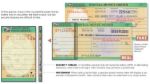
Scam (too good to be true) lure courtesy of miriyaparino at Flickr.

Counterfeit checks like all the ones recently discovered by an International law enforcement team being sent from Nigeria aren't the only bogus financial instruments being sent all over the world.

In this recent effort against this activity, over 15,000 counterfeit instruments were discovered in a months time.

For the past couple of weeks, I've received a lot of e-mail and blog comments from people receiving counterfeit American Express gift cheques in the mail with instructions to cash them and wire the proceeds (minus a paltry commission) back to the sender (scammer).

The reason for all the e-mails and comments are because of previous posts, I've written about these counterfeit financial instruments.

Other than having their financial world ruined, there are reports of people getting arrested after trying to pass some of these instruments. One victim recently wrote me after discovering she had been scammed -- and told me that when she tried to report her problems to the authorities, they advised her to seek legal advice before proceeding -- or she might be charged with money laundering.

The American Express gift cheques can be verified by calling 1-800-525-7641.

Counterfeit MoneyGram and U.S. Postal money orders are still also being sent to people as payment for goods, or in too good to be true lures that are nothing more than a scam.

A lot of these bogus financial instuments come from work-at-home scams, secret shopper, romance, lottery and auction scams. New varieties of these scams appear from time to time, but the common denominator in any advance fee (419) scam is that it is too good to be true and it makes little, to no sense.

Another common denominator in most of these scams is that they will try to get you to wire money. Here is what I wrote about this in a previous post:
The fraudsters want you to cash these counterfeit gift cheques and send (normally wire) the money back to them. When they are discovered to be fraudulent -- you end up taking the "rap" for the scammer and they disappear in an "electronic mist."
If you've received any of these items in the mail, I've compiled a lot of information on how to identify them and report them to the right people, here.

Another development being seen is that real scammers are getting their hands on these instruments, who have no intention of wiring any money, anywhere. In effect, they are scamming the scammers. This makes it a lot harder to figure out, whether or not, a person is a victim or a scammer. Maybe this is one of the reasons more people are getting arrested?

Of course, if the victim never wired the money, they are probably lining their own pockets (my opinion).

The bottom line is that falling, or getting involved in one of these scams can cause you a lot of financial pain and suffering and you might even get into worse trouble.

Tuesday, April 17, 2007

Counterfeit MoneyGram Money Orders being passed via Internet Scams

Recently, MoneyGram removed the Travelers Express name from their money order product. The new version is branded simply as MoneyGram, printed in Spanish (Espanol) in addition to English.

The old version with the Travelers Express name have been counterfeited and circulated via Internet scams for a couple of years. A lot of them had Walmart's logo printed on them. We've seen similar counterfeit American Express Gift Cheques and Postal Money Orders in recent years, also. Some of these items are still in circulation, including the older Travelers Express version.

The newer version (MoneyGram) printed in both Spanish and English are now being counterfeited and being circulated via Internet scams. The one I saw was accompanied by a letter from Walmart Financial Services.

Like other counterfeit financial instruments, we'll probably see these circulated via romance, auction, job, secret shopper and lottery scams. The common theme is that the scammer will always request that you send a portion of the money back to them (wire transfer is the preferred method).

In the case of auction scams, they may be used to buy expensive merchandise.

Cashing these items will leave you at a minimum, financially liable. I've also been told by readers that people are sometimes getting arrested for passing them!

The new version (recently seen) have receipts attached to them. Money Order companies often attach receipts to their products as a security feature. These receipts are used to obtain refunds, if a money order is lost, or stolen.

The counterfeiters have probably added this feature to instill a false sense of security.

Like their predecessors, these counterfeit Money Orders are (normally) easy identified by calling in and verifying their authenticity.

MoneyGram has an automated system to do this, which can be accessed by calling 1-800-542-3590. Live customer service help is available during normal business hours.

MoneyGram also has a page with a lot of relevant information on how to SAFELY negotiate these items, here.

Since this is something new, if anyone would like to help get the word out, please leave a comment on this post, or drop me a line at EdwardDickson@SBCGlobal.net.

Thursday, January 11, 2007

Will competition make it harder to write off fraud costs on auction sites?

Perhaps market forces will be what it takes to better protect buyers and sellers from fraud on auction sites? Competition dictates that the auction providers will have to offer a "better deal" to attract and maintain their customer base.

Internet auctions have become a "very" popular way to buy and sell goods, but they've also attracted a lot of fraud. And fraud seems to be motivating some changes at the most popular auction site, eBay.

eBay is limiting what types of transactions they protect and is banning Google's Checkout on it's site. In addition to this, they are increasing the dollar amount protected with PayPal.

Ina Steiner of AuctionBytes wrote:

eBay will double PayPal Buyer Protection on its site, offering up to $2,000 of coverage for qualified transactions on eBay.com, but is eliminating buyer-protection for non-PayPal transactions. The move is a dramatic effort by eBay to push buyers to use its PayPal online-payment service at a time when it faces increasing competition from Google Checkout, a method it prohibits sellers from accepting on its site.
AuctionBytes story, here.

The story also mentions that eBay no longer protects transactions with financial instruments, such as wire transfers, money orders and checks. Scams using these now "unprotected" financial instruments have been well documented in the auction world.

The message is that if you don't use PayPal, or a credit-card - you aren't protected on eBay.

Not sure if eBay is trying to limit it's own fraud exposure, or if they are marketing fraud protection?

Even though buyers might be getting "slightly" more protection - sellers seem to be more at risk of losing money from fraud than they were before. They are either going to have to limit their "accepted payment methods," or take the chance of losing more money.

And so far as credit cards - "sellers" still are and "always have been" at risk of receiving chargebacks from the financial institution involved.

It will be interesting to see how this progresses and how auction users react.

The auction business is getting more "competitive," and writing off the cost of fraud is going to become "increasingly more difficult."

Here are some previous posts, I've written on auction fraud:

Romanian Second-Chance eBay Scammers Busted

California Issues Alert on Emerging eBay Fraud Trend

How to Spot a Counterfeit on eBay

Bid Reaper, "TELLING IT LIKE IT IS" on eBay

Auction Fraud and the Romanian Connection

How to Protect Yourself on eBay

BBB Worker Takes Job Processing Fraudulent eBay Transactions

Friday, September 15, 2006

Counterfeit American Express Gift Cheques

Counterfeit American Express Gift Cheques might be the latest form of fraudulent financial instrument circulating via the Internet. The items seen thus far are for $500.00 - note the largest denomination issued legitimately is $100.00.

If you receive one of these items - it is recommended you verify it before negotiating it. For the information to do so - link here.

Counterfeit financial instruments being used in Internet scams are nothing new. Here are some previous posts, I've done on this sort of activity:

Counterfeit Cashier's Checks Fuel Internet Crime

Counterfeit Postal Money Orders Showing Up in IScams Again

Postal Money Order Romance Scam

Counterfeit Travelers Express (MoneyGram) Money Orders Showing Up ...

In most Internet scams involving counterfeited financial instruments - a person is duped into negotiating the item and wiring the money back to the sender (scammer). If someone asks you to cash an item and wire them money - take a deep breath - and just say "no thanks."

Monday, July 17, 2006

Armed Robbers Pose as Craigslist Customers

This story reaffirms something we should all know, which is be wary of anyone you know only from the Internet. In a story released on SFGate.com, a seller on Craigslist, selling "hooded jackets" was talked into meeting someone at a local mall. When they arrived for the meeting, they were relieved of their merchandise at gunpoint.

The good news is that the only loss was the "hooded jackets!"

For the full story on SFGate.com, link here.

In my opinion, Craig and Craigslist - who provide a "mostly" free service - have been extremely honest and proactive about protecting their "users" from crime.

Although, I could find nothing about this (new and frightening scam) - here is a link to their warnings about some of the scams attempted on their site. Hopefully this one will make their list soon.

The dangers of meeting someone that you have met only over the Internet have been well documented. Although primarily written in the context of "romance encounters," anyone meeting someone they meet on the Internet needs to be careful and verify (via a trusted source) who they are dealing with before proceeding.

For a resource from the University of Oklahoma (The Police Notebook), which covers this subject - link here.

Bid Reaper, "TELLING IT LIKE IT IS" on eBay

Over the past year, I've written more than one post about problems on eBay. Recently, my friend and partner in "Digging A Little Deeper," Paul Young was able to get the "Bid Reaper" to give me honorable mention on his site.

I'll have to admit, I had never been exposed to the "Bid Reaper" before. I found the site to be extremely informative, and a "informative" read for anyone trying to navigate the "sometimes" murky waters of Internet auctions.

Bid Reaper's motto is - Telling "IT" like it is - and it details what is going wrong on eBay - right now.

I plan to continue my visits to "Bid Reaper" and highly recommend that anyone interested in protecting themselves on eBay - do so - also!

And the pictures (see above) are very "interesting," to say the least. The very vision of the "Bid Reaper" should instill fear in auction fraudsters - as well as - eBay's marketing department.

To visit the "Bid Reaper," click here.

Monday, July 03, 2006

How to Protect Yourself on eBay

Kathleen Day of the Washington Post did an excellent article on "Self Defense for E-Bay Buyers," where she took an in depth look at fraud on eBay and came up with some pretty good suggestions on how to protect yourself.

In her own words:

"Goods that are damaged, counterfeit, don't match what was advertised or are never delivered remain a persistent problem for eBay and its customers -- even though the numbers represent a relatively small fraction of transactions on the Web site. How big a problem is unclear. EBay Inc. does not disclose specific totals."

She interviewed Ina Steiner of Auction Bytes, who clarifies this; despite eBay claims to the contrary:

"Ina Steiner, editor of AuctionBytes, an online newsletter that follows eBay and other electronic auction sites, said the estimate does not include many unresolved disputes that exceed the company's time limits for consideration or were not counted for other procedural reasons. It also does not include cases in which customers persuade their credit card company to cancel the charge. And Steiner points out that by comparing confirmed cases of fraud with the number of goods listed rather than the number of actual sales, eBay makes the percentage seem smaller."

In 2005, the NCL (National Consumers League) listed auction fraud as the most prevalent type on the Internet. Interestingly enough, eBay removed the link from their site to them (which tabulated the complaints) so the percentage might be higher than they reported.

For the full story - which contains some excellent tips on how to protect yourself on eBay - here is the link.

For a new service, which protects buyers and sellers on eBay:

buySAFE Protects it's Customers from Fraud on eBay

Sunday, July 02, 2006

buySAFE Protects it's Customers from Fraud on eBay

Fraud on eBay has become a growing concern - and because their internal programs have not satisfied their customers - a new "service" has come into vogue. I recently spoke to Rob Caskey (Senior Director of Marketing, BuySAFE), which is a service that certifies and guarantees purchases on the auction giant; about how they protect purchases on eBay. Rob provided me with a lot of information, including press releases and independent articles, which show how their program works.

A recent press release from BuySAFE said:

(www.buysafe.com), the leading online trust and safety company for e-commerce transactions, today launched the first service that enables Retail Websites to display a meaningful trust signal (the buySAFE Seal) backed with a broad guarantee. Merchants who qualify to use the buySAFE Seal have passed the buySAFE Business Inspection, which ensures the merchant is trustworthy, reliable and committed to delivering on the terms of the sale. These retailers can then display the buySAFE Seal on item listings, which tells consumers the transaction is guaranteed with a surety bond of up to $25,000. Additionally, all buySAFE Bonded Sellers agree to allow buySAFE to continuously monitor their performance. This ensures a virtually risk-free shopping experience.

For the full press release link, here.

In a follow-up press release, buySAFE did an impact study:

The study analyzed 1.6 million item listings from 188 Internet retailers.
  • the visitor-to-buyer conversion rate of Bonded Items was 2.1 percent higher than that of non-Bonded items
  • Bonded Items received 4.7 percent higher prices than non-Bonded items
  • Overall, using buySAFE increased revenues by 6.8 percent
  • buySAFE impacted both high and low-end product sales. For example, in the high-end jewelry category, Bonded Items saw the average sales price increase 40 percent. In the lower-end camera and photography accessory category, Bonded Items saw an increase in the average sales price of nine percent.

This study would indicate to me that the greatest increase in sales corresponds with the types of merchandise that are considered "desirable" to criminals, or items that are easily sold, elsewhere.

These are some pretty impressive statistics and when I spoke with Rob Caskey, I asked him for proof that buySAFE actually made good on their claims. The reason I did this is that - eBay claims to provide protection - and I've read a lot of "horror" stories of how frustrating it can be to file a claim.

Rob (Caskey) directed me to a recent story in BusinessWeek.com by Rob Hoff. In his own words, he said:

That said, I'm pretty satisfied now, because I just got a check from buySAFE, the company that offers bonding to online merchants--including Glacier Bay. Essentially, it's a reimbursement for what I paid. Although eBay's feedback system has worked amazingly well, at least for me, clearly it didn't work in this particular case, and I'm sure others like it. I had never paid much attention to that buySAFE seal, but you can bet I will on future auctions.

AuctionBytes (Ina Steiner), also did a story on this.

I've written about the individual (human) frustration of victims on eBay and often commented that they needed to get their act together. Now market forces are beginning to fill the "niche" that they have failed to provide.

Here are some previous posts, I've written about fraud on eBay:

California Issues Alert on Emerging eBay Fraud Trend

Package Deals to Commit eBay Fraud

BBB Worker Takes Job Processing Fraudulent eBay Transactions

Diary of an Identity Theft Victim

How Much Fraud Can e-Bay's Customers Endure

Sunday, June 04, 2006

Don't Trust a Bank to Tell You Whether a Check is Good, or Not

Just because someone at the bank tells you a check is good, it might not be the case. Here is a story written by Caroline Mayer of the Washington Post -- where someone selling a car on a auction site received a check for more than the amount of the purchase -- and was asked to wire the extra money back to the buyer.

The seller was suspicious and asked a teller at his bank (twice) to verify the check and was told it was good. Here is what happened next as Caroline Mayer reports:


"Four days later, as he reviewed his account online, he discovered the check was not good. Even worse, the bank was demanding that he repay the $5,000."

"Had I made the deposit and not tried to make sure it was legitimate, I should have full obligation to make good on it," said Schaefer, 34, a facilities manager in Brattleboro, Vt. "But I checked with the bank twice, and now I find out they have no accountability."

"Schaefer is one of thousands of consumers who have been victimized by an increasingly common check scam that relies on the vagaries of the banking system to take advantage of unsuspecting consumers."

"Federal rules require banks to release funds from a consumer's deposit quickly, usually within one to five business days, depending on the kind of check. However, it can take weeks before a bank discovers a check is fraudulent."

Full story, link here.

This is a typical advance fee scam, where counterfeit checks, or money orders are used to dupe a seller.

So far, as the bank involved, I would recommend that they do a little "fraud awareness training" with their tellers to protect their customers from getting ripped off. Counterfeit checks often use good account numbers, which can be deceptive.

In my experience, the best way to verify a check is to contact the issuer of the item. If the check is counterfeit, or a forgery, laws in most areas allow it to be charged back for a year, or more.

And that is a long time to wait!

Saturday, May 20, 2006

Counterfeit Postal Money Orders Showing Up in IScams Again


If someone you know over the Internet asks you to cash a money order -- or offers it you as a form of payment -- it's probably best to remember the old legal term "Caveat emptor, or "Buyer Beware."

As reported by readers and other sources, the Internet market is (again) being flooded with counterfeit U.S. Postal Money Orders. After not being around for awhile, these items are raising their ugly head again.

The U.S. Postal Inspectors have speculated in the past that these items are being counterfeited in Western Africa and Eastern Europe. For an interesting article from the NY Times about this, link here.

This is probably the best article, I've read on this subject.

The Postal Inspectors also have a page on how to identify counterfeit money orders.

Yes, counterfeit Postal Money Orders are making a come back, but the core activity has never stopped. The Internet is full of counterfeit methods of payment and the best way to avoid becoming a victim is to recognize the social hook the criminal uses, or "something too good to be true."

While we thought counterfeit Postal Money Orders were a thing of the past, they were replaced with counterfeit items from other money order issuers and legitimate money orders, which were altered.

Of course, there are also those counterfeit cashiers checks, which have been done from so many different financial institutions, it seems impossible to keep up with.

Internet fraud artists are constantly mutating their methods to confuse their victims.

In a recent post on Internet scams, I wrote:

"Thus far, these money orders are showing up mostly in Advance fee fraud (419) scams.
The Advance Fee scam is where a ruse is used to get a victim to send them money (nowadays normally wire-transfer) in anticipation of riches (or sometimes love) to come. The best known is the "Nigerian Letter," but the activity has mutated into romance, lottery, auction, check cashing, work at home and reshipping (as mentioned below) scams.
In a lot of the more recent Advance Fee activity, the victim is tricked into involving themselves in criminal activity, whether it be forwarding stolen merchandise, or negotiating bogus financial transactions and sending the funds elsewhere."

When someone from a Internet source offers free money, romance, or to pay more than something is worth - you are probably dealing with a fraudster.

Anyone, who does this for them, ends up with a huge loss. Even if you can convince the authorities you are a victim, the civil responsibility will still fall on you.

To make matters worse, a lot of petty criminals are getting in on the action, also. They get on the Internet, impersonate victims, get the instruments and then cash them with no intention of sending money back to the crook that sent them the item.

I predict, it's going to get harder and harder to convince the authorities that the person cashing them is totally innocent. Recently - in a "Judge Judy" episode - her "honor" chewed a defendant up and down for cashing a bunch of counterfeit money orders (through her sister's account) and claiming to be "totally innocent." In less than a minute, Judge Judy was easily able to establish that this victim had benefited financially from her transaction and had in fact never wired any money anywhere.

Best bet for all of this is to learn how to spot this activity and when we do, run away from it as fast as we can!

Of course, reporting it and making other's aware can help, also.

Thursday, April 20, 2006

Package Deals to Commit eBay Fraud

Gone are the days where committing fraud took knowledge, or technical expertise. Personal, financial and "how to scam" kits are all easily purchased in IRC (Internet Relay Chat) chatrooms.

AuctionBytes (Ina Steiner) is reporting:

"According to an "eBay scam kit" obtained by AuctionBytes, women are easy marks on eBay. The kit, marketed as "eBay: Women Dough v1.8," contained everything a scammer needs to set up auctions on eBay to sell items they don't own and don't intend to fulfill to "customers."

"The eBay Women Dough scam kit contained three prepackaged high-end auctions targeting U.S. female buyers. The kit included descriptions and photos to include in the eBay auctions with detailed advice on how to list, handle customer service and accept payments."

These kits even contain detailed instructions on how to bypass eBay controls and dupe the potential victim into using unprotected wire transfer services, such as Western Union and MoneyGram.

Full story, here.

Please note that AuctionByte's article also quoted a Washington Post Article on IRC chatrooms written by Brian Krebbs. This article covers the full spectrum of information that is bought and sold in these chatrooms and paints a pretty realistic picture of the activity.

Here is something, I thought was interesting from the article:

"Marcus Sachs, a former cyber-security adviser to the White House who now directs the Bethesda, Md.-based SANS Internet Storm Center, said that if the information posted by the IRC channel operators is legitimate, then they are likely working with people on the inside at the major credit card issuers. But Sachs said he suspects that by "verifying" credit card information posted by other chat room members, those running the IRC channels are more interested in scamming the phishers."

Full story, here.

I guess we now know where all the stolen information from the record amount of data breaches is going. It's being sold on the Internet.

Here is a previous post, I wrote on that subject (data breaches):

Information Breaches, the Human Factor

Saturday, April 15, 2006

25 Ways to Avoid Auction Fraud From a Seller's Perspective

Auction sites grow more popular all the time. Because of their popularity, they seem to attract all kinds of undesirable individuals, who are intent on making a profit at other's expense.

Here is a story I found on DailyIndia.com that was originally written by a "seller" himself (J. Foley of JJBargainDeals.com). After reading his 25 tips, I realized this was valuable information for anyone considering doing business on auction sites on how to avoid fraud.

Here are his 25 tips:

1. Stock photos and descriptions, Because they don't have the item they are "selling", some fraudsters use a stock photograph of the item. And they will probably use the manufacturer's product description too. So, stock photos and no original description might be a sign. Search for other auctions by the same seller, and see if they are brazen enough to advertise the same item more than once.

2. A price too good to be true often isn't true, A fraudster wants your money quickly, so you may find they offer to close their auction early with you as the "winner" having bid a price which you know to be somewhat of a bargain. Why would anyone close their auction early if the price hadn't reached market levels? I'll give you one guess.

3. High value or high volume, newly registered sellers, Although the vast majority of new sellers are genuine and honest, be cautious of buying from people selling high value items in bulk, very early on in their eBay career. This pattern isn't quite normal. Think back to your own first sales. You would have been tentative, and probably have tried single, low value items initially. So, a new seller fitting this profile may be someone who has perhaps been previously suspended and has registered another ID.

4. 1 day listings, Although 1 day listing are used by genuine sellers who have more than one item or who want a quick sale, unfortunately this duration is attractive to fraudsters too. They sometimes use a 1 day auction duration to gain a quick sale before their actions can be reported and acted upon. So, be extra wary on auctions with 1 day listing.

5. Invitations to trade off-eBay, This is a classic ploy of fraudsters. Having made some kind of contact with you, or you with them, they will invite you to purchase or to sell off eBay i.e. without using eBay's auction services. The attraction here to the fraudster is that they can drive the transaction along the lines they prefer, whether that be escrow, PayPal etc. Another reason why trading off eBay is not a good idea is that you have to keep your own formal records of the transaction, and you forfeit any cover from eBay buyer protection and PayPal buyer protection. Plus, and this might be a minor point, but you will not be able to leave feedback to let others know your experience with this seller/buyer.

6. Payment methods with no recourse, Fraudsters prefer to chose payment methods in which the buyer has no protection, like wire transfers where the buyer has no way of tracing where the money is going. Western Union Money Transfers and BidPay are favourites and should be totally avoided. Postal orders are similar although they are a popular payment method among the genuine sellers as they require no clearance time. Bank transfers and cheques can only provide the possibility of your bank investigating the details of the account the money was transferred into. For the best protection use Paypal and fund with a Credit Card. Note there are limits on eBay and PayPal protection, and you should make yourself aware of what these are.

7. Unusual sales pattern, If your seller's feedback indicates that they normally deal in collectables, DVDs or other specific items, be suspicious that they are suddenly listing laptops, plasma TVs or other high value items. The change may indicate that this seller's account has been hijacked.

8. Bad english gives you a pointer, Some fraudsters operate from abroad but pretend to be in UK or USA. As they aren't particularly adept at the english language they might use a translation tool like Babelfish to create their emails to you. So, watch out for emails that are not good english. In itself, it doesn't prove anything, there are plenty of genuine eBay sellers for whom english is not their first language. But it might add to further evidence you have.

9. Location Location Location, In the case of lazy fraudsters you might find their locations don't match up. By that I mean the auction says the goods are in the UK, but the seller's ID details show their location to be, say, Ukraine. This is not a good sign. Often in these cases if you contact these sellers you will receive an excuse as to why the item is not in the UK, and therefore can't be collected in person. In short, if an auction says the item is in the UK and the seller says that it is not, I would avoid the auction. And don't forget to cross check with their PayPal account, and see in which country this resides.

10. Ask questions, Always, always ask your seller a question. Any question. Their response, if you receive one, will help you judge how genuine the seller is. Beware auctions that carry a message asking you to contact the seller via a given email address as opposed to via the 'Ask seller a question' link. This could be an account hijacker trying to prevent buyers from 'Asking the seller a question'. They want to stop this from happening because such questions could be routed to the real account owner.

11. "eBay can vouch for me" email, A warning about a relatively new tactic used by fraudsters. If you are proving hard to land as a buyer/seller, they may claim they can get eBay to email you proof of their validity so that you can trust them. eBay, of course, will NEVER do this. The email sent out, however authentic looking, is fake and is designed to get you to part with your money or your goods. This applies equally to Square Trade and PayPal. They will never email you certifying the genuineness of anyone.

12.A PayPal warning, There are fraudsters who use stolen PayPal accounts to accept payments. To lower the possibility of this, check your seller's location as shown in eBay, and then see if it is one of PayPal's permitted countries by clicking here: http://www.workwinners.com/nlr701.htm. If PayPal don't offer their service in the country that the seller resides, be very wary.

13. Passwords, Never have the same password on your eBay and PayPal accounts. Or indeed on any other financial or personal site. Change your passwords every 30-60 days on both eBay and PayPal.

14. Pointers in feedback, Try to read the positive feedback as well as the negative. Read the way your seller responds to negative feedback as this will often give you an idea of how the seller will react if something goes badly wrong. If the seller is offering high value goods, be wary if their feedback has been built up quickly from low value purchases. Also, if the overall rating is good, but there are a disproportionate number of negatives in recent days/weeks, this might indicate the account has been taken over. Finally, be aware that feedback is not the guarantee it once was. Feedback can easily be manufactured. Also, if the user ID has been hijacked, you'll be reading the feedback of the original account owner, not the person with whom you're currently dealing!

15. Credit Card payment, For high value items, or for amounts of money you can't afford to lose, make sure you pay by credit card which has online fraud protection. This will give you some recourse if the seller is fraudulent. In this context, paying via PayPal is not the same. PayPal does have a buyer protection scheme, but there are criteria which the eBay auction has to satisfy in order to qualify. Even if the transaction qualifies, PayPal's standard protection currently has a maximum value of $1,000. Note that payment by debit card provides zero protection.

16. Address and Telephone check, Use the Ask the seller a question link, and request they email you with their address and telephone number. Any reputable seller will give you their address and telephone number. When you get the number, call it, and see if you get through to the genuine seller.

17. Keystroke capturing virus, This is a computer virus which you inadvertently download onto your PC. It's task is to capture the keystrokes you make, and to send them to the virus placer. The fraudster then uses pattern recognition software to identify and extract personal information, like username, password, credit card numbers etc. To avoid this happening to you, it is wise to have good, up-to-date virus, firewall and spyware checking software on your PC.

18. Shill bidding, Shill bidding is where people work in cahoots to inflate the bidding on an item. A seller has a "partner" who makes bids on the seller's items with a view to bumping up the bid price. They have no intention of buying the item. Fortunately, shill bidders and their associated seller can be stupid. The shill bidder will usually makes bids on other items from the same seller. Here's how to check to see if shill bidding is a feature of a particular seller. First, look at the seller's closed auctions over the last 30 days. If most of the closed auctions have no bids, it is unlikely the seller has shill bidders working with them. If all of the closed auctions have bids, take a look at the bid history. See if the same bidder appears in the list of bidders, usually with aggressive bidding and normally at the start of the auction. If so, you may have uncovered a shill operation, so avoid that seller's auctions.

19. Keep your transaction information, Keep your own record of the transaction when you're buying. Don't just rely on eBay. You want a record of the seller's identification, the item description, emails sent and received, plus the time, date and price of your bid.

20. "I noticed your bid...." , Never deal with anyone who contacts you after seeing your bid on another auction. They will say something like, "I saw you bidding on that digital camera. I have the same model available for sale. I don't have time to list it on eBay. It has more accessories than the one you lost out on. You can have it for xyz." If you bite, they'll probably take you down the fake escrow route. Also, if you entertain this proposition, you're operating outside of eBay and therefore have no auction protection whatsoever.

21. Changed eBay ID, Never deal with anyone who has a changed ID icon next to their name. This icon menas they've changed their ID in the last 30 days. Few legitimate people change their eBay ID. When was the last time you changed yours? There's a 1% chance that an ID change is genuine, but 99% that it is fraudulent. Why take the risk?

22. Changed email address mid-stream, If a seller or buyer changes their email address on you in the middle of a transaction, stop dealing with them. It is likely their previous email account was closed down due to some irregularity - such as a previous victim reported them. If you think about it, why would any genuine buyer or seller change their email address whilst corresponding on a transaction they wish to conclude expeditiously?

23. Complications, Never get involved in any transaction where the seller/buyer tries to introduce a third person into the financial arrangements. They might ask you to pay xyz, who will then pay the seller, and you will receive a discount or commission for your co-operation. Such proposals are always fraudulent. They prey on greed. Don't be tempted.

24. Time is of the essence, This is a scam which is has more potential for success than traditional phishing attacks, as it is time sensitive. The fraudster searches for high value auctions that have just ended. The bid history for an auction contains hyperlinks to each bidder. The fraudster checks to see if the winning bidder is selling any items of their own. If so, they go to that auction and embed a request for payment from the first auction within a question for seller. This works because winning bidders are expecting request for payment shortly after an auction ends. A variation of this is to offer a bidder a "second chance". This time the "Ask the seller a question" email pretends that the real winner has backed out, and offers the item at a lower price. The buyer, believing the story, is lured into paying to whom they believe is a genuine seller. Many eBayers have heard of the second chance system, but have no experience of it. This unfamiliarity coupled with the fact that a few weeks might have passed, makes this an effective method for fraudsters. The moral of this story is never get involved in any transaction which arrives in your inbox via the Ask the Seller a Question feature.

25. eBay IDs, Never us your email address as your eBay ID, or part of your eBay ID. Fraudsters have software which monitors internet traffic looking for information such as this. If your eBay ID and email address are the same, it is simple for a fraudster to plausibly communicate with other eBay members in your name.

Perhaps an experienced seller, such as Mr. Foley and his expertise in the auction world can help those, who are new and unfamiliar to the dangers lurking on auction sites.

I written many posts on auction fraud. Here is my most recent one with links to some others:

Phishy E-Mails from eBay/PayPal are at a Record High