Showing posts with label romance scams. Show all posts

Friday, April 25, 2008

80 year old man loses over $700,000 to advance fee (419) scammers

With spam e-mails offering too good to be true come-ons filling up our mailboxes, we often forget that there are some very real people who get victimized after falling for one of them.

Of course with the availability of botnets -- which command legions of spam spewing zombies (compromised computers)-- even if only a few people fall for the scheme, the scammers still make a tidy sum off of other people's misfortunes.

An example of this can be found on the Newport Beach Police website, where an elderly gentlemen lost a lot of money (probably his life savings) to one of these schemes:

Recently, an 80 year old resident of the city learned he was a victim of an international lottery scam. He originally received an email claiming he had won an overseas lottery which required him to pay a processing fee to have the funds released. This scam continued for a two year period and ended with the victim losing over $700,000.00.

Scam operators (often based in Canada) are using email, telephone and direct mail to entice U.S. consumers to buy chances in high-stakes foreign lotteries from as far away as Australia and Europe. These lottery solicitations violate U.S. law, which prohibits the cross-border sale or purchase of lottery tickets by phone or mail.
This type of scam is often referred to as an Advance Fee (419) scam.

Of course, the lottery scam isn't the only one out there. There are work-at-home (job) scams, secret shopper, romance, lottery and auction scams being sent out in millions (billions ?) of e-mails, also. And if you don't have your own financial resources, the scammers will gladly provide you with a wide array of counterfeit financial instruments to negotiate. They could care less if you get arrested and expect that you will wire them any proceeds if you successfully pass the bogus instrument.

Please note, that just because you initially are able to pass the instrument doesn't mean that someone won't come after you, later.

The news release from Newport Beach Police Department offers the following advice on how to report scams like this:

The FTC works for the consumer to prevent fraudulent, deceptive, and unfair business practices in the marketplace and to provide information to help consumers spot, stop, and avoid them. To file a complaint or to get free information on consumer issues, visit ftc.gov or call toll-free, 1-877-FTC-HELP (1-877-382-4357); TTY: 1-866-653-4261. The FTC enters Internet, telemarketing, identity theft, and other fraud-related complaints into Consumer Sentinel, a secure online database available to hundreds of civil and criminal law enforcement agencies in the U.S. and abroad.

They also point to a page on the FTC website about cross border scams, which can be seen here.

If you are a more "visual type," I recommend going to fakechecks.org, which has a series of video presentations on this subject.

Tuesday, April 08, 2008

2007 Internet Crime Report shows dollar loss at all time high!


According to what many consider a reputable source, the FBI, Internet scams have set a new dollar record ($240 million).

Here is what they wrote about it in the press release (courtesy of the FBI site):

Pets, romance, and secret shoppers.

They’re each among the top ruses used by Internet scam artists in 2007, according to a comprehensive report on online crime just issued by the Internet Crime Complaint Center, or IC3.

Here is how the FBI described the most prevalent scams:

Pet Scams

- You see an online (or offline) ad selling a pet and send in your money, plus a little extra for delivery costs. But you never get the pet; the scam artist simply takes your money and runs. - You’re selling a pet. You’re sent a check that’s actually more than your asking price. When you ask about the overpayment, you’re told it’s meant for someone else who will be caring for the pet temporarily. You’re asked to deposit the check and wire the difference to this other person. But the check bounces and you lose the money you sent to what turns out to be a fraudster.

Secret Shoppers and Funds Transfer Scams

- You’ve been hired via the web to rate your experiences while shopping or dining. You’re paid by check and asked to wire a percentage of the money to a third party. Like the pet scam, the check is bad and you’re out the money you sent. As part of the scam, the fraudsters often use (illegally) real logos from legitimate companies.
- While renting out a property, you’re sent a check that is more than your rental fee and asked to wire the difference to someone else (are you seeing a trend here?). Or you take a job that requires you to receive money from a company and redistribute funds to affiliates via wire.

Adoption and Charity Frauds

- You get a spam e-mail that tugs on your heartstrings, asking for a pressing donation to a charity and often using the subject header, “Urgent Assistance is Needed.” The name of a real charity is generally used, but the money is really going to a con artist. One set of scams in 2007, for example, used the name of a legitimate British adoption agency to ask for money for orphaned or abandoned children.

Romance Fraud

- You encounter someone in an online dating or social networking site who lives far away or in another country. That person strikes up a relationship with you and then wants to meet, but needs money to cover travel expenses. Typically, that’s just the beginning—the person may end up in the hospital during the trip or get mugged and need more money, etc.

Fraud stats. The report provides a complete breakdown of statistics on Internet crime in 2007. For the year, total complaints were down slightly with 206,884 submissions, but total losses were at their highest level ever, nearly $240 million. See the report for plenty more details about victims, perpetrators, and common categories of complaints.

Full report, here.

Please remember that these reports are only as accurate as the data they compile. Often, I find that a lot of scam victims have no idea, where to report activity to. Because of this, I will end this post with information from the release on where to report Internet scam activity (highly recommended):

Logging a complaint is easy: just go to the IC3 website, click on “File a Complaint,” type in the details, and hit “next.” Review your information and click on “submit” when you’re ready to send. The good folks at IC3 will take it from there.

Sunday, December 23, 2007

Are Internet Check Scam Artists staging a December Surge?


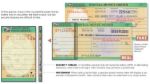
(Picture of counterfeit financial instruments recently intercepted in the mail by an International law enforcement task force)

In the past several days, I've noticed a surge in counterfeit check alerts from the FDIC (Federal Deposit Insurance Corporation). From December 19th to the 21st, the FDIC issued 26 alerts from various financial institutions throughout the United States reporting counterfeit activity using their information.

These checks are used in all the different varieties of overpayment scams. The basic MO (method of operation) in these scams is to trick someone into negotiating a bogus financial instrument and sending the money back to the person behind the scam. The victim is offered a small part of the money for doing this.

Of course, they are held liable for all of it when the item is discovered to be fraudulent.

Some of the known varieties of the overpayment scams are the lottery, auction, secret shopper, romance and work-at-home (job) scam(s). Please note you can search any of these "scam" terms at the top of this page for more information.

Spam e-mail is normally the vehicle in which these scams are presented, however they show up in more traditional print venues (including junk mail) from time to time, also.

One thing to bear in mind is that counterfeit checks (cheques) often appear to be legitimate in verification systems. The reason for this is simple, they use legitimate account numbers.

Victims have even asked employees at their financial institution of choice if the instrument was legitimate. Sadly, the items are often so good that the person is told that they are real. A financial institution employee verifying an item offers you no guarantee that the item is good. The person passing the instrument is the one who is liable for it.

Another tricky thing is that many financial institutions will also give their customers credit for these items in their accounts. This often gives the victim a false sense of security and causes them to send the money back to the scammer before realizing what is going on.

Federal rules dictate that banks can only put holds for a specified period of time depending on what type of check it is. The people behind the scams know about this and take advantage of it.

Although the money can be sent in a lot of different ways, most scammers prefer the use of Western Union, or MoneyGram wire transfer services. The reason for this is once the money is picked up (often within minutes), there is no recourse for the person who sent it.

Besides counterfeit checks, we've seen other instruments counterfeited on an industrial scale and sent to unsuspecting people, also. The known items in circulation are have included Postal Money Orders, Travelers Express (MoneyGram) Money Orders, American Express Gift Cheques and Visa Travelers Cheques.

The end result of these scams is that the person negotiating the item will be held financially liable. People are also getting arrested in certain circumstances for passing these items, also.

The National Consumers League recently set up a site (fakechecks.org), which is a great reference on Internet scams involving checks (complete with visual presentations), here.

Here is a post, I wrote with more information on how to verify one of these items:

Tools to verify those too good to be true financial instruments you got in the mail

Please note that if the deal you are being presented is too good to be true, or you are being asked to wire money it probably isn't worth going to the effort of trying to verify the item.

Also note that these scams have become so sophisticated that there is no guarantee that any amount of verification can guarantee the item is legitimate!

Thursday, December 13, 2007

Counterfeit Visa Travelers Cheques in circulation!

Counterfeit financial instruments are circulated in a variety of Internet scams. The ploy is always to get someone to cash them and then wire the money back to the person behind the scam.

In the past couple of weeks, readers and other sources have brought to my attention that counterfeit Visa Travelers Cheques are in circulation.

Visa has provided resources to identify these instruments.

You can call them at 1-800-227-6811 to verify an item. This can also be done on-line, here.Visa also has a good interactive tool to identify the security features of the Visa Travelers Cheque, here.

The trick is to ALWAYS verify them before you negotiate them using your good name!

Some of the scams being used to trick people into cashing these items are known as work-at-home (job) scams, secret shopper, romance, lottery and auction scams.

A collective name for all of these scams that ask you to cash an item and send the money back to the scammer is called the advance fee (419) scam.

A lot of the sites dedicated to fighting scams are also seeing an alarming trend, which is that people are getting arrested for attempting to cash these items.

I recently had a conversation with the fine folks over at FraudAid about this trend.

A great (new) resource about all the counterfeit paper being circulated is FakeChecks.org.

People, who fall for these scams do so because they are lured with something that is too good to be true. The old saying is that if it is "too good to be true, it is NOT!"

Here are some other counterfeit instruments, I written about that are still in circulation:

Counterfeit MoneyGram Money Orders being passed via Internet Scams

Counterfeit Cashier's Checks Fuel Internet Crime

American Express Gift Cheques Being Circulated in Internet Scams

Counterfeit Postal Money Orders Showing Up in IScams Again

Here is a picture of counterfeit Visa Travelers Cheques that were sent to someone about a week ago. They were sent from the United Kingdom, however the scammer wanted the money wired to Nigeria.


(Photograph courtesy of Raleigh)

Thursday, December 06, 2007

Word of mouth is fraud's worst enemy!

FraudAid, a website dedicated to helping fraud victims has a saying, "Silence is fraud's best friend. Word of mouth is fraud's worst enemy. Pass the word!"

In a world, where fraud victims have a hard time getting anyone to even talk to them this saying makes a lot of sense.

FraudAid was conceived by a woman by the name of Annie McGuire, who fell victim to a fraud scheme, herself. Her personal story, which is told in great detail on the site proves that just about ANYONE can become a fraud victim.

In my personal dealings with victims, you would be surprised who has been scammed.

The problem is that most people -- especially those who think they should have known better -- rarely report that they have become a victim of fraud. FraudAid strives to educate all of us that the lack of communication enables fraudsters to victimize people (who if they have been made AWARE) might not be have been taken in by a fraud scheme.

Thus, the reason there seems to be so much fraud and the experts compiling all the statistics disagree on how much fraud exists. After all, "Silence is fraud's best friend."

The FTC just released their estimate of identity theft victims, which has raised a lot of speculation about how accurate their number is.

I have no doubt that the FTC did the best they could, but if fraud isn't reported, it's hard to quantify.

The FraudAid site is a wealth of information for someone, who is trying to seek help after becoming a victim. Of the greatest importance (in my opinion) is how to deal with the authorities.

One page on the site shows the average person how to write a narrative that will get the Police interested in going after your case.

It also goes into great detail on what law enforcement agency specializes in what type of fraud. This can be confusing for someone dealing with being victimized for the first time.

The site also addresses a growing phenomenon, which is how to avoid getting arrested after becoming a victim. With all the auction fraud and stolen financial information being sold wholesale, fraudsters have developed a need to launder the proceeds of their illicit transactions.

The way they do this is by tricking people to do it for them. This is accomplished by hiring them under "false pretenses" to negotiate all their illicit transactions and wire the money to them. This scam is often referred to as a work-at-home, job, or check-cashing scam.

Another variation, known as a reshipping-scam, tricks people into reshipping stolen merchandise.

In reality the victim is taking all the risk for the scammer -- and more and more often -- the rap for them when they get caught. Sadly enough, the end result is almost certain financial ruin and possibly being charged with a host of crimes including, check fraud, money laundering and receiving stolen goods.

Some of detailed information on the different scams that can be found on FraudAid include investment, Nigerian (419), sweetheart/romance, lottery sweepstakes, lottery, work-at-home, visa/green card, counterfeit check/money order and reshipping/package processing scams.

Also covered on the site is how to protect yourself and recover from identity theft. Many fraud victims later become a victim of identity theft when a fraudster sells all the information they've data-mined off them.

The site even contains information on child safety and human trafficking.

Backing all this up are a host of research tools for fraud, where to report it and how to take political action.

Annie is now backed up by a group of volunteers, one of whom, Karrie Brothers, assisted me with a lot of information on the current going-ons at FraudAid.

To grow this effort, Karrie and Annie are actively seeking volunteers to assist them. Being one of the few resources where a victim can turn to, they are getting a lot of business!

FraudAid gives a good explanation of why volunteers are needed and they are trying to grow their organization:

Fraud, by every measure, is one of biggest and fastest growing industries in the world.

One study values worldwide corporate fraud at over two trillion dollars. This is not counting consumer and Internet frauds for which there is no reliable assessment. Another study estimates that 6% of global product is laundered money.

The fraud industry is run by many, many skilled professionals. The anti-fraud industry is small and, by comparison, run by very few skilled professionals.

That's why if you have the skills you can make a real difference!

Fraud Aid, Inc. is a volunteer anti-fraud organization. We, as all other anti-fraud organizations, are out-numbered and need your help.

We have the frauds. Do you have the time?

To grow the organization, they are recruiting a wide range of volunteers with law enforcement, legal, IT and education experience. There are also opportunities for people with no experience, also.

Even if you think you are aware of all the fraud schemes out there, FraudAid is a great place to learn more about them. After all, if people weren't being taken in by the schemes, fraud would probably disappear pretty quickly!

If you want to learn more about FraudAid, the site can be seen, here.

Tuesday, April 17, 2007

Counterfeit MoneyGram Money Orders being passed via Internet Scams

Recently, MoneyGram removed the Travelers Express name from their money order product. The new version is branded simply as MoneyGram, printed in Spanish (Espanol) in addition to English.

The old version with the Travelers Express name have been counterfeited and circulated via Internet scams for a couple of years. A lot of them had Walmart's logo printed on them. We've seen similar counterfeit American Express Gift Cheques and Postal Money Orders in recent years, also. Some of these items are still in circulation, including the older Travelers Express version.

The newer version (MoneyGram) printed in both Spanish and English are now being counterfeited and being circulated via Internet scams. The one I saw was accompanied by a letter from Walmart Financial Services.

Like other counterfeit financial instruments, we'll probably see these circulated via romance, auction, job, secret shopper and lottery scams. The common theme is that the scammer will always request that you send a portion of the money back to them (wire transfer is the preferred method).

In the case of auction scams, they may be used to buy expensive merchandise.

Cashing these items will leave you at a minimum, financially liable. I've also been told by readers that people are sometimes getting arrested for passing them!

The new version (recently seen) have receipts attached to them. Money Order companies often attach receipts to their products as a security feature. These receipts are used to obtain refunds, if a money order is lost, or stolen.

The counterfeiters have probably added this feature to instill a false sense of security.

Like their predecessors, these counterfeit Money Orders are (normally) easy identified by calling in and verifying their authenticity.

MoneyGram has an automated system to do this, which can be accessed by calling 1-800-542-3590. Live customer service help is available during normal business hours.

MoneyGram also has a page with a lot of relevant information on how to SAFELY negotiate these items, here.

Since this is something new, if anyone would like to help get the word out, please leave a comment on this post, or drop me a line at EdwardDickson@SBCGlobal.net.

Wednesday, April 04, 2007

Google name used in Internet deployed Lottery Scam

If it's too good to be true, it probably isn't (especially on the Internet). A spam e-mail, I received today informed me that I've won Google's lottery and 500,000 euros.

Trusted names are used to provide a false sense of legitimacy. Since I myself am a Google fan (user), I decided to comment on this one.

When the (eventually unfortunate) winner answers one of these, they are asked to send (wire transfer is preferred) money to cover taxes and tariffs to get their prize released.

Frequently, the scammer will send a counterfeit check (normally official, or cashier type) for their intended victim (winner) to cash. Eventually, the counterfeit check is discovered and the lottery winner is left hold the bag. Besides, financial consequences, (if I am to believe people reading this blog), cashing these items can cause someone to get arrested, also.

Unfortunately, the crooks behind these scams are normally safe in another country and rarely (if ever) get caught.

For a more detailed explanation on how these scams work (the lottery variety is one mutation of them), I did a post:

Counterfeit Cashier's Checks Fuel Internet Crime

A lot of the spam deploying these scams is facilitated using botnets (groups of zombie computers) that were taken over after another unfortunate Internet user opened an attachment in a spam e-mail, they probably shouldn't have.

Here is a post, I did at the beginning of the year describing this problem (getting worse all the time):

2006 was the Year of Internet Crime - 2007 is predicted to be even worse

Here is the e-mail I received (complete with all the bad grammar and spelling mistakes). Bad grammar and spelling mistakes are common in these e-mail lures.

Another clue is always the instruction not to tell anyone they are a winner.

From:nelson@nelsonbeilean.orangehome.co.uk
Subject:ISP Nomination/Email Award.
Date:Wed, 4 Apr 2007 17:53:07 +0200 (CEST)
To:FROM: LOTTERY COORDINATOR,INT. PROMOTIONS AND PRICE AWARD DEPARTMENTGOOGLE. Bolos Avenue 12900 kd .RESULTS FOR CATEGORY "A" DRAWS

Congratulations to you as we bring to your notice, the results of the First Category draws of E-MAIL LOTTERY organised by GOOGLE INT. We are happy to inform you that you have emerged a winner under the First Category, which is part of our promotional draws. The draws were held on 30th of March 2007 and results are being officially announced today 4th of April 2007. Participants were selected through a computer ballot system drawn from 5,500,000 email addresses of individuals and companies from Africa, America, Asia, Australia, Europe, Middle East, and Oceania as part of our International Promotions Program. Your e-mail address, attached to ticket number 675432890044/376, with serial number 2200-33 drew the lucky numbers 1-0-11-44-03-22 and consequently won in the First Category. You have therefore been awarded a lump sum pay out of One million (1,000,000.00) euros, which is the winning payout for Category A winners. This is from the total prize money from 1,500,000 euros shared among the 2 winners in this category. Your fund is now deposited with the paying Bank. In your best interest to avoid mix up of numbers and names of any kind, we request that you keep the entire details of your award strictly from public notice until the process of transferring your claims has been completed, and your funds remitted to your account. This is part of our security protocol to avoid double claiming or unscrupulous acts by participants / non participants of this program. Please contact your claims agent immediately for due processing and remittance of your prize money to a designated account of your choice:To file for your claim, please contact the CLAIMS agent.

Mr.Windy Smith.Cable Trust AgencyEmail:
*(e-mail
addresses and telephone numbers removed)
Academias53,11269 Athens
Greece.

You are advised to contact the agents by Email address.

NOTE: For easy reference and identification, find below your reference and Batch numbers.

Remember to quote these numbers in every one of your
correspondence with your claims agent.
REFERENCE NO:GPINT/7980/4376/06 BATCH
NO: 33/904/G3K. Congratulations once again from all our staff and thank you for
being part of our promotions program.

Sincerely Yours,

Dr.
Nelson Beilean.

PROMOTIONS COORDINATOR.

Wednesday, January 17, 2007

OCC is warning the public about counterfeit cashier's checks


I've written a lot about counterfeit cashier's checks, which have spread via the Internet in a number of different scams. Known scams include winning the lottery, secret shopping, overpayment for an item sold on an auction site, or assisting a romantic interest found in a chat-room.

The people who do this are creative and you never know what new "scam mutation" will be discovered tomorrow.

The OCC is warning:

However, cashier’s checks lately have become an attractive vehicle for fraud when used for payments to consumers. Although the amount of a cashier’s check quickly becomes “available” for withdrawal by the consumer after the consumer deposits the check, these funds do not belong to the consumer if the check proves to be fraudulent. It may take weeks to discover that a cashier’s check is fraudulent. In the meantime, the consumer may have irrevocably wired the funds to a scam artist or otherwise used the funds – only to find out later, when the fraud is detected – that the consumer owes the bank the full amount of the cashier’s check that had been deposited.

The OCC offers a lot of insight about the growing problem of counterfeit cashier's checks, here.

Also contained is a FDIC Bank locator, which is an excellent tool because in a lot of scams - the crooks set up phony telephone numbers and even addresses to make themselves appear legitimate.

In the case of cashier's checks, the issuing bank (not yours) is the best place to validate whether an item is legitimate, or not.

FDIC tool, here.

If you would like to see if a particular bank has been targeted with counterfeit cashier's checks - the FDIC issues alerts, here.

Another item to key on is the "scam behavior," which normally will always involve sending money to someone in anticipation of something that is too good to be true!

Sunday, January 14, 2007

Does anyone know - whether or not - check fraud is on the rise?

I sometimes wonder - whether or not - anyone really knows how much check fraud is out there?

Law enforcement jurisdictions often have dollar amounts (some fairly high), which must be met before a case is actively investigated - causing it to be recorded as a statistic. And in the private sector - a lot of NOT very "clear reasons" are used to return checks, which might or (might not) mean fraud.

My two favorites reasons the banks use to return checks are "refer to maker" and "stop payment." This might mean someone was unhappy with a service that was performed, or it could mean the item is counterfeit and the owner of the account placed "stop payments" on the checks. It's even possible that items returned as NSF (non-sufficient funds) are forgeries, or counterfeits because the owner of the account has yet to discover their account has been compromised.

The same holds true with "fraud accounts" that banks open for crooks (new account fraud). New account fraud occurs when fraudster(s) open an account (often with fake information), write a series of checks for a lot more than what is in the account, and disappear (literally).

Often they do this over a weekend, and withdraw the amount they initially deposited, also.

New account fraud items normally return as (NSF) non-sufficient items until the bank closes the account. Once this occurs, they are classified as "account closed." Non-sufficient fund and account closed items are normally not considered a fraud classification.

The only thing that is certain is that the loser is going to be the party, who accepted the check, and not the banks. In fact -- some believe the banks are the winners in this process -- because they make a lot of money from "bounced check" fees.

In a lot of the recent Internet scams, customers have even gone to a bank employee to ask if an item is good. After trusting the employee's expertise, the check was deposited and the funds were made "available." A few days later, the item was returned as fraud and the customer's account was "garnished."

And in all the cases, I've heard where this happened, the bank didn't accept any liability. Here's a post, I wrote about this:

Don't Trust a Bank to Tell You Whether a Check is Good, or Not

The other day, I came upon an article by SmartPros, indicating that a "possibility exists" that check fraud will rise in the coming year.

According to SmartPros:
Identity theft trends in the next year may include an increase in check fraud, check synthesizing and check counterfeiting, according to The Identity Theft Resource Center, a nonprofit victim assistance center.
SmartPros story, here.

In case no one has been watching - check fraud appears to have been growing rapidly over the past several years. It's true that all the bogus "financial paper" circulating aren't only checks, we are seeing a lot of counterfeit money orders, also.

Counterfeit cashier's checks and other bogus paper financial instruments (money orders, travelers and gift cheques) have been showing up in secret shopper, romance, lottery, work-at-home and auction scams at ever increasing rates. The situation seems to be getting worse - as more and more people - become Internet users.

In fact, eBay recently announced they will no longer offer any protection for paper financial instruments on their site.

And so far as the amount of them out there, there is evidence that bogus paper financial instruments are being produced on an industrial level:

Are Counterfeit Documents being Mass-Produced in Nigeria?

The Federal Deposit Insurance Corporation sends out alerts on all the counterfeit cashier's checks, which are pretty hard to keep up with. If you want to see what I mean, link here.

We read a lot about "DIY" (do-it-yourself) kits being sold to commit phishing and eBay fraud in shady Internet crime forums -- but in the case of checks -- DIY kits are openly sold in stores, and available on e-commerce sites.

In fact, there are a lot of "legitimate companies" selling all sorts of software, printers and even magnetic ink, which are capable of turning out some pretty convincing counterfeits. Throw in a computer, and it's not very difficult to start making checks.

To show all the "DIY check technology" for sale on the Internet, I ran a Google search, here. Of course, a lot of this (including the paper) can be bought at your local office supply store, also.

As with a lot of fraud, technology seems to be enabling the problem.

Although check fraud might continue to grow, there is little doubt that it's already a huge problem. BankersOnline did an article in 2002 stating:

About five years ago, U S NEWS and WORLD REPORT did the most in-depth study on this that we've had, and I've used their figures ever since. They probably are low by now. They said the financial institutions in the United States lose about $12 Billion a year in check fraud, and the retail industry loses a like amount. The total loss being $24 Billion as a result of check fraud. I think identity theft is getting a lot of publicity now - but it's been around for a long time. We just never gave it the designation of identity theft.

Since this report is now 5 years old and it is using figures that were 5 years old -- no one probably knows how much check fraud is really going on.

I guess until everyone comes up with some uniform standards, it's going to be impossible to determine how much check fraud is really out there.

BankersOnline article by Barbara Hurst, here.

A great resource on check fraud is the National Check Fraud Center. Their site provides a lot of expert information on check fraud and how to protect yourself from it.

Is check fraud on the rise? Despite the lack of statistics - my best guess is that it is!

Saturday, December 23, 2006

Fraudulent Gift Cheque Update from American Express

Since September, I've been writing about counterfeit American Express Gift Cheques showing up in a variety of Internet fraud schemes.

Readers have reported receiving these items primarily as a result of work-at-home scams, but they can show up in a variety of Internet fraud come-ons. They might also show up in secret shopper, romance, lottery and auction scams.

The fraudsters want you to cash these counterfeit gift cheques and send (normally wire) the money back to them. When they are discovered to be fraudulent - you end up taking the "rap" and they disappear in an "electronic mist."

Several readers reported being asked to wire the money to Nigeria and the United Kingdom. I recently wrote a post based on large amounts of counterfeit financial instruments being found at airports in the United Kingdom (allegedly from Nigeria), here.

Most of the counterfeit gift cheques, seen thus far, have been in the $500.00, or $1000.00 denominations. Note American Express doesn't issue gift cheques for more than $100.00.

American Express states in their bulletin that gift cheques are safe when verified prior to negotiating them. Anyone can call them and verify an item at 1-800-525-7641.

Unfortunately, a lot of people don't verify these items. Many people have also deposited them, initially received credit, and then had their accounts garnished when the items returned.

I've also had a couple of people write me and say they were arrested for trying to cash them. Presenting counterfeit financial instruments is considered a crime in most places. It will be up to the person arrested to prove they were a victim of a scam and not involved, intentionally.

American Express gift cheque bulletin, here.

Listed below are the posts, I've written since September, along with some scary comments from readers:

Counterfeit American Express Gift Cheques

Counterfeit American Express Gift Cheques (Update)

American Express Gift Cheques Being Circulated in Internet Scams

American Express gift cheques aren't the only items that have been counterfeited and passed via Internet scams. In the past we've seen a lot of Postal Money Orders and Travelers Express (MoneyGram) money orders being counterfeited, also.

Monday, November 27, 2006

Tickets to the Oprah Show Smell a little Phishy

First gypsies impersonate Dr. Phil and now someone is selling tickets to the Oprah show that smell a little "phishy."

Illinois Attorney General, Lisa Madigan warned the public in a official statement:

In this case, e-mail recipients are asked to submit personal information and told they will receive tickets to The Oprah Winfrey Show after verification of certain financial information and/or the wiring of money to an unknown third party. However, according to Harpo Productions, Inc., The Oprah Winfrey Show does not sell tickets or ticket travel packages to fans. Consumers should disregard any e-mail that purportedly comes from The Oprah Winfrey Show offering show taping tickets for a fee.

No one is reporting any cases of identity theft yet, however one this is certain; wire money to anyone for Oprah tickets and you are going to lose out!

Tickets to watch a taping of the Oprah show are free!

Fraudsters and Phishermen love to have money wired to them - because once it's picked up - it belongs to them and there is nothing the sender can do about it.

Western Union has a warning about wire transfer scams, here.

Of course, the personal information harvested from this phishing attempt might be for sale in underground forums (chat-rooms). More on this, here.

Please note that "unsolicited" requests for personal and financial information via the Internet are scams, no matter how official they might seem. Fake "official looking" websites - including banking sites - are all "too" common in the "sometimes" murky waters of the Internet.

For more on this, you can read the release from Attorney General Madigan's office, here.

The press release mentions information on where to report this scam at the bottom of the release (link above).

Tuesday, November 07, 2006

Russian Expert Cites 99 Percent of Internet Brides are a Scam

Romance scams happen on the Internet, daily. Here is a story, which indicates that despite "Internet legends" not all of them start in Nigeria.

Mosnews (a Russian publication) reports:

All online dating sites suffer from dating scammers, 99 percent of the emails are hoaxes designed by professional Internet criminals says Elena Petrovathe founder of Russian Brides Cyber Guide, Prweb.com Website reports.

Internet criminals use sophisticated scripts and custom-built software to contact thousands of male users of Internet personals, creating fake Russian women identities and requesting money for airplane tickets.

Link, here.

Interestingly enough, they mentioned one group making a million dollars off these scams AND that in one instance involving "Russian brides," it was an American that was behind the scam.

While I was reading this story - I happened to see another one that claims that a senior Russian prosecutor claims that corruption in Russia amounts to 240 billion a year, read here.

Russian organized crime seems to have it "claws" in a lot of illicit activities - including cybercrime. The U.S. Department of Justice published a document going into great detail about it, here.

I started this post with the comment that despite "Internet legend" not all fraud originates in Nigeria. I will close with that all of it doesn't come from Russia either. In fact, according to the Anti-Phishing Working Group, there are more malicious websites "hosted" in the United States than anywhere else in the world.

Of course, I could go on and on about this - but the bottom line is that Internet criminals can come from anywhere and so can "good people," who are doing their best to fight it.

Saturday, October 21, 2006

American Express Gift Cheques Being Circulated in Internet Scams

A couple of weeks ago, I updated an earlier post about counterfeit American Express Gift Cheques and asked my readers to help me discover exactly how these items were surfacing.

Prior to this, I knew they were showing up over a wide geographical area, but no one was "sharing" how they happened to get them.

One reader wrote in and said:

"I was almost duped into this. I responded to an ad on indeed.com. I was told that this person was an artist that needed a way of getting his money from clients in the US. This person was going to give me 10% of every artwork he sold. I bought in to this hook, line and sinker. However, when the payment came it was from Nigeria that made me suspicious. I checked online and verified these with American Express they asked me for all the information I had on the person I received these cheques from and had me write a series of numbers and letters on the back of the cheques and send them back to them. Thanks to your website I was able to prevent this from happening to me."

Several other readers wrote in and reported getting them as a result of being hired to process payments a.k.a. (also known as) a "job scam," or as an "overpayment scam" for something they were selling online. The goal in an "overpayment scam" is to have the amount "overpaid" wired to a far-away locale.

In every report, the reader had been asked to negotiate the items and wire the majority of it (minus a commission) to either Nigeria, or the United Kingdom. The return addresses (where they were being sent from) were from all over the United States and as stated above, Nigeria.

Interestingly enough, I haven't seen any warnings in the press, or from American Express about this.

The best way for someone to protect themselves is to verify them with American Express by calling their verification number at 1-800-221-7282. American Express claims that if you do this, they will either tell you the item is fraudulent, or reimburse you if they make a mistake.

If you spot any of this activity, I would report it to:

Internet Crime Complaint Center (FBI)

If it involves receiving these through the mail, you can also report it to the Postal Inspectors, here.

Besides counterfeit cashier's checks - which seem to change "affected financial institutions" daily - we have seen (mostly) counterfeit money orders (U.S. and Travelers MoneyGram) being used in Internet misdeeds in the past couple of years.

Here are some previous posts about similar, or the same activity:

Counterfeit American Express Gift Cheques

Counterfeit Cashier's Checks Fuel Internet Crime

Counterfeit Postal Money Orders Showing Up in IScams Again

Postal Money Order Romance Scam

Counterfeit Travelers Express (MoneyGram) Money Orders Showing Up ...

Friday, September 15, 2006

Counterfeit American Express Gift Cheques

Counterfeit American Express Gift Cheques might be the latest form of fraudulent financial instrument circulating via the Internet. The items seen thus far are for $500.00 - note the largest denomination issued legitimately is $100.00.

If you receive one of these items - it is recommended you verify it before negotiating it. For the information to do so - link here.

Counterfeit financial instruments being used in Internet scams are nothing new. Here are some previous posts, I've done on this sort of activity:

Counterfeit Cashier's Checks Fuel Internet Crime

Counterfeit Postal Money Orders Showing Up in IScams Again

Postal Money Order Romance Scam

Counterfeit Travelers Express (MoneyGram) Money Orders Showing Up ...

In most Internet scams involving counterfeited financial instruments - a person is duped into negotiating the item and wiring the money back to the sender (scammer). If someone asks you to cash an item and wire them money - take a deep breath - and just say "no thanks."

Thursday, September 07, 2006

Counterfeit Cashier's Checks Fuel Internet Crime

Tom Fragala - Truston Identity Theft Blog - and I were talking about how counterfeit cashier's checks have become a long-term problem in the world of Internet crime.

It's often difficult to verify that a check is counterfeit. They often use valid account numbers, which verify (easily) in the computerized telephone systems that most banks use today. Quite simply, unless the bank or the account owner is aware of that their account is being counterfeited - the item will appear to be legitimate.

Furthermore -- a lot of banks have taken the stance in recent years -- that they will not verify whether a check is good, or not. It's getting harder all the time to verify checks with banks.

The lottery, auction, work-at-home (check cashing), romance, advance fee (419) and secret shopper scams all have a common theme -- they often use counterfeit cashiers checks to lure victims into negotiating the item and wiring the money off to some far-away location.

The fraudsters often request that you use Western Union, or MoneyGram to wire money to them. They are also known to use wire transfers services offered by banks. Once the money is picked up (normally very quickly in scams), the sender has very little, or no recourse.

The golden rule is to never wire money to people you don't know, or only know from the Internet.

To understand why Internet fraudsters prefer counterfeiting these instruments, one can refer to the legal definition of a cashier's check (courtesy of Wikipedia):

Under Article 3 of the Uniform Commercial Code, a cashier's check is effective as a note of the bank. Also, according to Regulation CC (Reg CC) of the Federal Reserve, cashier's checks are recognized as "guaranteed funds" and amounts under $5000 are not subject to deposit holds, except under certain circumstances.

To the person receiving the item, they appear as if they are guaranteed by the bank and if the check is under $5,000.00 - there is no hold on the funds. The fraudsters know this and it will normally be 7-10 days before their victim discovers that anything is wrong.

There was a recent story circulating in the press about a "seemingly cautious gentleman," who decided to have his bank examine the item before he went forward with an auction deal. The bank told him the item was good (twice) and he deposited it. Several days later, while reviewing his online statement, he discovered that this wasn't the case and the bank had withdrawn the funds.

In the article, the bank blamed "Reg CC," because they are unable to hold the funds. Not completely true, an exception can be made if they have reason to believe the item can't be collected. The item may also be sent in as a collection versus depositing it in the account.

Nonetheless, in this instance, the bank had little to no liability because the item was counterfeit.

To illustrate, the amount of this activity, the FDIC sends out alerts on counterfeit cashier's checks. If you would like to see how many alerts -- they've issued recently (scary) -- link here.

Here are some things a person can do to see if a cashier's check is fraudulent:

If someone is asking you to wire money back to them - it's more than likely a scam.

Review the security features of a cashier's check. Despite the "booming" make your own check industry, some of the items out there are pretty amateur. Wikipedia has a good reference on the security features, here.

Review recent FDIC alerts - in a lot of cases, a warning has already been issued.

Verify the check with the issuing institution. Although this isn't 100 percent effective in the case of a counterfeit, they can normally verify certain items; like the ABA/account number, payee, check number, date of issuance, authorized signer and amount.

When you call the bank, never use the number printed on the check. Quite often - phony numbers with phony employees are set up to verify these items. Get the bank's number from a website, or telephone directory. Using 411 (information) might not be the best way to verify a number. Recently, there have been phony numbers set up that verify through - and reverse - through 411.

Since, there are also a lot of phony bank sites out there, if you use the Internet, TrustWatch is a good option for a search engine. TrustWatch will show you via a "coded coloring system," whether the site is verified to be legitimate, or not.

In some instances, good cashier's checks are copied, which defeats verifying the item by telephone. Once the counterfeit item is cashed, the fraudster negotiates the good item and the counterfeit is returned. This is also seen (occasionally) with counterfeit money orders.

If you are still uncomfortable after talking to the bank - ask to speak to a supervisor, or even better - someone in the fraud department. Ask if you can fax them a copy of the item for them to look at. A good way to do this - is to tell them you have a reason to suspect fraud.

Scams that involve, counterfeit cashier's checks, always represent something that is too good to be true. If this is the case, it probably is.

Sunday, May 28, 2006

Is the Latest Congressional Scandal a Nigerian Fraud


The AP is now reporting the possible involvement of Nigerian Vice President Abubakar Atiku in the bribery scandal involving Congressman William Jefferson of Louisiana.

To try to get some commentary on this, I went to Congressman Jefferson's site. The only thing I found "interesting" was a message to the "Katrina Victims." Unfortunately, Katrina has now - ALSO - proven to be a fraud-ridden event.
Now the AP is briefly mentioning that the Vice President of Nigeria was the intended recipient of the bribe and the African Press is discussing it in more detail.

As reported by the AP:

While the name of the intended recipient of the $100,000 is blacked out, other details in the affidavit indicate he is Abubakar Atiku, Nigeria's vice president. He owns a home in Potomac, Maryland, that authorities have searched as part of the Jefferson investigation.


For the full story from the AP, courtesy of W-TOL in Toledo, Ohio, link here.

Nigeria has received a lot of bad press for being the "point of origin" for fraud schemes that have victimized people worldwide. In the past few years, President Olusegun Obasanjo has come down hard on fraud and with the help of his EFCC (Economic Financial Crimes Commission) prosecuted a lot of high profile cases, which were well publicized.

Here is a description of Nigerian fraud that I wrote in an earlier post:

"Nigeria is one of main sources for all sorts of Advance fee fraud (419) fraud scams. The Advance Fee scam is where a ruse is used to get a victim to send them money (nowadays normally wire-transfer) in anticipation of riches (or sometimes love) to come. The best known is the "Nigerian Letter," but the activity has mutated into romance, lottery, auction, check cashing, work at home and reshipping scams."
While the fraud that is exported from Nigeria is what we read about all the time, there is considerable evidence that fraud in Nigeria (at least historically) exists at all levels. The current President (Obasanjo) has led a very public campaign against corruption within Nigeria and is credited with making great strides in this area.

It will be interesting to see if the EFCC investigates the Vice President. AllAfrica.com is reporting the story, which quotes Atiku as saying Jefferson was name dropping and obviously committing a 419 (Nigerian Penal Code for Advance Fee) scam. In all fairness, most of the money was still in Congressman Jefferson's freezer, and he did indicate to the "informant" that the money had reached the intended recipient.
Please note that other fraudsters impersonating Nigerian fraud is nothing new. In the past, I've seen other groups do scams - which were made to look as if they came from Nigeria.
However, BiafraNigerianWorld.com wrote an article about the "mysterious" mansion in Potomac, and it's (legal) owner, Jennifer Douglas. According to BiAfra Nigerian World, the mansion was purchased after Atiku became Vice-President and Jennifer Douglas - who they describe as one of Atiku's many wives - is a student with no verifable income. Their article states that Ms. Douglas has left the United States and returned to Nigeria. The AP article states that this mansion, if they are one and the same, belongs to Atiku and makes no mention of Ms. Douglas.
BiAfra Nigerian World has a link to Maryland Property records showing Jennifer Douglas as the owner.
Another item mentioned in all the artices was a telecommunications deal with Nigeria, where the owner of the U.S. company in question has already pled guilty to giving Congressman Jefferson $400,000.00 to seal deals with Nigeria and "other African countries.
Link to the story from BiafraNigerianWorld.com, here.
The AP doesn't seem to come to any conclusions and the FBI isn't commenting yet, which could mean the matter is still under investigation.
The FBI recently added a page to their website, where the public can report government fraud.
Considering the recent activity with Tom Delay, Randy (Duke) Cunningham and now this investigation, they seem to be pretty busy in this arena.

Here are some previous posts, I've done on Nigerian Fraud:

419 From the Other Side of the Fence

Hard Drives for Nigeria

Nigerian Vice President Abubakar Atiku

Saturday, May 20, 2006

Counterfeit Postal Money Orders Showing Up in IScams Again


If someone you know over the Internet asks you to cash a money order -- or offers it you as a form of payment -- it's probably best to remember the old legal term "Caveat emptor, or "Buyer Beware."

As reported by readers and other sources, the Internet market is (again) being flooded with counterfeit U.S. Postal Money Orders. After not being around for awhile, these items are raising their ugly head again.

The U.S. Postal Inspectors have speculated in the past that these items are being counterfeited in Western Africa and Eastern Europe. For an interesting article from the NY Times about this, link here.

This is probably the best article, I've read on this subject.

The Postal Inspectors also have a page on how to identify counterfeit money orders.

Yes, counterfeit Postal Money Orders are making a come back, but the core activity has never stopped. The Internet is full of counterfeit methods of payment and the best way to avoid becoming a victim is to recognize the social hook the criminal uses, or "something too good to be true."

While we thought counterfeit Postal Money Orders were a thing of the past, they were replaced with counterfeit items from other money order issuers and legitimate money orders, which were altered.

Of course, there are also those counterfeit cashiers checks, which have been done from so many different financial institutions, it seems impossible to keep up with.

Internet fraud artists are constantly mutating their methods to confuse their victims.

In a recent post on Internet scams, I wrote:

"Thus far, these money orders are showing up mostly in Advance fee fraud (419) scams.
The Advance Fee scam is where a ruse is used to get a victim to send them money (nowadays normally wire-transfer) in anticipation of riches (or sometimes love) to come. The best known is the "Nigerian Letter," but the activity has mutated into romance, lottery, auction, check cashing, work at home and reshipping (as mentioned below) scams.
In a lot of the more recent Advance Fee activity, the victim is tricked into involving themselves in criminal activity, whether it be forwarding stolen merchandise, or negotiating bogus financial transactions and sending the funds elsewhere."

When someone from a Internet source offers free money, romance, or to pay more than something is worth - you are probably dealing with a fraudster.

Anyone, who does this for them, ends up with a huge loss. Even if you can convince the authorities you are a victim, the civil responsibility will still fall on you.

To make matters worse, a lot of petty criminals are getting in on the action, also. They get on the Internet, impersonate victims, get the instruments and then cash them with no intention of sending money back to the crook that sent them the item.

I predict, it's going to get harder and harder to convince the authorities that the person cashing them is totally innocent. Recently - in a "Judge Judy" episode - her "honor" chewed a defendant up and down for cashing a bunch of counterfeit money orders (through her sister's account) and claiming to be "totally innocent." In less than a minute, Judge Judy was easily able to establish that this victim had benefited financially from her transaction and had in fact never wired any money anywhere.

Best bet for all of this is to learn how to spot this activity and when we do, run away from it as fast as we can!

Of course, reporting it and making other's aware can help, also.

Sunday, April 16, 2006

Postal Money Order Romance Scam


Altered Money Orders have been around for a long time. Before new technology made counterfeiting money orders pretty easy, it was a common method of committing fraud.

Criminals buy a large number of them for a small amount, normally $1.00. The $1.00 money orders are then altered, using chemicals, and a much higher dollar amount is put on them.

Because financial institutions are fairly aware of this activity AND the "getting caught" factor is a risk, they find creative ways to get a less knowledgeable person to take the risks and send them the rewards.

These "less knowledgeable" people frequently suffer the consequences, or take the RAP for them, also.

While altered money orders (not just the Postal variety) have been around for quite some time, convicts seem to have a new way of getting them cashed.

They place ads in the personal section seeking pen pals. Once they have gained the confidence of the person, they trick them into cashing the altered instruments and sending the money back to them.

The Postal Inspection Service warns:

Be aware of the telltale signs of this unusual scheme. If you begin to write letters to a prisoner who is attempting to cultivate you for his mail fraud scheme, he will slowly attempt to gain your trust and confidence. If you are a single woman, he may even send you love letters and handsome photos, and promise to marry you upon his release. Male prisoners posing as women try to lure men into the scheme as well.

While confessing their love for you, he will also admit that he is serving a prison term for a tax violation or other non-violent offense. But he will say his prison term is almost up, and he's looking forward to starting a new life together with you when he is freed.

Eventually, he will ask you to cash one or more postal or other money orders for him, claiming that he needs the money to pay attorney fees or court fines. Where does he get each high-value money order (often as much as $700)? He will obtain them from an accomplice outside the prison who buys them in small denominations (often only $1) and then smuggles them inside the prison, where inmates alter them to reflect higher values.

When you assist your pen pal by cashing any such money order--and sometimes there are many of them totaling thousands of dollars--you are told to send the money to a "friend" of the prisoner, whom you're told is helping with his legal defense. Of course, this friend is the outside accomplice. You will be told first to deposit the money orders in your personal bank account for temporary "safe-keeping" and then to pay out the funds to the outside accomplice.

Shortly after sending the money, you will receive a cruel "Dear Jane or John" letter asking you to understand that your pen pal only did what he or she "had to do" to survive, and now that he's out, the relationship is over. But he's not out. He's still in prison. And what's even worse, he now has your money, because the bank will charge your account for the phony money orders you deposited. Since the U.S. Postal Service routinely compares all of its cashed postal money orders with the original money order receipts, all altered postal money orders will ultimately be discovered.

Under current law, the person who cashes, or deposits and then withdraws, an altered money order is responsible for its total value--in this case, the altered value. Therefore, shortly after you pay out the temporarily held funds from your bank account, your bank will notify you that you must pay the difference between the issued amount and the raised amount. For example, if you cash a $1 money order that has been altered to $700, you will end up being charged $699 of your own money.

Link to bulletin, here.

Although convicted criminals committing crime from behind bars makes a good news story, they might not be the only group involved in this type of activity.

Nigerian fraudsters are also known to be involved in Romance scams. Of course, there are other places the scam originates besides Nigeria, also.

Altered Money Orders don't only come from the prison system, either.

The U.S. Department of Justice reported:
At trial, the national money order fraud coordinator for the U.S. Postal Service testified that document fraud rings operating in West Africa, are known to be involved in altering U.S. Postal Money Orders and shipping them back into the U.S. to be cashed.
Link, here.

Counterfeit money orders might be more common in a lot of Internet scams, but altered money orders are still being produced and successfully used.

If you happen to receive any of these altered money orders, they can be reported to the Postal Inspectors, here.

Thursday, February 09, 2006

Phishing for a Lonely Heart

Romance Scams are not new on the internet. In the past, they have become a variation of Advance fee fraud (419) activity. The typical ploy was to establish e-mail/IM contact with a victim and get them to send money.

Now, it seems, the stakes are getting higher. Valentines Day could bring on a surge of phishing attacks designed to install malware (malicious software) on computer systems. The end-result of many of these attacks is personal and financial information being stolen and used to commit identity theft .

Here is a warning from Michael Carr of Purdue University, courtesy of TMCNet:

Electronic Valentine cards promising sweet nothings may instead infect loved ones' computers with a nasty surprise from a cyber scam artist, according to a Purdue University computer security expert.

"An e-mail or instant message from a 'secret admirer' on Valentine's Day may be specifically designed to pique your curiosity," says Michael Carr, Purdue's chief information security officer. "It's human nature and exactly what the bad guy is counting on."

According to the article, and Mr. Carr, here are items to be wary of:

- Not clicking on links or attachments unless they are part of an expected e-mail or instant message from a reliable, known source.

- Protecting your computer with current anti-virus software and manufacturer-recommended system patches.

- Checking the authenticity of a questionable message by contacting the sender via telephone or another messaging technique.

Sometimes dangerous e-mails can even arrive having been forwarded by or appearing to have been forwarded by people known by the recipient. Carr says even these messages also need to be evaluated and confirmed by a phone call to the sender.

"If you continue to have doubts about the e-mail or instant message, just delete the message," Carr says. "It is not worth the risk of being a victim."

"Information Technology at Purdue, also known as ITaP, provides free- of-charge computer security advice, including how to identify spam and phishing scams, on the Web at http://www.purdue.edu/SecurePurdue.

Here is the full story by TMCNet:

Expert: Electronic Valentine Cards Present Cyber Security Risk

Here is a previous post, I did on Romance Scams:

Criminal Activity on Dating Sites

A lot of these scammers lurk on dating sites and there is a Yahoo Group, Romance Scam 419 Yahoo Group (US) that is (in my opinion) the best resource out to learn how to avoid being a victim, or go to if you have become one. The members of this group support victims and actively go about scamming the scammers.

Here is what they do, in their own words:

"Welcome to the group Romancescams. Please feel free to tell us your story whether it is your own personal story or that of someone you know. This group provides a safe haven for all, free of criticism and judgment. Our goal is to educate by getting the word out to as many people as possible. Check out our photo, link, database, and file pages when you get the opportunity."

I highly recommend you find the opportunity to visit them and educate yourself. The group and it's members truly give a lot of themselves to help others, which is a noble cause. They also get quite a bit of revenge on the immoral people, who take advantage of other's feelings.

Monday, January 16, 2006

From Russia With Cash?

Advance fee fraud (419) scams never seem to go away. They mutate into another form and move forward. The news media and internet trace these scams to shady internet cafes in Lagos (Nigeria), but there is a lot of evidence that Nigeria isn't the only place they comes from.

The latest version is a solicitation to make a "cool" $45 million for helping a jailed Russian Billionaire invest some money. Of course, the end result for anyone who gets involved in this is having your account cleaned out.

Here is the latest twist as reported by Alex Nicholson from the Associated Press:

"Russia has more in common with Nigeria these days than just oil. Following up on the politically charged jailing of oil tycoon Mikhail Khodorkovsky, a wave of scam e-mails in the style of Nigeria's notorious spammers have been popping up in inboxes from Moscow to Kentucky."

Here is the full story: Russian Tycoon Is Spammers' New Target.

We can't even blame Nigeria for inventing the scam. The evolution of Advance Fee started with letters from (allegedly) rich merchants during the middle ages AND "a rash of Russian Letters that appeared in the 1920s, with money supposedly needed to rescue people held by the Bolsheviks."

Here is another mutation of the scam that stereotypically, we blame on Russians:

The internet is full of stories of Russian Romance Scams, where men and women are duped into sending money to someone they meet in a chatroom, or dating site. If you were to talk to the people at Romance Scam 419 Yahoo Group (US), my guess is that they would tell you that the scams not only originate from Nigeria and Russia, but several other places, also.

With the evolution of the internet, scams inducing people to send money in advance of a promise (which never materializes) are becoming epidemic. The original letter scam has led to romance, lottery, auction, check cashing and job scams. Undoubtedly, it will continue to mutate into different varieties as new events occur and different things become popular.

They are also no longer exclusively from Nigeria and Russia, but can come from anywhere. Recently, Canada and the Netherlands seems to be fertile breeding grounds AND in the future, who knows?

The internet with it's borderless environment has caused an explosion in this activity. Furthermore, with computers and internet access becoming cheaper all the time, more are more potential victims are getting on-line daily.

The reason why this scam continues to work is that it plays on human emotion and recognizing that is key to teaching people how to avoid being victims.

"If it seems to good to be true, it isn't."

For a good resource on definitions on all the various mutations of Advance Fee, Wikipedia does a pretty good job in their Internet fraud section.

Here is another well put together page on Advance fee activity from Caslon Analytics (Australia): the 419 Scam: basis, statistics, regulation.