Showing posts sorted by relevance for query reshipping scams. Sort by date Show all posts

Saturday, October 15, 2005

Criminal Activity on Dating Sites

I was reading an article by Christopher T. Heun (InternetWeek) on the amount of fraud on dating sites. He quotes an industry analyst that approximately 10 percent of the profiles on any given site are fake.

Recently, I've seen victims duped into cashing fraudulent money orders and or cashier checks by someone that met in a chatroom or on a dating site. Dating sites are another place where fraudsters go to harvest victims.

In the article, Dan Larkin (Internet Crime Complaint Center) states "People are already going to [dating Web sites] in a somewhat vulnerable position and the bad guys play on that. The reality is, people either don't know they're a victim or don't want to report it."

Dating sites are often used to recruit people into cashing fraudulent instruments and reshipping scams. These involve fraudulent financial instruments, or merchandise purchased with them. They are then asked to ship the merchandise, or negotiate the instrument into cash and wire the money to the fraudster.

In both scenarios, once the transactions are determined to be fraudulent, the victim is often left responsible for the financial loss. Even worse, they might face criminal charges.

Of course, there are also the mail order bride scams that can be found on these sites. Sometimes these scams are also set up on sites created by the fraudsters themselves. Here is an excellent link with information on how to spot these scams:

http://www.dangersofinternetdating.com/mailorderb.htm

There are also a lot of sexual and violent crimes are initiated on the internet. The "Home Page" of the link above is a really good site for anyone, who desires to protect themselves, or someone they know from the dangers of dating on the internet.

http://dangersofinternetdating.com/

In the busy world of today, there are a lot of people using the internet to find companionship. Whenever something becomes popular, it seems to attract the criminal element. In the end, being aware and informed is probably the best defense against becoming a victim.

Sunday, May 28, 2006

Is the Latest Congressional Scandal a Nigerian Fraud


The AP is now reporting the possible involvement of Nigerian Vice President Abubakar Atiku in the bribery scandal involving Congressman William Jefferson of Louisiana.

To try to get some commentary on this, I went to Congressman Jefferson's site. The only thing I found "interesting" was a message to the "Katrina Victims." Unfortunately, Katrina has now - ALSO - proven to be a fraud-ridden event.
Now the AP is briefly mentioning that the Vice President of Nigeria was the intended recipient of the bribe and the African Press is discussing it in more detail.

As reported by the AP:

While the name of the intended recipient of the $100,000 is blacked out, other details in the affidavit indicate he is Abubakar Atiku, Nigeria's vice president. He owns a home in Potomac, Maryland, that authorities have searched as part of the Jefferson investigation.


For the full story from the AP, courtesy of W-TOL in Toledo, Ohio, link here.

Nigeria has received a lot of bad press for being the "point of origin" for fraud schemes that have victimized people worldwide. In the past few years, President Olusegun Obasanjo has come down hard on fraud and with the help of his EFCC (Economic Financial Crimes Commission) prosecuted a lot of high profile cases, which were well publicized.

Here is a description of Nigerian fraud that I wrote in an earlier post:

"Nigeria is one of main sources for all sorts of Advance fee fraud (419) fraud scams. The Advance Fee scam is where a ruse is used to get a victim to send them money (nowadays normally wire-transfer) in anticipation of riches (or sometimes love) to come. The best known is the "Nigerian Letter," but the activity has mutated into romance, lottery, auction, check cashing, work at home and reshipping scams."
While the fraud that is exported from Nigeria is what we read about all the time, there is considerable evidence that fraud in Nigeria (at least historically) exists at all levels. The current President (Obasanjo) has led a very public campaign against corruption within Nigeria and is credited with making great strides in this area.

It will be interesting to see if the EFCC investigates the Vice President. AllAfrica.com is reporting the story, which quotes Atiku as saying Jefferson was name dropping and obviously committing a 419 (Nigerian Penal Code for Advance Fee) scam. In all fairness, most of the money was still in Congressman Jefferson's freezer, and he did indicate to the "informant" that the money had reached the intended recipient.
Please note that other fraudsters impersonating Nigerian fraud is nothing new. In the past, I've seen other groups do scams - which were made to look as if they came from Nigeria.
However, BiafraNigerianWorld.com wrote an article about the "mysterious" mansion in Potomac, and it's (legal) owner, Jennifer Douglas. According to BiAfra Nigerian World, the mansion was purchased after Atiku became Vice-President and Jennifer Douglas - who they describe as one of Atiku's many wives - is a student with no verifable income. Their article states that Ms. Douglas has left the United States and returned to Nigeria. The AP article states that this mansion, if they are one and the same, belongs to Atiku and makes no mention of Ms. Douglas.
BiAfra Nigerian World has a link to Maryland Property records showing Jennifer Douglas as the owner.
Another item mentioned in all the artices was a telecommunications deal with Nigeria, where the owner of the U.S. company in question has already pled guilty to giving Congressman Jefferson $400,000.00 to seal deals with Nigeria and "other African countries.
Link to the story from BiafraNigerianWorld.com, here.
The AP doesn't seem to come to any conclusions and the FBI isn't commenting yet, which could mean the matter is still under investigation.
The FBI recently added a page to their website, where the public can report government fraud.
Considering the recent activity with Tom Delay, Randy (Duke) Cunningham and now this investigation, they seem to be pretty busy in this arena.

Here are some previous posts, I've done on Nigerian Fraud:

419 From the Other Side of the Fence

Hard Drives for Nigeria

Nigerian Vice President Abubakar Atiku

Wednesday, November 21, 2007

Too good to be true employment opportunities

Patrick Jordan (Sunbelt blog) did a nice post about a huge problem that frequently occurs on the dark-side of the Internet.

The problem, I'm referring to is people being recruited (some might say duped) to assume the risk involved in collecting the proceeds of Internet crime.

With all the fraud occuring on auction and e-commerce sites -- criminals need a way to move they money they are stealing. This activity is often referred to as money laundering.

They accomplish this with money transfer scams, which are sometimes referred to as job scams.

These scams are nothing more than a way to trick people into negotiating bogus financial instruments, or launder the proceeds of auction fraud!

We've all probably seen a spam e-mail, or two (I get several daily) with job offers that seem a little too good to be true. Most of these jobs seek a financial representative to handle payments for a foreign company. In reality -- the person is moving stolen money overseas -- where it disappears into thin air.

Besides being offered in spam e-mails, people are also recruited off job sites and sometimes even from the classifed sections of newspapers and magazines.

A sister scam to money transfer scams is referred to as a reshipping scam. The difference is in this job a person reships hot merchandise (normally from auction sites) to their bosses.

In most of these scams, they prefer you use Western Union or MoneyGram to send them their money. Once the money is picked any efforts to recover it will most likely be useless. Please note that there are many e-cash venues that are used, also.

While these jobs might have fancy titles, a lot of people refer to someone doing this as a "mule."


(courtesy of mattcoz at Flickr)

In Patrick's post, he reveals another twist to this activity, which are websites set-up to make these jobs appear to be legitimate.

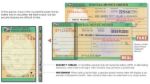
Here is a screen shot (courtesy of the Sunbelt blog) of the site Patrick discovered:


He also lists some other sites to avoid from the same IP in his post, which can be seen, here.

Most of these scams are pretty easy to discover because they are offering too much money for too little work.

These job offers are nothing more than a way for criminals to get other people to take all the risk, while they reap the rewards of their illegal efforts!

Besides facing almost certain financial ruin, some of these employees are ending up living in new digs:

Thursday, December 06, 2007

Word of mouth is fraud's worst enemy!

FraudAid, a website dedicated to helping fraud victims has a saying, "Silence is fraud's best friend. Word of mouth is fraud's worst enemy. Pass the word!"

In a world, where fraud victims have a hard time getting anyone to even talk to them this saying makes a lot of sense.

FraudAid was conceived by a woman by the name of Annie McGuire, who fell victim to a fraud scheme, herself. Her personal story, which is told in great detail on the site proves that just about ANYONE can become a fraud victim.

In my personal dealings with victims, you would be surprised who has been scammed.

The problem is that most people -- especially those who think they should have known better -- rarely report that they have become a victim of fraud. FraudAid strives to educate all of us that the lack of communication enables fraudsters to victimize people (who if they have been made AWARE) might not be have been taken in by a fraud scheme.

Thus, the reason there seems to be so much fraud and the experts compiling all the statistics disagree on how much fraud exists. After all, "Silence is fraud's best friend."

The FTC just released their estimate of identity theft victims, which has raised a lot of speculation about how accurate their number is.

I have no doubt that the FTC did the best they could, but if fraud isn't reported, it's hard to quantify.

The FraudAid site is a wealth of information for someone, who is trying to seek help after becoming a victim. Of the greatest importance (in my opinion) is how to deal with the authorities.

One page on the site shows the average person how to write a narrative that will get the Police interested in going after your case.

It also goes into great detail on what law enforcement agency specializes in what type of fraud. This can be confusing for someone dealing with being victimized for the first time.

The site also addresses a growing phenomenon, which is how to avoid getting arrested after becoming a victim. With all the auction fraud and stolen financial information being sold wholesale, fraudsters have developed a need to launder the proceeds of their illicit transactions.

The way they do this is by tricking people to do it for them. This is accomplished by hiring them under "false pretenses" to negotiate all their illicit transactions and wire the money to them. This scam is often referred to as a work-at-home, job, or check-cashing scam.

Another variation, known as a reshipping-scam, tricks people into reshipping stolen merchandise.

In reality the victim is taking all the risk for the scammer -- and more and more often -- the rap for them when they get caught. Sadly enough, the end result is almost certain financial ruin and possibly being charged with a host of crimes including, check fraud, money laundering and receiving stolen goods.

Some of detailed information on the different scams that can be found on FraudAid include investment, Nigerian (419), sweetheart/romance, lottery sweepstakes, lottery, work-at-home, visa/green card, counterfeit check/money order and reshipping/package processing scams.

Also covered on the site is how to protect yourself and recover from identity theft. Many fraud victims later become a victim of identity theft when a fraudster sells all the information they've data-mined off them.

The site even contains information on child safety and human trafficking.

Backing all this up are a host of research tools for fraud, where to report it and how to take political action.

Annie is now backed up by a group of volunteers, one of whom, Karrie Brothers, assisted me with a lot of information on the current going-ons at FraudAid.

To grow this effort, Karrie and Annie are actively seeking volunteers to assist them. Being one of the few resources where a victim can turn to, they are getting a lot of business!

FraudAid gives a good explanation of why volunteers are needed and they are trying to grow their organization:

Fraud, by every measure, is one of biggest and fastest growing industries in the world.

One study values worldwide corporate fraud at over two trillion dollars. This is not counting consumer and Internet frauds for which there is no reliable assessment. Another study estimates that 6% of global product is laundered money.

The fraud industry is run by many, many skilled professionals. The anti-fraud industry is small and, by comparison, run by very few skilled professionals.

That's why if you have the skills you can make a real difference!

Fraud Aid, Inc. is a volunteer anti-fraud organization. We, as all other anti-fraud organizations, are out-numbered and need your help.

We have the frauds. Do you have the time?

To grow the organization, they are recruiting a wide range of volunteers with law enforcement, legal, IT and education experience. There are also opportunities for people with no experience, also.

Even if you think you are aware of all the fraud schemes out there, FraudAid is a great place to learn more about them. After all, if people weren't being taken in by the schemes, fraud would probably disappear pretty quickly!

If you want to learn more about FraudAid, the site can be seen, here.

Saturday, November 04, 2006

More and More - The Jefferson Scandal Does Appear to be a Nigerian Fraud


In late May, I did a post about the Jefferson scandal - where money was discovered in a freezer - that was allegedly "earmarked" for the Vice President of Nigeria, Abubakar Atiku.

At the time, Vice President Atiku stated "that Jefferson was name dropping and obviously committing a 419 (Nigerian Penal Code for Advance Fee) scam."

For anyone that is unfamiliar with advance fee (419):

"Nigeria is one of main sources for all sorts of Advance fee fraud (419) fraud scams. The Advance Fee scam is where a ruse is used to get a victim to part with their money (nowadays normally via wire-transfer) in anticipation of riches (or sometimes love) to come. The best known is the "Nigerian Letter," but the activity has mutated into romance, lottery, auction, check cashing, work at home and reshipping scams."

I also wondered in the post, whether or not, the EFCC (Economic Financial Crimes Commission) would investigate further. Apparently, they did with assistance from the FBI.

Brian Ross of ABC news is reporting:

Acting on information provided by the FBI, Nigerian fraud investigators have now indicted Vice President Atiku Abubakar on 14 counts of corruption, involving tens of millions of dollars allegedly diverted from government accounts.

According to Nuhu Ribadu, head of a new anti-corruption squad created by Nigeria's president, $23 million of the diverted money is still missing. Ribadu said $6.7 million of the missing funds has been traced to a U.S. company tied to Congressman Jefferson's family.

Link to Brian Ross story, here.

Meanwhile both Congressman Jefferson and Vice-President Atiku still deny everything and Mr. Jefferson -- who is running for re-election -- has yet to be charged.

In the original AP story, two of Jefferson's associates have been found guilty of bribery and admitted giving Jefferson other money to bribe African officials. The story also reports some pretty "damning" statements Jefferson made while being taped without his knowledge.

I wonder if and when he (Jefferson) will be charged - $90,000.00 in a freezer is a little hard to explain - even if it is a drop in the bucket when compared to the 6.7 million alleged by the Nigerian investigation.

The EFCC site has a lot of coverage (from a Nigerian perspective) on Mr. Atiku's woes.

Sadly enough - Congressman Jefferson is leading in the polls:

Congressman Jefferson Race Gets National Eyes And New Orleans Ayes

Of note - Jefferson has lost the support of the Louisiana Democratic Party, which seems a wise move on their part.

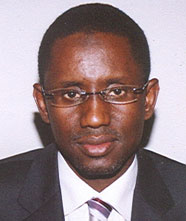
Nigerian fraud is legendary on the Internet - and the EFCC has had a lot of success in "taking a bite" out of it. Here is a picture of Nuhu Ribadhu, who is in charge of the EFCC and managed the Nigerian part of this investigation:


Since most fraud today has a global reach, some might argue the EFCC is stopping people from being victimized, worldwide.

You can view Mr. Ribadhu's biography, here.

Friday, March 31, 2006

Counterfeit Travelers Express (MoneyGram) Money Orders Showing Up in Internet Scams

Got a comment on an old post today about a reader being scammed by cashing counterfeit Travelers Express money orders. The reader was duped into thinking they were working as a Secret Shopper and has lost $7,000.00. Here is the previous post, I am referring to:

Secret Shoppers Scammed

Did a little checking via some of my sources and found that counterfeit Travelers Express money orders are showing up in all sorts of internet scams in the past week.

Thus far, these money orders are showing up mostly in Advance fee fraud (419) scams.

The Advance Fee scam is where a ruse is used to get a victim to send them money (nowadays normally wire-transfer) in anticipation of riches (or sometimes love) to come. The best known is the "Nigerian Letter," but the activity has mutated into romance, lottery, auction, check cashing, work at home and reshipping (as mentioned below) scams.

In a lot of the more recent Advance Fee activity, the victim is tricked into involving themselves in criminal activity, whether it be forwarding stolen merchandise, or negotiating bogus financial transactions and sending the funds elsewhere.

Please note that cashing counterfeit items is illegal and people have been arrested for passing them.

Here is information on how to verify Travelers Express Money Orders from their site:

"If you have retained your money order number, MoneyGram offers 24-hour automated money order status information by calling 1-800-542-3590. MoneyGram customer service representatives are also available from 7 a.m.-8 p.m. CST Monday-Friday and 8 a.m.-5 p.m. CST Saturdays."

There is more information on their site, which can be viewed by clicking on the title of this post.

Please note that automated systems aren't always accurate and that money orders are notoriously high risk instruments. Most money order companies leave themselves with an "out" in case the instrument is later discovered to be bad.

The old saying is "Caveat emptor," or "let the buyer beware." If it seems to good to be true, it probably isn't.

Saturday, May 20, 2006

Counterfeit Postal Money Orders Showing Up in IScams Again


If someone you know over the Internet asks you to cash a money order -- or offers it you as a form of payment -- it's probably best to remember the old legal term "Caveat emptor, or "Buyer Beware."

As reported by readers and other sources, the Internet market is (again) being flooded with counterfeit U.S. Postal Money Orders. After not being around for awhile, these items are raising their ugly head again.

The U.S. Postal Inspectors have speculated in the past that these items are being counterfeited in Western Africa and Eastern Europe. For an interesting article from the NY Times about this, link here.

This is probably the best article, I've read on this subject.

The Postal Inspectors also have a page on how to identify counterfeit money orders.

Yes, counterfeit Postal Money Orders are making a come back, but the core activity has never stopped. The Internet is full of counterfeit methods of payment and the best way to avoid becoming a victim is to recognize the social hook the criminal uses, or "something too good to be true."

While we thought counterfeit Postal Money Orders were a thing of the past, they were replaced with counterfeit items from other money order issuers and legitimate money orders, which were altered.

Of course, there are also those counterfeit cashiers checks, which have been done from so many different financial institutions, it seems impossible to keep up with.

Internet fraud artists are constantly mutating their methods to confuse their victims.

In a recent post on Internet scams, I wrote:

"Thus far, these money orders are showing up mostly in Advance fee fraud (419) scams.
The Advance Fee scam is where a ruse is used to get a victim to send them money (nowadays normally wire-transfer) in anticipation of riches (or sometimes love) to come. The best known is the "Nigerian Letter," but the activity has mutated into romance, lottery, auction, check cashing, work at home and reshipping (as mentioned below) scams.
In a lot of the more recent Advance Fee activity, the victim is tricked into involving themselves in criminal activity, whether it be forwarding stolen merchandise, or negotiating bogus financial transactions and sending the funds elsewhere."

When someone from a Internet source offers free money, romance, or to pay more than something is worth - you are probably dealing with a fraudster.

Anyone, who does this for them, ends up with a huge loss. Even if you can convince the authorities you are a victim, the civil responsibility will still fall on you.

To make matters worse, a lot of petty criminals are getting in on the action, also. They get on the Internet, impersonate victims, get the instruments and then cash them with no intention of sending money back to the crook that sent them the item.

I predict, it's going to get harder and harder to convince the authorities that the person cashing them is totally innocent. Recently - in a "Judge Judy" episode - her "honor" chewed a defendant up and down for cashing a bunch of counterfeit money orders (through her sister's account) and claiming to be "totally innocent." In less than a minute, Judge Judy was easily able to establish that this victim had benefited financially from her transaction and had in fact never wired any money anywhere.

Best bet for all of this is to learn how to spot this activity and when we do, run away from it as fast as we can!

Of course, reporting it and making other's aware can help, also.

Thursday, April 13, 2006

BBB Worker Takes Job Processing Fraudulent eBay Transactions

A Better Business Bureau worker was recently involved in eBay fraud by taking a part-time (work-at-home job) processing account receivables for criminals from Eastern Europe. According to her, she even checked them out before accepting the job and found nothing that would suggest a scam.

The job was to process payments (primarily from eBay transactions) and wire the money to her employers.

These scams, known as check-cashing schemes solicit people to process fraudulent financial instruments and wire the money to a far-away locale. Their employers normally prefer the use of Western Union, or Money Gram, which offer little to no protection once the money is sent.

News clip from 9News.com in Denver, here.

There is also another version of the work-at-home scam, which entails receiving the stolen merchandise and then reshipping it.

In work-at-home (check cashing) schemes, the worker is normally instructed to set up an account (using their information and good credit) to process the financial instruments. Quite often, they are held financially responsible after the financial instruments are discovered fraudulent and they have wired the money.

No matter what the scam entails, the fraudsters always prefer "unprotected" methods of wiring money. I would highly recommend NEVER wiring money to someone you don't know, or haven't done a lot of business with for a LONG TIME.

To add to the confusion many auction fraud victims buy merchandise from seemingly highly rated sellers when their account is taken over. Account takeovers are normally accomplished via phishing, where a legitimate account holder is duped into giving up their account information.

Phishy e-mails from eBay and PayPal are circulating the internet at a record rate.

Interesting that the BBB worker was savvy enough to do a little "due diligence" on the scam company, which revealed nothing. When I looked at their site, I found two articles that describe activity very similiar to this.

Work-at-Home Schemes

Work-At-Home-Schemes Now Peddled On-Line

I wasn't able to find an article on the BBB regarding "check cashing schemes," but in reality this scam is nothing more than a "mutation" of the "work at home" scheme.

I'd offer to write it for them, but after writing this post, I doubt they will solicit my services.

It's becoming quite common for organized gangs to set up fraudulent businesses as a front for the various scams out there. They are often complete with office space, telephones and even web sites.

I guess the moral of the story is that when a business has no verifiable track record a prudent person should dig a little deeper? I stole that one from my friend Paul, who writes prying1.

Let's face it, processing proceeds from auctions using your own account and wiring the money to Eastern Europe seems a little risky. At least to me, it does.

Saturday, March 11, 2006

Hard Drives for Nigeria

Nigeria is one of main sources for all sorts of Advance fee fraud (419) fraud scams. The Advance Fee scam is where a ruse is used to get a victim to send them money (nowadays normally wire-transfer) in anticipation of riches (or sometimes love) to come. The best known is the "Nigerian Letter," but the activity has mutated into romance, lottery, auction, check cashing, work at home and reshipping (as mentioned below) scams.

In a lot of the more recent 419 activity, the victim is tricked into involving themselves in criminal activity, whether it be forwarding stolen merchandise, or negotiating bogus financial transactions and sending the funds elsewhere.

419 is the criminal code for Advance Fee in Nigeria and they call their victims, Mugus. According to Wikipedia, 'Mugu' is a Nigerian Pidgin term which means 'fool'.

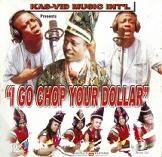
In fact in Nigerian popular music, a musician called Osofia has even done what is considered their anthem "I Go Chop your Dollar." Here are some of the lyrics:

"419 is just a game, you are the losers, we are the winners.

White people are greedy, I can say they are greedy White men, I will eat your dollars, will take your money and disappear.

419 is just a game, we are the masters, you are the losers."

For the video, click here.

419 (Advance Fee) is now done primarily via the internet via e-mail, instant messaging and in chat rooms. The fraudsters reportedly operate out of internet cafes in Nigeria.

Here is an interesting report involving Nigerian Fraud activity and shipping hard drives to Nigeria.

Can't say for sure, but I could speculate that they would be used in the 419 industry over there.

Hilary Bothma of the Oakland Tribune reports:

"A team of Oakland police officers, Secret Service agents and investigators from Hewlett Packard have recovered approximately $12,000 in hard drives that were about to be shipped to Nigeria as part of a package-forwarding scam.

Oakland police said they were contacted last week by HP's global security department about hard drives bought from the company with a stolen credit card and shipped to three Oakland addresses.

Oakland officers who contacted one of the recipients of the hard drives said he was "stunned" to find that his Nigerian friend, whom he met in a Yahoo chat room, was really a scam artist.
Police said the man, who preferred not to be identified, turned over two boxes of hard drives immediately and called them Wednesday to report that he wanted to return 10 more boxes.

According to police, the man's "friend" had used a stolen American Express account to purchase 120 desktop hard drives, with a value of about $100 each. The Oaklander was persuaded to receive the goods, reportedly told by his friend that shipping electronics directly to Nigeria would be risky and expensive.

The Oakland man, who works in a local Christian bookstore, planned to relabel the boxes and ship them to Nigeria himself, unaware that the parts were bought with a stolen credit card and that he risked being held liable.

Police said they do not suspect any of the three people who received the hard drives of any deliberate wrongdoing."

Here is the full story from the Oakland Tribune:

Hard drive-mailing scam cracked

419 Advance Fee activity has inspired an internet community dedicated to fighting their efforts. Many of the sites can be viewed courtesy of the 419 Coalition (US) on their links page.

If you have been a victim, or merely want to report activity, the 419 Coalition main page (linked above) is a wealth of information on how to do it anywhere in the world.