Showing posts sorted by relevance for query advance fee scam. Sort by date Show all posts

Friday, September 07, 2007

International investigation in Nigeria regarding counterfeit checks could lead to arrests, worldwide


A joint operation by the Economic and Financial Crimes Commission, United States Postal Inspection Service and the United Kingdom Serious Organized Crimes Agency has substantiated that a lot of counterfeit checks are being shipped via mail out of Nigeria.

From This Day courtesy of AllAfrica.com:

A statement by Osita Nwajah Head, Media & Publicity of EFCC said the exercise is the first multi-national interdiction operation of outward bound packages in the country. It saw agents of the three law enforcement agencies poring through tones of outward bound packages in the pre-exporting mail processing centres of the Nigerian Postal Service (NIPOST) and private courier companies like FedEx, UPS and DHL. The operation produced startling discoveries of how criminal elements operating from the country ship fake documents and counterfeit financial instruments abroad. In several packages were found fraudulent identification and counterfeit financial instruments neatly concealed in carbon paper to evade the sensors of scanners.

In all, 15,129 counterfeit cheques related to advance fee fraud scams were intercepted. They include 6,948 blank cheques and others drawn for the sums of $145.9 million, Euro 211,077, 218.00, over two million Pounds Sterling and 120,450.00 Canadian dollars.

Thus far, according to the report, no arrests have been made. The checks used in different variations of the advance fee scam are normally mailed in quantity to distributors and then mailed to the individual victims to cash. My guess is that this effort was to gather evidence, which will enable law enforcement to tie in the counterfeit checks to criminals in several different countries.

To substantiate this guess, the article in This Day states:

Similar interdiction operations were carried out simultaneously in Spain, the Netherlands, United Kingdom, Canada and the United States. The global initiative against 419 scam will climax with an international press conference in Washington DC, to be conducted by Chief Executives of selected law enforcement agencies around the world. The EFCC is one of the agencies invited, the statement pointed out.

In an advance fee scam, social engineering ploys (trickery) are used to dupe people into cashing these bogus financial instruments and wiring the money back to the criminals behind the scheme.

When the check is discovered to be fraudulent, anywhere from right on the spot to about ten days later, the person passing the item is left holding the bag. This can translate into a loss of their freedom (getting arrested), being held financially liable, or a combination of both these consequences.

Interestingly enough, the report states that fraudulent identification documents were being shipped along with the counterfeit checks. This might lead some to speculate that not all of these items are intended to be pawned off on advance fee victims. Counterfeit checks and counterfeit identification documents are a well-known combination used by individuals, or groups committing the more intentional variety of check fraud.

Advance fee victims are duped into using their own information to cash the items.

A new trend has been noted called reverse scamming, also. This occurs when scammers have the bogus instruments sent to them, cash them and then never follow the instructions to wire the money.

If confronted, these reverse scammers will always proclaim (loudly) to be victims, however if they don't wire any money anywhere, their intent in passing the item is pretty obvious.

Hopefully, enough evidence has been gathered in this operation to prosecute fraudsters all over Europe and North America, as well as in Nigeria.

The Economic and Financial Crimes Commission's motto is "The EFCC will get you anywhere .....anytime." With a little luck, this investigation might end up proving how true this statement is!

This Day story, here.

A lot of people are led to believe that advance fee scams are all from Nigeria. Although some of them are, Nigeria isn't the only point of origin for this activity. In fact, because of all the press on Nigerian scams, I've seen a lot of these other advance fee fraudsters impersonate Nigerians to lay the blame, elsewhere.

Counterfeit money orders, gift and travelers cheques have been circulating in these scams in the recent past, also.

I've written other posts about how the EFCC goes after criminal activity, here.

Saturday, October 29, 2005

Advance Fee Loan Scams

I was reading "Ask the Private Investigator," which is a blog that is linked to mine and saw a post on Advance Fee Scams taking another "twist," or mutation. From there, I did a "news search" on Yahoo and found an article by Stephanie Zimmerman of the Chicago Sun Times dated October 24th on this very subject.

Ms. Zimmerman writes:

"The loan approvals seemed like the end to their troubles, but little did two suburban women know, they were about to get even deeper in debt.

Sadly, they were not alone: More than 4.5 million Americans were said to have lost money to advance-fee loan schemes last year in an old ripoff that's seen a resurgence in Chicago and nationally. So-called loan brokers -- often people based across the border in Canada -- tell consumers they have been approved for a loan, then ask them to pay a "security fee" to guarantee they will make their monthly payments.

Once the money is wired, the "loan" disappears.

"We are hearing on a daily basis from people who have lost money to advance fee loans," said Steve Bernas, vice president of the Better Business Bureau of Chicago and Northern Illinois."

Most of the solicitations (ads) target people, who have bad credit and promise loans even to those in bankruptcy. The ads are being found in "classified sections" and on the internet. The recently reported scams come out of Canada, which more and more, is becoming an origin point for advance fee activity.

The FTC also has some recommendations on what to look for:

Don’t pay for the promise of a loan. It’s illegal for companies doing business by phone in the U.S. to promise you a loan and ask you to pay for it before they deliver.

Requiring advance fees for loans also is illegal in Canada.

Ignore any ad — or hang up on any caller — that guarantees a loan in exchange for a fee in advance.

Remember that legitimate lenders never guarantee or say that you will receive a loan before you apply, or before they have checked out your credit status or contacted your references, especially if you have bad credit or no credit record.

Don’t give your credit card, bank account, or Social Security number on the telephone, by fax, or via the Internet unless you are familiar with the company and know why the information is necessary.

Don’t make a payment to an individual for a loan; no legitimate lending organization would make such a request.

Don’t wire money or send money orders for a loan through Western Union or similar companies. You have little recourse if there’s a problem with a wire transaction. Legitimate lenders don’t pressure you to wire funds.

If you are not absolutely sure who you are dealing with, get the company’s number in the phone book or from directory assistance, and call it to make sure you’re dealing with the company you think you are. Some scam artists have pretended to be the Better Business Bureau or another legitimate organization.

Check out questionable ads by calling Project Phonebusters in Canada toll-free at 1-888-495-8501. If you live in the U.S. and think you’ve been a victim of an advance-fee loan scam, report it to the FTC online at http://www.ftc.gov or by phone, toll-free, at 1-877-FTC-HELP (1-877-382-4357).

Advance Fee Scams seem to mutate continuously. With ever growing numbers of people gaining access to the internet, there are a larger pool of victims to be harvested by the cybercriminals. Unfortunately, as this pool of victims grows, we are now seeing the less fortunate (people who already have financial problems) being taken advantage of.

You can read Stephanie Zimmerman's article at:

http://www.suntimes.com/output/news/cst-nws-loan24.html

For the FTC publication on this matter, click on the title of this post.

Saturday, March 11, 2006

Hard Drives for Nigeria

Nigeria is one of main sources for all sorts of Advance fee fraud (419) fraud scams. The Advance Fee scam is where a ruse is used to get a victim to send them money (nowadays normally wire-transfer) in anticipation of riches (or sometimes love) to come. The best known is the "Nigerian Letter," but the activity has mutated into romance, lottery, auction, check cashing, work at home and reshipping (as mentioned below) scams.

In a lot of the more recent 419 activity, the victim is tricked into involving themselves in criminal activity, whether it be forwarding stolen merchandise, or negotiating bogus financial transactions and sending the funds elsewhere.

419 is the criminal code for Advance Fee in Nigeria and they call their victims, Mugus. According to Wikipedia, 'Mugu' is a Nigerian Pidgin term which means 'fool'.

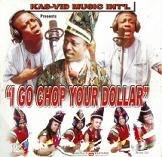
In fact in Nigerian popular music, a musician called Osofia has even done what is considered their anthem "I Go Chop your Dollar." Here are some of the lyrics:

"419 is just a game, you are the losers, we are the winners.

White people are greedy, I can say they are greedy White men, I will eat your dollars, will take your money and disappear.

419 is just a game, we are the masters, you are the losers."

For the video, click here.

419 (Advance Fee) is now done primarily via the internet via e-mail, instant messaging and in chat rooms. The fraudsters reportedly operate out of internet cafes in Nigeria.

Here is an interesting report involving Nigerian Fraud activity and shipping hard drives to Nigeria.

Can't say for sure, but I could speculate that they would be used in the 419 industry over there.

Hilary Bothma of the Oakland Tribune reports:

"A team of Oakland police officers, Secret Service agents and investigators from Hewlett Packard have recovered approximately $12,000 in hard drives that were about to be shipped to Nigeria as part of a package-forwarding scam.

Oakland police said they were contacted last week by HP's global security department about hard drives bought from the company with a stolen credit card and shipped to three Oakland addresses.

Oakland officers who contacted one of the recipients of the hard drives said he was "stunned" to find that his Nigerian friend, whom he met in a Yahoo chat room, was really a scam artist.
Police said the man, who preferred not to be identified, turned over two boxes of hard drives immediately and called them Wednesday to report that he wanted to return 10 more boxes.

According to police, the man's "friend" had used a stolen American Express account to purchase 120 desktop hard drives, with a value of about $100 each. The Oaklander was persuaded to receive the goods, reportedly told by his friend that shipping electronics directly to Nigeria would be risky and expensive.

The Oakland man, who works in a local Christian bookstore, planned to relabel the boxes and ship them to Nigeria himself, unaware that the parts were bought with a stolen credit card and that he risked being held liable.

Police said they do not suspect any of the three people who received the hard drives of any deliberate wrongdoing."

Here is the full story from the Oakland Tribune:

Hard drive-mailing scam cracked

419 Advance Fee activity has inspired an internet community dedicated to fighting their efforts. Many of the sites can be viewed courtesy of the 419 Coalition (US) on their links page.

If you have been a victim, or merely want to report activity, the 419 Coalition main page (linked above) is a wealth of information on how to do it anywhere in the world.

Wednesday, September 07, 2005

Advance Fee Scams with Katrina

It was a matter of time, but the Advance Fee a.k.a. (419) scams have started using the Katrina disaster. 419 is the penal code in Nigeria for the advance fee scam. This scam involves tricking someone to pay an advance fee for untold riches they will receive at a later date.

In urban legend, the scam is Nigerian based; however it is now being done all over the world. These scams have not only been traced to Nigeria and Western Africa, but also to Europe, Canada, Australia and even within the United States. Historically, it would be a letter, or e-mail sent from a foreign prince etc., who had a lot of money that he was willing to share with you for passing it through your account. Besides tricking someone into sending money, if they got enough of your account information, they would wipe out the balance.

More recently, the scam has mutated into getting someone to think they have won a lottery, or that someone wants to buy something they placed on a auction. I have even seen a variation where they are approached by a (alleged) beautiful foreign model on a dating site, who needs their help to negotiate some financial instruments. In the end, the victim is duped into sending money and is left at a loss. This can be severe if they have negotiated a lot of money for them. In these more recent mutations, the fraudsters are sending counterfeit cashiers checks (cheques) and counterfeit money orders and duping their victim into to cashing them and wiring the money back. In a lot of instances, the items are intitally cashed and discovered to be counterfeit after the money has been wired (normally overseas).

For the person, who cashes these items, at a minumum they are financially liable. There are reports that people have had criminal charges brought against them as a result of passing the instruments.

Besides getting people to send them money in advance these criminals are very adept at stealing personal and financial information. This might include invading a computer if someone opens an attachment and using software to obtain what they need to do their misdeeds. The best thing to do is avoid these people like the plague.

Right after the Tsunami disaster and London bombings, the letters surfaced and today it is being reported that Katrina is being used in yet another variation. In an article from Gregg Keizer, it was reported that a letter is being circulated from an illegal Mexican national, who has discovered hidden treasure (boxes full of currency).

It amazes me that this variation still is out there despite all the publicity it has drawn.

Of more concern will be the phishing and pharming activity, which I wrote a previous post on:

http://fraudwar.blogspot.com/2005/09/fbi-reports-fraudulent-activity-on.html

In this post, I've listed recommendations from the FBI (who is noting a lot of sites being registered for Katrina) on how to avoid becoming a victim. In case you are interested on more detailed information on this scam and variations thereof, feel free to use the search box by keyword located at the top of the page.

Monday, January 16, 2006

From Russia With Cash?

Advance fee fraud (419) scams never seem to go away. They mutate into another form and move forward. The news media and internet trace these scams to shady internet cafes in Lagos (Nigeria), but there is a lot of evidence that Nigeria isn't the only place they comes from.

The latest version is a solicitation to make a "cool" $45 million for helping a jailed Russian Billionaire invest some money. Of course, the end result for anyone who gets involved in this is having your account cleaned out.

Here is the latest twist as reported by Alex Nicholson from the Associated Press:

"Russia has more in common with Nigeria these days than just oil. Following up on the politically charged jailing of oil tycoon Mikhail Khodorkovsky, a wave of scam e-mails in the style of Nigeria's notorious spammers have been popping up in inboxes from Moscow to Kentucky."

Here is the full story: Russian Tycoon Is Spammers' New Target.

We can't even blame Nigeria for inventing the scam. The evolution of Advance Fee started with letters from (allegedly) rich merchants during the middle ages AND "a rash of Russian Letters that appeared in the 1920s, with money supposedly needed to rescue people held by the Bolsheviks."

Here is another mutation of the scam that stereotypically, we blame on Russians:

The internet is full of stories of Russian Romance Scams, where men and women are duped into sending money to someone they meet in a chatroom, or dating site. If you were to talk to the people at Romance Scam 419 Yahoo Group (US), my guess is that they would tell you that the scams not only originate from Nigeria and Russia, but several other places, also.

With the evolution of the internet, scams inducing people to send money in advance of a promise (which never materializes) are becoming epidemic. The original letter scam has led to romance, lottery, auction, check cashing and job scams. Undoubtedly, it will continue to mutate into different varieties as new events occur and different things become popular.

They are also no longer exclusively from Nigeria and Russia, but can come from anywhere. Recently, Canada and the Netherlands seems to be fertile breeding grounds AND in the future, who knows?

The internet with it's borderless environment has caused an explosion in this activity. Furthermore, with computers and internet access becoming cheaper all the time, more are more potential victims are getting on-line daily.

The reason why this scam continues to work is that it plays on human emotion and recognizing that is key to teaching people how to avoid being victims.

"If it seems to good to be true, it isn't."

For a good resource on definitions on all the various mutations of Advance Fee, Wikipedia does a pretty good job in their Internet fraud section.

Here is another well put together page on Advance fee activity from Caslon Analytics (Australia): the 419 Scam: basis, statistics, regulation.

Friday, November 30, 2007

How to spot a foreclosure scam

With 1-2 million foreclosures on the horizon, we are probably going to see a lot of shady characters advertise on lamp posts, classified ads, pay-per-click advertising and spam e-mails with questionable promises to rescue people in a difficult situation.

Apparently, the mortgage crisis is now so bad some are saying it's likely to cause a recession.

Foreclosure scams have been around for a long time, predating the current mortgage crisis.

Scams rarely change very much, they tend to disappear and then resurface when there is an event that makes them viable again.

For instance, the infamous Nigerian 419 scam which is frequently in the news can be traced to what was known as the Spanish Prisoner letter, which dates back to the early 1900s.

Advance fee is one of the more popular variations of a foreclosure scam, people are asked to pay a large fee up front and then get nothing for their money.

I had a reader send me an e-mail, where this was occurring and the intended victim was being asked to wire the money. Being asked to wire the money is common in all the advance fee type scams, because once it's wired the sender has very little recourse, if any at all!

I found an interesting article on the DOJ (Department of Justice) website published in 1998 by the American Bankruptcy Institute.

The report details the following types of foreclosure scams:

For the cost of a bankruptcy filing fee, a debtor can immediately obtain one of the most powerful injunctions available under American law: the automatic stay," the foreclosure scam task force pointed out. The task force report described bankruptcy foreclosure fraud as the practice of filing for bankruptcy to delay or defraud creditors, without intending to comply with the requirements for obtaining a bankruptcy discharge or completing a repayment plan.

The foreclosure scam most commonly associated with the West Coast is the fractional interest transfer. Typically, a partial interest--perhaps 5 percent or 10 percent--in property held by a homeowner facing foreclosure is transferred to a real or fictional entity already in bankruptcy. Because the property interest is then held by a bankruptcy debtor, the original owner's creditor cannot foreclose until the bankruptcy court lifts the automatic stay.

Some scams involve fractional interests transferred with the knowledge of the original property owner. Often, however, the original owner first transfers the property to the perpetrator of a foreclosure scam, who then transfers the fractional interest without the original owner's knowledge. Sometimes a property is moved from case to case as the stay is lifted; one residential property was linked to 24 different bankruptcy cases.

The task force report explained how one homeowner facing foreclosure was persuaded by a scam perpetrator to sign deeds of trust and grant deeds transferring fractional interests in her property. The homeowner paid the foreclosure consultant several hundred dollars per month so she could stay in her home. The fractional interest recipients included apparently fictitious individuals as well as homeless persons recruited for a fee to participate; eight recipients filed for bankruptcy one after the other. Each filing stayed foreclosure on the property, causing a 10-month delay between the first filing and the completed foreclosure.

Many more variations of bankruptcy foreclosure fraud are surfacing around the country. Probably the most widespread involves the use of foreclosure notices to identify individuals facing the loss of their homes. The scam perpetrator contacts the home owner, advertising "mortgage assistance" or "foreclosure counseling" and promising to work out the home owner's problems with the mortgagee or to obtain refinancing for an up-front fee typically ranging from $250 to $850. The perpetrator may direct the home owner to "fill out some forms," including a blank bankruptcy petition, or may collect the information needed to complete a petition later. The perpetrator subsequently files a bankruptcy petition in the home owner's name, after filling in the bankruptcy papers signed by the home owner or forging the home owner's signature. The bankruptcy petition invokes the automatic stay, the imminent foreclosure is postponed, and the home owner stops receiving collection calls and letters.

In most cases, the perpetrator does not tell the home owner about the bankruptcy petition, instead convincing the home owner that foreclosure activity has ceased because mortgage problems have been worked out. The perpetrator may tell the home owner that he or she might receive a notice from the court, which should be ignored. The home owner may even be told that the perpetrator has gone to court on the home owner's behalf. No one appears at the Section 341 meeting, the case is dismissed, the foreclosure goes forward, and the home is lost.

Permutations of this scam include the perpetrator's collecting monthly mortgage payments from the homeowner, falsely stating that they will be forwarded to the mortgagee. In these cases, each defrauded homeowner pays not only the up-front fee for "services," but also hundreds or thousands of dollars in mortgage payments.

In another increasingly common alternative, the scam perpetrator convinces the home owner to quit-claim the residence to the perpetrator or to sell the residence for a nominal fee such as $1. The home owner agrees to transfer title because he or she has little or no equity in the property. The perpetrator charges the home owner "rent" or a "consultant's fee" or "management fee" to stay in the residence while the mortgage problems are worked out, after which the home owner will be able to "apply for repurchase" of the property or share the profits if the perpetrator sells the property.

But it costs money for the perpetrators to file all of these bankruptcy cases. To avoid bankruptcy filing fees, some perpetrators transfer an interest of the home owner's quit-claimed property into the name of an existing bankruptcy debtor--perhaps a Chapter 11 business debtor across the country--in a variation of the fractional interest scam. Typically, the debtor learns that a property interest has been transferred into its bankruptcy estate when it is contacted by counsel for the property owner's secured creditor, who has learned it cannot foreclose because the property is owned by a bankruptcy debtor.

Full report from the American Bankruptcy Institute, here.

Reuters video (courtesy of YouTube) did an interesting piece that is more recent. In it they offer some pretty good advice to be EXTREMELY CAREFUL before signing any documents related to your home in any of these come-ons.

The end result could be losing your home to the person, who is claiming to help you!

You can view the video below:

Saturday, January 19, 2008

January Symantec Report reveals questionable blogs, polls and Nigerian Scam restitution schemes

If you ever want to know what criminals and other misfits are up to on the Internet, watching spam traffic can reveal a few clues.

After all, spam is the vehicle most cybercriminals use to pass along whatever scheme they are behind designed to part people with their hard-earned money.

Symantec noted in December that close to 75 percent of all e-mail being sent is spam.

A little over a week ago, they issued their January report, which showed spam levels peaking towards the end of December to 83 percent.

Highlights noted in the January report are:

Holiday Spam Spikes: Spam levels reached new levels as spammers inserted holiday-oriented keywords into everything from subject lines to images.

Spammers Get Honest? Not So Fast: Spammers tried a new twist on an old scam, falsely promising past spam victims restitution of $100,000.

As Oil Prices Hike, Spammers Strike: This new spam claims to identify gas stations that fraudulently tamper with pump prices.

Not-So-Happy New Year: Recipients were invited to download a fun New Year’s song and dance, but instead found themselves downloading something far more malicious.

Presidential Polling Scam: Promising gift cards in exchange for opinions, spammers leverage the US presidential primaries to collect personal information.

Beware of Blogs: The use of blogs within spams appears to be on the rise, particularly in China where simplified character sets are common.
I found the 419 restitution activity interesting. In case you've never heard the term "419," it is the penal code in Nigeria for the infamous Advance Fee scam.

Here is what the report said:

419 spammers who have traditionally used stories about African dictators to defraud individuals have recently changed their approach to these types of emails. Certain 419 scams observed by Symantec this month claim to offer compensation to victims of 419 scams. The scam states that payments will be supervised by UN officials and about 150 scam victims will be paid compensation of $100,000 each. It provides some URL links as a reference to money that was successfully recovered by 419 scam victims. At the bottom of the email, it explains how the money may be recovered and the fraudulent background of such emails may be observed.

Interestingly enough, the Economic and Financial Crimes Commission (EFCC)of Nigeria has made real victims whole with funds seized from 419 scammers. You can see some real examples of this on their site.

The most recent time, I've mentioned the EFCC on this blog is when they were part of an International task force that intercepted large quantities of counterfeit checks at post offices in several countries. These counterfeit checks are normally used in advance fee scams, where people are tricked into cashing them and wiring the proceeds back to the criminal(s) sending them.

This led to a major press campaign and new website dedicated to educating the public about these checks called FakeChecks.org. The United States Postal Inspection Service, who worked with the EFCC on the task force, is one of the major sponsors of this site.

Most advance fee scams can be traced to a spam e-mail.

So far as the other trends noted, spammers and scammers are very adept of using what is popular or newsworthy to spread their deceit on the Internet.

It's probably not a surprise that they are taking advantage of the rise in oil prices, or political polls to lure people into their web.

If you would like to read more about this, the January report from Symantec can be read in full, here.

Sunday, May 20, 2007

Advance Fee credit schemes steal from people who are already in financial trouble

A Florida scam artist has been caught after ripping off thousands of people in what is known as an advance fee credit scheme. The scam -- which targets a market segment known as the under banked -- offers credit to people, who wouldn't qualify for it, otherwise.

Although variations of advance fee schemes have been around for centuries, the global and anonymous nature of the Internet has enabled them to spread like a virus with the click of a mouse.

In advance fee credit schemes, after paying a large fee in advance, the people don’t get the credit and are out the fee.

According to the AP, the Florida man, defrauded low income people out of about $12 million in this recent arrest.

Although in this instance, credit cards were being offered, other forms of credit are offered in advance fee credit scams, also.

These scams are spread via spam e-mails all the time, but they also appear in more traditional advertising like newspapers and magazines. People are also often solicited by telephone.

Recently, the Truston blog commented about a New York Times story revealing that InfoUSA, a databroker, was selling lists of senior citizens interested in lotteries and sweepstakes. Lottery and sweepstake scams are rampant on the Internet.

I wonder how many other telephone lists are sold by data brokers, which help fraudsters market their scams?

The Federal Trade Commission (FTC) has a nice page explaining this problem, here.

Suspected activity can also be reported to the FTC:

The FTC works for the consumer to prevent fraudulent, deceptive and unfair business practices in the marketplace and to provide information to help consumers spot, stop, and avoid them. To file a complaint or to get free information on consumer issues, visit http://www.ftc.gov/ or call toll-free, 1-877-FTC-HELP (1-877-382-4357); TTY: 1-866-653-4261. The FTC enters Internet, telemarketing, identity theft, and other fraud-related complaints into Consumer Sentinel, a secure online database available to hundreds of civil and criminal law enforcement agencies in the U.S. and abroad.

Most scams do not make sense and are too good to be true. Paying a third-party to get credit is unlikely to change, whether or not, an individual qualifies for a particular financial product.

On a final note, it's also not wise to give out your information to someone you don't really know. Doing so, might lead to becoming an identity theft statistic.

AP story, here.

Truston blog post on New York Times article about data brokers selling telephone lists to criminals so they can "market" their scams, here.

Saturday, November 04, 2006

More and More - The Jefferson Scandal Does Appear to be a Nigerian Fraud


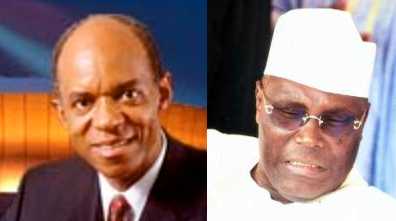
In late May, I did a post about the Jefferson scandal - where money was discovered in a freezer - that was allegedly "earmarked" for the Vice President of Nigeria, Abubakar Atiku.

At the time, Vice President Atiku stated "that Jefferson was name dropping and obviously committing a 419 (Nigerian Penal Code for Advance Fee) scam."

For anyone that is unfamiliar with advance fee (419):

"Nigeria is one of main sources for all sorts of Advance fee fraud (419) fraud scams. The Advance Fee scam is where a ruse is used to get a victim to part with their money (nowadays normally via wire-transfer) in anticipation of riches (or sometimes love) to come. The best known is the "Nigerian Letter," but the activity has mutated into romance, lottery, auction, check cashing, work at home and reshipping scams."

I also wondered in the post, whether or not, the EFCC (Economic Financial Crimes Commission) would investigate further. Apparently, they did with assistance from the FBI.

Brian Ross of ABC news is reporting:

Acting on information provided by the FBI, Nigerian fraud investigators have now indicted Vice President Atiku Abubakar on 14 counts of corruption, involving tens of millions of dollars allegedly diverted from government accounts.

According to Nuhu Ribadu, head of a new anti-corruption squad created by Nigeria's president, $23 million of the diverted money is still missing. Ribadu said $6.7 million of the missing funds has been traced to a U.S. company tied to Congressman Jefferson's family.

Link to Brian Ross story, here.

Meanwhile both Congressman Jefferson and Vice-President Atiku still deny everything and Mr. Jefferson -- who is running for re-election -- has yet to be charged.

In the original AP story, two of Jefferson's associates have been found guilty of bribery and admitted giving Jefferson other money to bribe African officials. The story also reports some pretty "damning" statements Jefferson made while being taped without his knowledge.

I wonder if and when he (Jefferson) will be charged - $90,000.00 in a freezer is a little hard to explain - even if it is a drop in the bucket when compared to the 6.7 million alleged by the Nigerian investigation.

The EFCC site has a lot of coverage (from a Nigerian perspective) on Mr. Atiku's woes.

Sadly enough - Congressman Jefferson is leading in the polls:

Congressman Jefferson Race Gets National Eyes And New Orleans Ayes

Of note - Jefferson has lost the support of the Louisiana Democratic Party, which seems a wise move on their part.

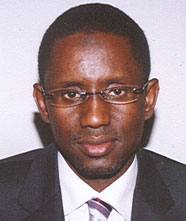
Nigerian fraud is legendary on the Internet - and the EFCC has had a lot of success in "taking a bite" out of it. Here is a picture of Nuhu Ribadhu, who is in charge of the EFCC and managed the Nigerian part of this investigation:


Since most fraud today has a global reach, some might argue the EFCC is stopping people from being victimized, worldwide.

You can view Mr. Ribadhu's biography, here.

Sunday, May 28, 2006

Is the Latest Congressional Scandal a Nigerian Fraud


The AP is now reporting the possible involvement of Nigerian Vice President Abubakar Atiku in the bribery scandal involving Congressman William Jefferson of Louisiana.

To try to get some commentary on this, I went to Congressman Jefferson's site. The only thing I found "interesting" was a message to the "Katrina Victims." Unfortunately, Katrina has now - ALSO - proven to be a fraud-ridden event.
Now the AP is briefly mentioning that the Vice President of Nigeria was the intended recipient of the bribe and the African Press is discussing it in more detail.

As reported by the AP:

While the name of the intended recipient of the $100,000 is blacked out, other details in the affidavit indicate he is Abubakar Atiku, Nigeria's vice president. He owns a home in Potomac, Maryland, that authorities have searched as part of the Jefferson investigation.


For the full story from the AP, courtesy of W-TOL in Toledo, Ohio, link here.

Nigeria has received a lot of bad press for being the "point of origin" for fraud schemes that have victimized people worldwide. In the past few years, President Olusegun Obasanjo has come down hard on fraud and with the help of his EFCC (Economic Financial Crimes Commission) prosecuted a lot of high profile cases, which were well publicized.

Here is a description of Nigerian fraud that I wrote in an earlier post:

"Nigeria is one of main sources for all sorts of Advance fee fraud (419) fraud scams. The Advance Fee scam is where a ruse is used to get a victim to send them money (nowadays normally wire-transfer) in anticipation of riches (or sometimes love) to come. The best known is the "Nigerian Letter," but the activity has mutated into romance, lottery, auction, check cashing, work at home and reshipping scams."
While the fraud that is exported from Nigeria is what we read about all the time, there is considerable evidence that fraud in Nigeria (at least historically) exists at all levels. The current President (Obasanjo) has led a very public campaign against corruption within Nigeria and is credited with making great strides in this area.

It will be interesting to see if the EFCC investigates the Vice President. AllAfrica.com is reporting the story, which quotes Atiku as saying Jefferson was name dropping and obviously committing a 419 (Nigerian Penal Code for Advance Fee) scam. In all fairness, most of the money was still in Congressman Jefferson's freezer, and he did indicate to the "informant" that the money had reached the intended recipient.
Please note that other fraudsters impersonating Nigerian fraud is nothing new. In the past, I've seen other groups do scams - which were made to look as if they came from Nigeria.
However, BiafraNigerianWorld.com wrote an article about the "mysterious" mansion in Potomac, and it's (legal) owner, Jennifer Douglas. According to BiAfra Nigerian World, the mansion was purchased after Atiku became Vice-President and Jennifer Douglas - who they describe as one of Atiku's many wives - is a student with no verifable income. Their article states that Ms. Douglas has left the United States and returned to Nigeria. The AP article states that this mansion, if they are one and the same, belongs to Atiku and makes no mention of Ms. Douglas.
BiAfra Nigerian World has a link to Maryland Property records showing Jennifer Douglas as the owner.
Another item mentioned in all the artices was a telecommunications deal with Nigeria, where the owner of the U.S. company in question has already pled guilty to giving Congressman Jefferson $400,000.00 to seal deals with Nigeria and "other African countries.
Link to the story from BiafraNigerianWorld.com, here.
The AP doesn't seem to come to any conclusions and the FBI isn't commenting yet, which could mean the matter is still under investigation.
The FBI recently added a page to their website, where the public can report government fraud.
Considering the recent activity with Tom Delay, Randy (Duke) Cunningham and now this investigation, they seem to be pretty busy in this arena.

Here are some previous posts, I've done on Nigerian Fraud:

419 From the Other Side of the Fence

Hard Drives for Nigeria

Nigerian Vice President Abubakar Atiku

Monday, December 26, 2005

Scammers Posing as Victims?

Lately, we have seen a surge of fraudulent financial instruments circulated through the internet. Daily, there are alerts by the FDIC on counterfeit cashier checks (FDIC: Special Alerts) and other alerts on counterfeit postal money orders, counterfeit money orders in general and counterfeit Qchex items (checks mailed to your e-mail).

These counterfeit instruments are often (as you will see maybe not always) used to commit Advance fee fraud, where the goal is to get someone to wire money (normally overseas) after cashing one of these instruments. There are many versions of these scams and victims are harvested off of job, dating, auction and lottery sites.

Thus far, it seems that law enforcement has had little success in prosecuting these advance fee crimes because the people passing the fraud checks are considered victims and since the money is wired to some faraway locale, the senders are also hard to go after.

While there are millions of victims out there, we are starting to see the criminal element take advantage of a general apathy in prosecuting these crimes by posing as victims.

Here is a story out of Montana from the AP (Man admits depositing bad check), where a man opened an account with one of these checks, drained it and never wired the money back to Nigeria. In this story, the culprit admitted, he felt it was a scam and didn't really think the bank would honor the check.

I doubt if he communicated his concerns to the bank!

The key to spotting these counter-scams is that no wire transfer takes place. Even when a wire transfer takes place, the person passing these items is sometimes getting money for something they sold in addition to (normally) a "little extra" for negotiating the item. Another key-factor indicating collusion is when the passer suffers no personal financial liability for doing so. Many of these items are passed at institutions that cash checks for a fee, which include grocery stores and even Walmart.

These institutions often bear the initial and often final costs of accepting the item when the passer tells their collection department that they no longer have any of the money. Of course, maybe they are just claiming to no longer have the money?

I've recently seen evidence (sent to me by readers) in the form of e-mail correspondence that advance fee scammers are directing people to these establishments, partially because the banks are becoming wiser and these businesses often offer wire transfer services, also.

When these people collect a substantial amount of money, plus a "tip" and then claim they can't pay it back without being able to show money being wired; serious consideration should be given towards further investigation.

This is especially true in the case of auction scams. In most cases, the advance fee scammer isn't interested in the money and only the cash, which is wired to them. In theory, the auctioneer (who never sent the merchandise and cashed the check) could very well be laughing all the way to the bank. Some of these counter-scammers could doing this over and over again and if they are confronted, they cry "victim."

After all, most of the auction sites flash a warning about this type of scam when people are posting to sell something. It make one wonder how many people could be posing as a victim out there?

This leads me to believe that although we must protect the victims, we also need to take a hard line on those attempting to take financial advantage of the situation. The bottom line is that pretending to be a victim, or even attempting to pass an item that one suspects to be fraud makes the person making the fraud claim as guilty as the person, who sent it to them.

What is needed is more through screening of fraud claims, making it mandatory to produce evidence that money was wired and in cases (where the passer suffered no personal financial liability) that everything makes sense and they never received any financial gain from it. There should also be mandatory reporting of these incidents from which data bases could be created that would identify "repetitive victims." One of the reasons this activity continues to grow is the continuing lack of reporting and investigation when it occurs. In the long run, failure to get aggressive on this matter will only inspire more of it, which makes all of us victims.

Monday, October 30, 2006

B&B Owners on the Offensive Against Advance Fee (419) Artists

The advance fee artists on the Internet are always looking for a way to make a quick buck.

When they targeted B&B owners, they might have bitten off more than they can chew on.

Here is a warning from "Pillows and Pancakes" - a magazine covering the B&B industry:

The end goal is to get the B&B owner to send money to the scammer. Typically, the scammer will make a booking and overpay for it with either a credit card or forged check. The scammer will request the balance sent somewhere, usually by Western Union. Remember, these scammers are creative and there are many variations on the scam.
To read more on the different variations, link here.

They have listed other links to become aware and deal with this activity, also:

View Names/Aliases

Actions you can take

Resources

Forum

Unfortunately, I wasn't listed as a "resource," but here are some posts I've done on this type of Internet scam:

419 Artists Arrested and Tie to Funding Terrorists Suspected

Counterfeit Cashier's Checks Fuel Internet Crime

Counterfeit Postal Money Orders Showing Up in IScams Again

Aids Cure, Another Lure in the Internet Fraud Saga

Don't Trust a Bank to Tell You Whether a Check is Good, or Not

Advance Fee Scams with Katrina

And the most current bogus financial instrument a lot of these scammers are using is:

American Express Gift Cheques Being Circulated in Internet Scams

Please note that not even American Express has published anything on this yet - at least as far as I know?

Of course, the most extensive list of resources I've ever seen about Advance Fee (419) is the 419 Coalition Website.

On a closing note, I would like to welcome the B&B folks to this effort to rid the Internet of these "less than desirable" users!

Sunday, February 08, 2009

Spammers Love to Hurt Internet Users

Love is a many splendored social engineering tool and spammers are busy sending out a whole lot of their particular brand of love across the electronic universe.

An interesting blog post (Love Hurts) by Kevin Haley at Symantec points out that malicious code writers are busy spreading their work in attachments hidden in the millions of spam messages being spewed out by zombies (compromised computers). If you click on one of these attachments — and your machine isn't bulletproof — it also can become a zombie and used as part of a botnet to send out more spam. Botnets are groups of compromised computers used to form a super computer. Of course, downloading malware can also mean that all your personal and financial information will be stolen, too. Please note (as you will see below) that some forms of malware currently being sent out can do both.

Kevin's blog post came out at almost the same time Symantec issued it's monthly Spam Landscape Report. With Valentine's Day coming up, love is a predictable lure and it's probably a good idea to make sure you know who loves you before clicking on any links in an e-mail.

Another predictable finding in the report is that spam levels are continuing to rise to normal levels after they fell when McColo was shut-down. McColo (a Web service hosting provider) was shut down in November after it was discovered they were the source of a large number of botnets, which are used to send out spam. Last month, 79 percent of all e-mail was spam. The report also notes that the point of origin for spam is shifting a little. Although the United States is still number one, the number of active zombies in other countries is rising. While some of this is being attributed to McColo, the report points out that this might point to the fact that some of these countries have an increasing number of users accessing the Internet.

From a spam-commerce point of view, the report indicates weight loss products, counterfeit drugs, cheap watches and porn top the list of items available at super-cheap prices as Valentine's Day approaches.

Besides Valentine's Day, President Obama also continues to be used as a spam lure, according to the report. A lot of this spam contains malware with files names such as usa.exe, obamanew.exe, statement.exe, barackblog.exe and barackspeech.exe. The malware being spread in these spam e-mails is called the W32.Waledac, which is capable of both stealing sensitive personal and financial information and turning a machine into a zombie. It also establishes a backdoor to a machine so it can be remotely accessed.

Current events (and holidays) have been and probably will continue to be used as social engineering lures to snare the unwary.

Also noted was a rise in Russian spam hawking goods and services. With cheap long distance services using VoIP, the Russians have actually set up telephone numbers for their intended victims to call. My guess is that they will entice someone to send money, which can't be recovered when the person sending it discovers they've been scammed.

Chinese gambling spam is also mentioned as a new phenomenon in the report. It appears to be patterned after English language gambling spam, but is written in Chinese.

Last, but not least, Nigerian spam is mentioned. Nigerian or 419 spam is named after the section of the Nigerian penal code dealing with fraud. It normally is a come-on for lost riches or winning a lottery and has a lot of spelling and grammatical errors. Typically known as advance fee fraud, the victim is enticed in sending money across a border (wire transfer is preferred) to secure their fortune. Of course in the end, the victim never receives anything and is often left in financial ruin.

There are many twists to advance fee and one of them is to send a bogus financial instrument to a person with instructions to cash it. If the person doesn't get arrested for presenting it, they are instructed to send the money back to the scammer. Of course, the cashing institution eventually figures out the instrument is bogus and the victim is held liable for it.

A lot of people think that advance fee all comes from Nigeria, which isn't true. I've personally traced it to a lot of other places and called some of the telephone numbers. The person answering didn't sound Nigerian and I've spoken to a few people from Nigeria in my time. Naturally, this doesn't mean that scam activity is not coming from Nigeria and just that not all of it does.

Pam Dixon, of the World Privacy Forum, went on record recently that the spelling and grammatical errors aren't being seen as much in advance fee lures anymore. Obviously, advance fee scammers, wherever they hail from, are being more careful and have discovered spell check?

To close, the Anti-Phishing Working Group's recent report on phishing, which is delivered via spam, has noted that the number of crimeware-spreading URLs out there has increased 258 percent versus the same time period last year. It also noted a record high in the amount of hijacked and victimized brand names. Last but not least, it noted another record in the amount of malicious application variants being seen in the wild (on the Internet).

This would suggest that spam is getting more dangerous and the people sending it are becoming more sophisticated. The smartest thing to do with all spam is to delete it. Making sure your computer's security is updated with a known and reliable vendor is also a smart thing to do. After all, as I've speculated many times before, most fraud, phishing and financial misdeeds on the Internet start with spam.

Friday, April 25, 2008

80 year old man loses over $700,000 to advance fee (419) scammers

With spam e-mails offering too good to be true come-ons filling up our mailboxes, we often forget that there are some very real people who get victimized after falling for one of them.

Of course with the availability of botnets -- which command legions of spam spewing zombies (compromised computers)-- even if only a few people fall for the scheme, the scammers still make a tidy sum off of other people's misfortunes.

An example of this can be found on the Newport Beach Police website, where an elderly gentlemen lost a lot of money (probably his life savings) to one of these schemes:

Recently, an 80 year old resident of the city learned he was a victim of an international lottery scam. He originally received an email claiming he had won an overseas lottery which required him to pay a processing fee to have the funds released. This scam continued for a two year period and ended with the victim losing over $700,000.00.

Scam operators (often based in Canada) are using email, telephone and direct mail to entice U.S. consumers to buy chances in high-stakes foreign lotteries from as far away as Australia and Europe. These lottery solicitations violate U.S. law, which prohibits the cross-border sale or purchase of lottery tickets by phone or mail.
This type of scam is often referred to as an Advance Fee (419) scam.

Of course, the lottery scam isn't the only one out there. There are work-at-home (job) scams, secret shopper, romance, lottery and auction scams being sent out in millions (billions ?) of e-mails, also. And if you don't have your own financial resources, the scammers will gladly provide you with a wide array of counterfeit financial instruments to negotiate. They could care less if you get arrested and expect that you will wire them any proceeds if you successfully pass the bogus instrument.

Please note, that just because you initially are able to pass the instrument doesn't mean that someone won't come after you, later.

The news release from Newport Beach Police Department offers the following advice on how to report scams like this:

The FTC works for the consumer to prevent fraudulent, deceptive, and unfair business practices in the marketplace and to provide information to help consumers spot, stop, and avoid them. To file a complaint or to get free information on consumer issues, visit ftc.gov or call toll-free, 1-877-FTC-HELP (1-877-382-4357); TTY: 1-866-653-4261. The FTC enters Internet, telemarketing, identity theft, and other fraud-related complaints into Consumer Sentinel, a secure online database available to hundreds of civil and criminal law enforcement agencies in the U.S. and abroad.

They also point to a page on the FTC website about cross border scams, which can be seen here.

If you are a more "visual type," I recommend going to fakechecks.org, which has a series of video presentations on this subject.

Sunday, June 26, 2005

Organized Fraud Gangs

With the advent of the internet, fraud has become increasingly more global. There is evidence that there are major organized groups (gangs) running a lot of the frequently mutating financial scams. Recently, we have seen fairly high quality counterfeit money orders, cashier's checks and washed counterfeit bills indicating a fairly high level of sophisitication. We have also seen increased sophistication in phishing and pharming scams and repetitive large scale data intrusions, where both personal information and financial instruments (credit card numbers) were compromised.

The known players in these enterprises are the Russians, Nigerians, Asian, Armenian and Mexican organizations. As stated in my previous post, many of these groups plant people in organizations to skim financial and personal information. Although in some instances, these plants perform scams within the organization they infiltrate, more often than not, they merely skim information to be used in outside fraud scams that might even be committed in a different country.

Recently, there has been a tendency to see the various groups work in collusion with each other. For instance, counterfeit Postal Money Orders, have been traced to being produced in both Nigeria and Eastern Europe. Traditionally, counterfeiting was a primary function of the Asian gangs. 419 (Advance Fee) scams are now as likely to originate in Russia and Eastern Europe in what was traditionally a Nigerian scam.

Quite often, both personal information and counterfeit financial instruments are being produced by one organization and passed by another. Information and instruments are also often sold. When the Advance Fee scam mutated into the Auction Scam, it was difficult to prosecute because many of the people passing the counterfeit instruments were considered innocent victims. In a further mutation of this scam, people are merely pretending to be victims, obtaining the instruments and attempting to negotiate them. Recently, in the news, the Postal Inspection Service arrested numerous people for doing this.

Although not known, it makes one wonder if these groups could also be doing business with terrorist organizations.

Most of the groups are involved in a lot of activities, including drug trafficking, extortion, murder and white slavery. Interestingly enough, they consider the fraud schemes as the safest because they carry light penalties and there is less chance of getting caught.

Although, most of these groups work in collusion (network) with other groups, within their parent organizations, they maintain ethnic purity within their own ranks. This makes it extremely difficult to infiltrate these organizations.

In light of recent events and the ever growing bill that these people are causing, we can no longer afford ignore this activity. Proactive measures must be taken to combat this menace and we must realize that it is no longer contained within national boundaries. Should we fail to act, we might find that this menace will destroy the way we know society today.

Here is a link to a previous post on legislation to increase the penalties on these crimes. There are links to political representatives in both the US and UK. Write them and show support.

http://fraudwar.blogspot.com/2005/05/spyware-bill-approved-by-house-of.html

Friday, November 18, 2005

Secret Shoppers Scammed

I'm sure we've all seen advertisements on how you can make a lot of money, get free merchandise and meals and even take cruises as a "Secret Shopper." We've also seen numerous services (questionable) that will sell you information on how to do it.

Although, there are numerous companies, who do this for legitimate businesses, very few people make much money by being a secret shopper. So far as the services selling you a package to do it, I would recommend that you stay away from them. Quite simply, they aren't necessary and you are probably paying for something that you could have got for free. All one needs to do is look up the companies, (Secret Shopper) online and apply directly to the company.

On a much scarier note, I read a report from the Minneapolis Star Tribune that "Secret Shopping" is the latest ploy to attract victims into Advance fee fraud (419 scams).

Here is how this latest scam works as reported in the Minneapolis Star Tribune:

"John McCullough, business coordinator for the Financial Crimes Task Force, said the perpetrators ran an ad in the Star Tribune classified section last month luring readers with an offer to be "Secret Shoppers" for "$100/hr. guaranteed" and "no experience necessary."

People who responded to the ad were sent a letter congratulating them on being selected and instructing them to cash a $2,830 check at their bank or other institution, to keep $200 for themselves, and to send most of the rest to the Canadian address. The check-cashing task is described in the letter as an "assignment" to "evaluate the effectiveness and efficiency of a payment system called 'Moneygram' which is available at all Wal-Mart (sic)."

Moneygram and Western Union offer wire transfer services, which aren't insured by the FDIC. In many advance fee scams, the ploy is to get someone else to cash a fraudulent instrument and wire the money (normally overseas) before the instrument is discovered as a fraud.

"The letterhead is topped with the Web address (secretshopper.ca) of an apparently legitimate operation in Canada that employs people to shop and evaluate retail establishments. Other legitimate operations include secretshoppercompany.com in Gainesville, Ga., and secretshopper.com in Minneapolis."

As I am constantly saying, Advance Fee is a continuously mutating animal. The Secret Shopper twist is new and if history proves correct, we will see this version of the scam travel quickly in the borderless environment of the internet.

Some good advice from the article is, "beware of checks made out for more than the selling price of an advertised item, checks delivered via overnight delivery service, checks drawn on an account in a name that is different from the person buying the item, and instructions to wire money to a large U.S. city or to another country such as Canada, England or Nigeria.

Other things to watch for are payment of a "commission" for facilitating money transfers through personal accounts, and e-mails requesting the receiver to "confirm, update or provide" personal banking account information."

Note that people, who fall victims to these scams are normally held financially responsible. In some instances, some of them have even been arrested for attempting to pass fraudulent financial instruments.

Should you suspect you are being solicited on any internet scam, the best thing to do is to report it to the authorities. There are numerous links throughout this blog and in my "links" on how to do so!

Saturday, August 05, 2006

419 Artists Arrested and Tie to Funding Terrorists Suspected

Nigerian fraud has become "Internet folklore" and there are many sites on the Internet about it.

In recent years - a unit of law enforcement professionals have been waging war against fraud in Nigeria - and as a result, it's not very safe to commit fraud in Nigeria anymore. Here is a story of a recent arrest, where it appears that 419 (advance fee fraud) might have been helping fund a terrorist group:

"The Economic and Financial Crimes Commission, EFCC, have arrested a terrorism suspect in a raid on a cybercafe, NetXpress, located on Road 51, Festac town, Lagos. The commission disclosed that 13 other suspects caught in the act of sending scam mails to Europe and America, were also arrested."

"The suspect who claimed to represent a faceless terror group, Terrorist International was caught demanding payoff from a multinational oil company to forestall the kidnap of its expatriate staff in the Niger Delta. The other suspects were caught sending scanned documents purportedly issued by Chief Executives of Nigerian government agencies such as the Central Bank of Nigeria, CBN and the Nigerian National Petroleum Corporation, NNPC."

Link from the EFCC site, here.

Of note, Nigeria recently passed a pretty strict law on advance fee (419) activity entitled the Advance Fee Fraud Act. This law allows for cyber-cafe owners and even the landlords to be arrested if 419 activity is occurring on their premises.

Advance fee activity is a worldwide problem and it's not only done by Nigerians. Catching this group undoubtedly saved a lot of people in other countries from being victimized.

There seems to be a lot of speculation from the law enforcement community that Internet fraud (a worldwide problem) is being used to fund terrorist groups. In this recent case, the EFCC has helped validate this.

Here is a previous post - with links to others - regarding concerns by law enforcement that Internet fraud might be a source of terrorist funding:

Great Britain Creates National Fraud Squad to Fight Organized Crime and Terrorists

Friday, October 21, 2005

419 From the Other Side of the Fence

There is an interesting article by Robyn Dixon of the LA Times, who interviewed an allegedly former 419 (Advance fee fraud) scam artist named Samuel. He describes a murky world of cybercafes, where the Nigerian fraudsters congregate and send out the infamous e-mails. According to the article "they even have an anthem "I Go Chop Your Dollars," hugely popular in Lagos, which hit the airwaves a few months ago as a CD penned by an artist called Osofia:

"419 is just a game, you are the losers, we are the winners.

White people are greedy, I can say they are greedy White men, I will eat your dollars, will take your money and disappear.

419 is just a game, we are the masters, you are the losers."


For the video, click here.

Samuel goes on to describe the long lost riches and the dating scams, as well as the money some have made off these schemes. You can read the entire article by going to:

''I Will Eat Your Dollars''

The lyrics of this song might be offensive to some, but it is probably reality to many in Nigeria.

Quite simply, in Nigeria, 419 is a means to escape poverty. For years, foreign companies have made themselves and a "select" few Nigerians extremely rich (via vast oil reserves). Meanwhile the majority of the population lives in conditions that would make a "welfare recipient" in the West appear wealthy. In fact, the CIA estimates that 70 percent of the country lives in poverty, despite the fact that they are a member of OPEC and the eleventh largest producer of petroleum in the world.

To a Nigerian, their perception of these companies is probably just what the song states, or "greedy white men."

There is another headline that has been hitting the press about Microsoft and the Nigerian goverment working together to end scams. Neil Holloway (President Microsoft Europe) said "It's the first-ever agreement Microsoft has signed with an African country to aid law enforcement efforts. Microsoft's aid will include providing information to law enforcement in addition to training. The company has already been working with Nigerian authorities over the last three to six months. We think we have a responsibility to make an impact in this particular area."

Hopefully, the Microsoft Computer Security types have received additional training in self-defense, or have been augmented by other security types, preferably former special forces personnel. Here is the latest CIA Travel report: U.S. State Department's Travel Warning - Nigeria. My understanding is that the oil companies, who have billions invested in Nigeria, have a large budget for security there.

The Nigerian government has also made numerous headlines lately in it's battle against 419. Numerous arrests have been made and money has even been returned to victims. After years of bad press (a lot of it from 419), they do seem to be trying to take measures to improve their image in the world.

Still, the majority of the people live in standards that we couldn't even imagine in the West. I fear, if this problem (which is probably the cause) is allowed to continue, there will always be a steady stream of willing recruits into this seedy business.

Unfortunately, these actions by the Nigerian government and Microsoft only address the suffering created in the West by 419.

If we really want to address the problem of 419 in Nigeria, we probably should take a look putting pressure on the government over there to provide a better standard of living for their people. I would challenge all the foreign companies doing business in Nigeria (particularly from the petroleum industry) to take this to heart.

Microsoft is a newcomer in Nigeria and there is no doubt they are doing a lot of charitable work around the world. I salute them in their efforts and hope their partnership with the Government of Nigeria reduces the amount of suffering created by 419. I would hope that Microsoft and (others) also take the time to address the reason that 419 is a means of escape for many young Nigerian's, like Samuel.

It would be sad that if in the end, they "too" were perceived as "greedy white men."

If anyone is interested in a Nigerian view of corruption in Nigeria, click on the title of this post.

For some of the bad press on the internet regarding 419, here are some sites courtesy of the 419 Coalition (US) :

419eater.com
419 Fraud (US)
419 Legal (South Africa)
419letter.org
African Anti-Fraud Control Agency (AAFA) (Norway)
Africaservice.com (Norway)
American Association of Retired Persons (AARP) (US)
AnthonyParsons.com
Anti African Scam Commission
Artists Against 419 (US)
Australian Institute of Criminology
Avant Solutions Inc. (US)
BankersOnline.com (US)
Bart De Wolf's Site (El Salvador)
Brian Wizard Inc. - 419 Novel Available Now - (US)
BusinessInAfrica.com (US)
California Society of Certified Public Accountants (US)
Canadian Council of Better Business Bureaus
Classic Car Fair (New Zealand)
ConsumerAffairs.com (US)
Consumer Protection Association of America
Crimes of Persuasion (US)
Data Wales (Wales, UK)
Delaware Scam Victims (US)
eBay Scamkillers (US)
Economic and Financial Crimes Commission (EFCC) (Nigeria)
Edofolks.com (Nigeria)
Email Scams and Frauds (Dr. Robert J. O'Hara's site) (US)
Fighting back at Nigerian 419 Advance Fee Fraud Scammers (UK)
Financial Scandals Website (UK)
Forensic Services SA (South Africa)
FraudAid (US)
Freeman Institute (US)
G2 (US)
Globrocks Information Systems (US)
GreaterThings.com (US)
I Need a Trustworthy and Honest Business Partner (Denmark)
Idaho Department of Finance (US)
InterGOV (US)
International Investigation Services (IIS) (Iceland)
Internet Crime Prevention and Control Institute (US)
Internet Fraud Complaint Center (IFCC) (US)
Internet Scambusters E-Zine (US)
Involution.Org (US)
Lads Of Lagos (US)
London Metropolitan Police (UK)
Loss Prevention Concepts Ltd. (US)
Ministry of Fair Trading, Government of Western Australia
Money From Africa Letter Collection (Poland)
Monitor das Fraudes (Brazil-Portuguese Language)
Monks of Adoration (US)
Motherland Nigeria (US)
Mr. Ugo Watt's Scam Baiter Pages (UK)
National Association of Credit Management (NACM) (US)
National Criminal Intelligence Service (UK)
National Fraud Information Center - Internet Fraud Watch (US)
Nigeria 419 Scam (US)
Nigeria Master Web (Nigeria)
Nigeria Scam Alert (US)
Nigerian Business Proposal (.com) (US)
Nigerian Fraud Email Gallery (US)
NigerianGemScam.com (US)
Nigerian Letters (Australia)
Nigeria Master Web (Nigeria)
Nigerian Nightmare (US)
Nigerian Scams (WONST) (US)
Nigerian Spam.com (India)
Offshore Finance Canada Magazine/Ezine (Canada)
PeaceProject (US)
Pennsylvania Attorney General (US)
Phonebusters (Canada)
Policia Judiciaria (Portugal-Portuguese language)
Poppage1 Site (Canada-India)
Popsubculture.com (US)
Quatloos! (US)
Quatrocantos.com (Brazil-Portuguese Language)
Regulatory Intelligence Agency (RIA) (Vanuatu)
Romance Scam 419 Yahoo Group (US)
RCMP/GRC Royal Canadian Mounted Police (English & French language)
Scam.com (US)
Scambuster419.co.uk (UK)
Scam o Rama (US)
Scams.net (US)
ScamWatch (US)
Scam Victims United (US)
Scott Bidstrup Site - Onsite Personal Viewpoint on Nigeria (US)
Sierra-Leone.org (Sierra Leone)
Silicon Valley Business Law (Law Offices of Thomas Gross) (US)
Snopes.com Urban Legends Reference Pages (US)
South African Police Service (South Africa)
Southwest Georgia Com (SOWEGA.COM) (US)
Spam, Scams and Hoaxes (US)
Stentorian.com (US)
Stop 419s (UK)
StorOslo Sikkerhetstjeneste AS (Norway)
Svensk 419/Nigeriabrev-site (Sweden-Swedish Language)
The Big Scam (Sweden)
The Internet Project (TIP) (Australia)
The Nigerian Scam Buster
The Nigerian Muse (Dr. Mobolaji Aluko) (US & Nigeria)
TheThin.net (US)
United Nigeria Association Tulsa (UNAT) (US)
United States Department of Commerce International Trade Administration
United States Department of State Bureau of Consular Affairs
United States Department of State Bureau of International Narcotics and Law Enforcement
United States Department of the Treasury FinCEN
United States Embassy Nigeria
United States Federal Bureau of Investigation
United States Federal Trade Commision
United States National Archives and Records Administration
United States Postal Service
United States Secret Service
United States Senator Russ Feingold
Venture Research Institute (US)
Virginia Attorney General
War On Spam (US)
Waruno Mahdi's Website (Germany)
Web Police (US)
Whatsthebloodypoint.com (US)
ZYRA.org (UK)